By Staff Reporter
KARACHI: A newly formed police investigation team has begun formal inquiries into the murder of young businessman Mir Raza Ali, days after a second post-mortem examination overturned earlier suggestions that he had taken his own life.
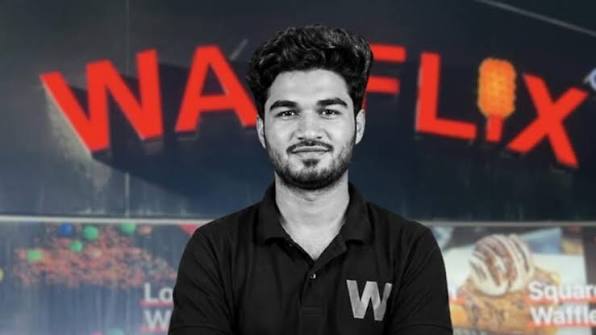
Ali, the owner of the Wafflix eatery, had been missing since 28 July. His body was discovered the following day in bushes in the Gulistan-i-Jauhar area of the city, with a gunshot wound that police initially treated as consistent with suicide.
That theory collapsed after his body was exhumed and re-examined last weekend. The second post-mortem found that Ali had sustained multiple injuries and had been shot in the back, a finding investigators said ruled out the possibility that he died by his own hand. A murder charge was subsequently added to the police file.
The businessman’s family had maintained from the outset that he had been abducted, tortured and killed, and had repeatedly voiced distrust in the officers originally assigned to the case.
On Monday, members of the family met the newly constituted investigation team, along with their lawyer, Jibran Nasir, at the office of the Karachi Deputy Inspector General (DIG) of Crime. The team also held talks with officers from the original inquiry and took possession of the case records compiled so far.
Amir Farooqi, the DIG of Crime and Investigation who is leading the new unit, said his officers had listened at length to the family and their lawyer about the circumstances of Ali’s death.
“The police will keep the family informed of all steps being taken to solve the case,” he said.
Farooqi added that the new team had requested the full case file from the previous investigators in order to review the evidence gathered to date.
Judicial commission shelved
The Sindh provincial government said earlier on Monday that it had put on hold a proposal to establish a judicial commission to examine the killing.
Ziaul Hassan Lanjar, the province’s home minister, said on social media that Karachi’s mayor, Murtaza Wahab, had spoken with Ali’s relatives, who told him they had confidence in the newly formed police team and believed it should be allowed to carry out the investigation.
“Therefore, the decision of establishing a judicial commission has been deferred for the time being,” Lanjar wrote.
The announcement came only days after Lanjar himself had suggested a judicial inquiry, overseen by a Sindh High Court judge, might be established. That proposal was swiftly rejected by the family’s legal team.
Writing on social media at the weekend, Nasir said the family had neither requested nor agreed to a judicial commission and did not believe one was necessary at this stage.
“A new investigation team has been formed, which the family will meet tomorrow,” he wrote, adding that the provincial authorities should refrain from creating “hurdles or confusion” in the name of facilitating the case.
The proposal for a judicial commission had first been raised publicly by Faryal Talpur, a senior figure in the Pakistan Peoples Party, who said on Sunday that such a body should examine every aspect of the case and ensure the facts were brought to light. Hours later, Lanjar and Wahab visited the family home and met Ali’s father, Mir Hussain Ali, assuring him that the family would receive justice.
Force accused of “miscommunication”
Sindh’s Inspector General of Police, Javed Alam Odho, acknowledged on Monday that the investigation needed to be handled more effectively and said he hoped the new team would give full weight to all available evidence.
Speaking to reporters in Sukkur, Odho said the case had drawn concern from the government, the public and the police alike, and that it needed to be examined “with an open mind and an open heart”. He confirmed that disciplinary action had already been taken against officers found to have acted with misconduct or negligence during the original inquiry.
The police chief said the controversy that had engulfed the case stemmed largely from poor communication.
“I have strictly instructed the entire investigation team to keep communication open and transparent this time, whether with the deceased’s family or the media,” he said.
The reconstitution of the investigation team was formally announced by the Sindh IGP’s office on Sunday, in an order stating that the change had been prompted by the findings of the second post-mortem, which directly contradicted the conclusions of the first.
That same day, Karachi’s police chief, Azad Khan, suspended two officers with immediate effect: Muhammad Arshad Afridi, the sub-divisional police officer for Sharea Faisal, and Kamran Qureshi, the station house officer for Gulistan-i-Jauhar. Both were accused of failing to preserve the crime scene or carry out a proper forensic examination when Ali’s body was found. The case has also been transferred from Ferozabad police station, where it was originally registered, to Zaman Town police station.
Dispute over the first autopsy
The chain of events that led to the case being reopened began with a public dispute between Karachi’s police surgeon and the original investigating officers over apparent inconsistencies in the medico-legal report from Ali’s first post-mortem.
Dr Summaiya Syed, the police surgeon, told a private television channel last week that the findings of the first post-mortem had raised significant questions, as several observations in the report appeared not to match photographic evidence from the scene. Dr Syed, who had based her assessment solely on the report and photographs rather than a physical examination of the body, said the recorded entry wound, bullet trajectory and exit wound did not correspond with one another.
She noted that entry wounds in firearm deaths were typically smaller than exit wounds, and pointed out that no test had been carried out for gunshot residue on the hands, despite this being standard practice in cases where suicide is suspected.
Her remarks prompted a rebuke from police authorities, who issued a statement warning that such public observations risked undermining the ongoing investigation. The statement nonetheless left open the possibility of exhumation, should the medical board recommend it for further clarification by a panel of medico-legal experts, subject to court approval.
On 6 August, a judicial magistrate granted permission for the body to be exhumed, acting on an application from Ali’s father, and directed the police surgeon and Sindh’s health secretary to convene a medical board to oversee the procedure.
The health department initially formed an eight-member board with Dr Syed as convener. In the early hours of 7 August, however, the board was reconstituted by order of the director general of the Sindh health department. Dr Syed remained convener of the revised five-member panel, but its other members were replaced.
The family rejected the reconstituted board, a decision that led to the exhumation, originally scheduled for Friday, being postponed. Nasir accused the authorities at the time of attempting to obscure the facts of the case.
The provincial government subsequently restored the original medical board, and Ali’s body was exhumed on Saturday.
Following the second post-mortem, Dr Syed told Dawn newspaper that multiple injuries had been found to the head and face. “Fractured rib on the back, which is the entry wound of the gunshot [that] exited from the front,” she said, adding that the body also bore injuries to the right flank and feet, along with a congealed black substance found in the mouth and throat.
Copyright © 2021 Independent Pakistan | All rights reserved