By Staff Reporter
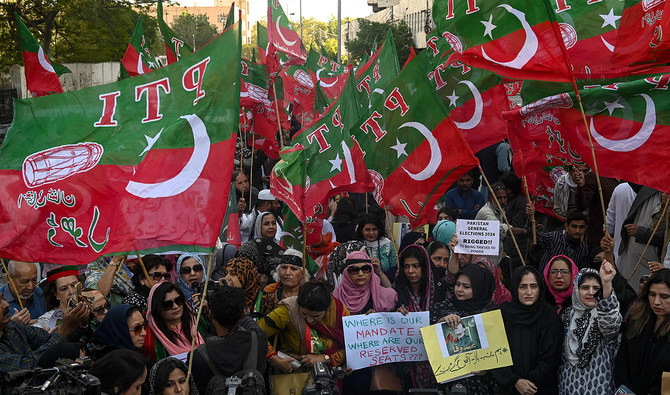
PESHAWAR: Khyber Pakhtunkhwa’s chief minister has insisted that Pakistan Tehreek-e-Insaf’s entire political leadership, along with its allied group, is united behind a long march on Islamabad scheduled for September 27, as he moved to shut down suggestions from within his own party that the date was the product of a backroom deal with the government.
Sohail Afridi told a local television channel that the timing had been agreed jointly by PTI’s provincial and central leadership together with the Tehreek-e-Tahaffuz-e-Ayeen-e-Pakistan, the alliance formed around the party. “All our political leadership, the provincial leadership of Pakistan Tehreek-e-Insaf across all provinces, and central, and along with that the alliance too, Tehreek-e-Tahaffuz-e-Ayeen-e-Pakistan — yes, all of them are on board,” he said.
The chief minister was pressed on reported reservations from Aleema Khan, sister of jailed PTI founder Imran Khan, who has questioned why the march was not called earlier than late September. Afridi described her as “non-political” and said he was confident she would come round once presented with the full picture. “Aleema apa is Imran Khan sahib’s sister, and we repeatedly say that she is non-political; she has nothing to do with politics,” he said. “We will, God willing, satisfy her.”
More pointed were allegations from PTI figures based overseas, who have claimed Afridi settled on September 27 — rather than a mid-August date reportedly favoured by some in the party — because of an undisclosed arrangement with the authorities. Afridi rejected this outright, arguing that anyone with genuine concerns should have raised them with him privately rather than airing them publicly. “This is an attempt to mislead people, and this should not happen,” he said, adding that those loyal to Imran Khan and the party ought to seek clarification before making such claims.
He was especially firm in denying a specific allegation that he had met interior minister Mohsin Naqvi and another official on August 4, shortly before the long march date was announced. Calling the claim “completely baseless,” Afridi said he had spent that afternoon at KP House in Islamabad, in meetings connected to the province’s Pado KP and telemedicine programmes, running from midday until 4.30pm. Asked directly whether the alleged encounter had taken place in Peshawar instead, he was unequivocal: “No, I was at the KP House in Islamabad,” dismissing the suggestion as baseless.
Afridi also rejected any notion of a rift between the party’s leadership and its rank and file, and addressed the “D-Chowk, D-Chowk” chants that featured at a recent Peshawar rally, suggesting that state institutions withholding political space from PTI should recognise the restraint his leadership had shown in trying to resolve matters through dialogue. He predicted the scale of the September 27 mobilisation would be difficult to contain. “Not just in KP but across Pakistan, particularly the youth, no one will be able to contain them when they come out on Sept 27, because I can see passion and a ray of light in their eyes,” he said.
Pressed on whether he would defer to Imran Khan directly, Afridi said that if he were granted a meeting with the PTI founder at Adiala jail and instructed to postpone the march, he would comply — and would likewise follow any instruction to pursue talks instead.
He was equally forthright in his criticism of the federal government led by prime minister Shehbaz Sharif, accusing it of economic mismanagement and poor governance, and argued that PTI’s pattern of protest was a function of being ignored rather than a matter of choice. “People say that the PTI does politics of chaos, unrest and protests; however, it would not have resorted to these if it had been heard by the authorities,” he said. He described Imran Khan’s imprisonment as unlawful, saying the former prime minister was being held in solitary confinement and denied access to his family, lawyers and personal physicians. “The PTI founder is in solitary confinement and denied his rights. No one is allowed to meet him — not me, his family, lawyers or personal physicians,” he said, adding that the party had exhausted constitutional and legal avenues before turning to protest. “We are holding a peaceful protest. The Constitution allows us to do so, so the authorities will have to hear us.”
Afridi said the party continued to press for Imran Khan’s cases to be heard on their merits, with proper access to independent medical care. He further claimed Khyber Pakhtunkhwa’s police force had come under pressure from the federal government and other institutions, while separately distancing the provincial government from criminal cases brought against journalists in the province, insisting it would never sanction such action.
On the long-standing PTI proposal to carve out new provinces within Pakistan, Afridi described it as part of Imran Khan’s original vision, but cautioned that only an elected government with a public mandate could actually create them. “We support the call for creating new administrative units, but only through a government brought to power by the people,” he said.
A last resort, PTI says
Afridi’s comments followed remarks a day earlier from Shafi Jan, a PTI leader and aide to the chief minister, who said the party had no option left but to march, with the ultimate aim of securing Imran Khan’s release. Jan said PTI intended to leave Peshawar for Islamabad with two million people, and described the march as the party’s last resort after being ignored. “We will leave Peshawar with two million people,” he said, predicting the effects would be felt nationwide.
Imran Khan, 73, has been detained since August 2023 in a case his party maintains is politically motivated. He was removed from office in April 2022 following a no-confidence vote and has since faced a succession of legal proceedings, including cases relating to state gifts and an allegedly unlawful marriage. While some convictions against him have since been suspended or overturned, several appeals remain before the higher courts, and he and his party continue to deny all the allegations.
He is currently serving a 14-year sentence at Rawalpindi’s Adiala jail over the £190 million case, formally known as the Al-Qadir Trust case. An Islamabad accountability court sentenced Imran Khan and his wife, Bushra Bibi, to 14 and seven years respectively in January 2025; both have since challenged their convictions before the Islamabad High Court. The case centres on allegations that the couple received billions of rupees, along with land worth hundreds of kanals, from Bahria Town Ltd in exchange for legalising £190 million recovered by the UK and returned to Pakistan during PTI’s time in government.
Court protest falls flat
The disputes over the long march date came as a separate PTI mobilisation effort visibly faltered. The party had called on its assembly members to gather outside the Islamabad High Court on Monday, with all parliamentarians instructed at a Sunday night meeting to be at the venue by 10am. In the event, only six turned up by the appointed hour: Ali Muhammad Khan, Senator Mushtaq Ahmed Khan, Senator Falak Naz Chitrali, Shafqat Awan and Junaid Akbar. Party secretary-general Salman Akram Raja arrived briefly, assessed the scene and left shortly afterwards. Police deployed heavily around the court in anticipation of the protest, with prisoner vans stationed nearby.
Raja made little effort to disguise his frustration with the turnout, directing sharp criticism at his own colleagues. “I had begged and implored them to reach outside the high court. Where are all these people? Why didn’t they come? I will expose everyone by name,” he said.
Sit-in threat over jail access
At a separate news conference alongside Raja and senior lawyer Babar Awan, Afridi suggested he could stage a sit-in outside the Supreme Court if denied permission to visit Imran Khan in jail on Thursday. He said he had formally requested access and was prepared to forgo any press briefing afterwards in exchange for the meeting being granted, citing concerns over the former prime minister’s health. “I am ready to assure that I will not hold any press conference after meeting with my leader. Imran Khan’s health is bad and we want him to be provided with proper treatment facilities; we should be allowed to meet him,” he said.
Afridi warned that continued restrictions on Imran Khan would deepen despair among young Pakistanis who, he said, already felt their futures were bleak and were growing increasingly angry. “Once the people come out on the streets, no one will be able to control them,” he said, predicting nationwide protest preparations ahead of September 27 and describing resistance as the only option against what he termed a “fake government.” He added that no one should consider causing harm to Imran Khan in custody, insisting neither he nor anyone else would have the will to do so, and expressed regret that court hearings on prison-visit access had stalled. He noted that Imran Khan’s family remained non-political and said both family and legal team had given assurances they would not hold a press conference following any visit.
Raja, addressing the same gathering, said nothing mattered more at this stage than Imran Khan’s health. “The health of the party founder will not be allowed to be played with anymore,” he said, adding that the campaign now beginning would not let up. He accused the authorities of imposing what he called a “false government” on the public, saying they had been treated “as cockroaches,” and predicted the party’s resistance movement would gather pace in the weeks ahead.
Copyright © 2021 Independent Pakistan | All rights reserved