By Staff Reporter
PESHAWAR: The chief minister of Pakistan’s restive Khyber Pakhtunkhwa province, Sohail Afridi, demanded on Saturday that the federal government immediately convene a meeting of the National Finance Commission to address what he described as Rs550 billion in outstanding dues owed to the province, while sharply warning against any new military operations in the tribal districts that could lead to civilian casualties.
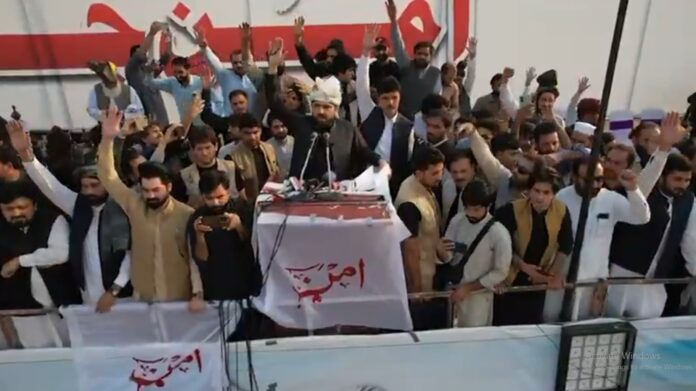
Speaking at a jirga, or tribal assembly, in the province’s Khyber district, Afridi evoked the lingering scars of past conflicts, tracing the region’s turmoil back to the aftermath of the Sept. 11, 2001, terrorist attacks in the United States, which killed nearly 3,000 people and drew Pakistan into a protracted fight against militancy.
“After 9/11, Pakistan entered a foreign war without our consent,” Afridi said, addressing the gathering. “It was said that Pakistan needs sacrifices. For Pakistan, we left our houses. Drone strikes and military operations started here.” He added: “We were made the scapegoats. Our homes, markets, and mosques were destroyed, yet we gave sacrifices for Pakistan.”
The remarks came amid a surge in terrorist attacks in Khyber Pakhtunkhwa and neighboring Balochistan, following the collapse of a fragile ceasefire between the government and the banned Tehreek-i-Taliban Pakistan in November 2022. The militant group has since vowed to target security forces, police and other law enforcement personnel.
Afridi, whose Pakistan Tehreek-e-Insaf party has governed the province since 2013, has been vocal in opposing large-scale military offensives, which local tribes have long resisted because of the mass displacements they often cause. Earlier this week, he attributed the resurgence of terrorism to the “flawed policy” of the federal government.
At the jirga, he cautioned that the people of the tribal districts would “not be made into scapegoats again” and pointed to security forces’ claims in 2018 that areas like Khyber had been cleared of militants. Yet, he said, “preparations are again being made for new military operations.”
The province stands with the state on matters of peace, Afridi said, but “under no circumstance will we support collateral damage.” “If any innocent life is lost this time, there will be accountability.”
He also insisted that any future decisions affecting the region “must include the provincial government and parliamentarians from KP,” rejecting those made behind “closed doors.” The jirga followed a meeting of PTI’s senior leadership at the chief minister’s residence in Peshawar. Participants included the PTI chairman, Barrister Gohar; Afridi; the party’s provincial president, Junaid Akbar; Asad Qaiser; and other leaders.
The group discussed the province’s law and order situation in detail and decided to convene a peace jirga in the Khyber Pakhtunkhwa Assembly. Invitations will go to former chief ministers, governors, scholars, jirga leaders, civil society representatives, lawyers and other prominent figures. “The aim of the peace jirga is to eliminate terrorism and formulate a unified strategy for sustainable peace,” the statement said.
Copyright © 2021 Independent Pakistan | All rights reserved