By Staff Reporter
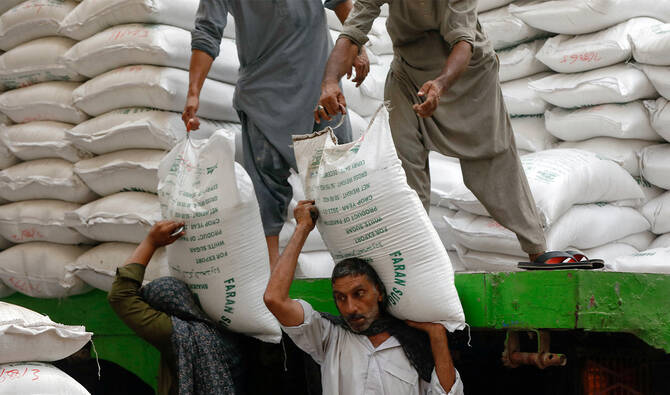
ISLAMABAD: Pakistan’s state trading agency is evaluating offers to supply 100,000 metric tons of sugar, with the lowest bid at $539 per ton, even as the government insists on surplus stocks and cracks down on market manipulation amid a recurring sugar crisis.
The Trading Corporation of Pakistan (TCP) has received offers in its international tender to purchase 100,000 metric tons of white refined sugar, with European traders estimating the lowest price at $539 per metric ton, cost and freight included. The TCP is still considering the bids and has not yet confirmed any purchases, as negotiations can extend before a final decision, traders said. Further price and volume estimates may emerge later, they added.
National Food Security and Research Minister Rana Tanveer Hussain, however, asserted on Thursday that the country holds a surplus of sugar, dismissing reports of shortages due to exports as misleading. “A perception is being created as if there is a major issue regarding the availability, supply or pricing of sugar,” Hussain said at a press conference. He announced a government crackdown on hoarders and profiteers, targeting retailers and mill owners to curb market manipulation.
Hussain defended the government’s export and import policies against criticism, citing a decade of data showing exports typically follow the crushing season, occasionally necessitating imports. The Sugar Advisory Board, including federal and provincial officials and industry representatives, approved last year’s exports based on surplus figures, he said.
Pakistan began the season with 800,000 metric tons in stock. The crushing season produced 6.8 million metric tons against an annual consumption of 6.3 million metric tons, yielding a 1.3 million-ton surplus. “To prevent a supply glut that could harm both farmers and millers, the government had allowed gradual sugar exports,” Hussain said. Prices even fell from Rs138 per kg to Rs119 per kg after the export decision in October 2024, countering claims of shortages or inflation, he added.
However, climate change disrupted the 2024-25 season, cutting production to 5.8 million metric tons from a projected 7 million tons. The prime minister halted exports in January 2025 as a result. By April 30, total stocks, including a 0.5 million-ton buffer, reached 6.3 million metric tons, matching annual demand. Current stocks stand at 2 million metric tons, sufficient for three months.
Hussain blamed recent price spikes on manipulation by mill owners, wholesalers, and hoarders, triggered by sugarcane procurement prices rising from Rs450 to Rs700 per 40kg. The government set ex-mill prices at Rs165 per kg and retail prices at Rs173 per kg, launching enforcement operations to ensure compliance. Retail prices have stabilized at Rs172-173 per kg, with ex-mill prices steady at Rs165, he said, noting Pakistan’s prices align with neighboring countries.
Last year, Pakistan earned $402 million exporting 750,000 metric tons, though Hussain said earlier approval could have secured better rates. To bolster domestic supply, the government approved imports of up to 500,000 metric tons, expecting to bring in 300,000 tons at $150 million.
The Pakistan Sugar Mills Association (PSMA) said mills are supplying sugar at Rs165 per kg ex-mill, with stocks ample until mid-November 2025. A PSMA spokesperson blamed past supply chain issues on divergent government measures, now resolved, and rejected claims tying prices to exports. Exports came from surplus stocks of the past two years, with mills selling below production costs at Rs140 per kg to meet government terms, the spokesperson said. Climate change and higher costs—sugarcane at Rs700 per maund versus Rs425 last season, have squeezed margins, closing 12 mills, the PSMA added, calling for deregulation akin to rice and maize sectors.
Economists, however, pointed to deeper issues. “The sugar crisis is not new, it recurs every two to three years regardless of which party is in power, even under military regimes,” said Dr. Kaiser Bengali, blaming weak enforcement, opaque stock reporting, and a cartel of politically connected mill owners manipulating prices via policy influence and artificial shortages. Dr. Khaqan Najeeb, former finance adviser, urged reforms: boosting yields, promoting ethanol and bagasse power, deregulating markets, enforcing anti-cartel laws, and using technology for supply chain oversight. “There is no easy solution, only the hard path of structural reform,” he said.
Copyright © 2021 Independent Pakistan | All rights reserved