By Staff Reporter
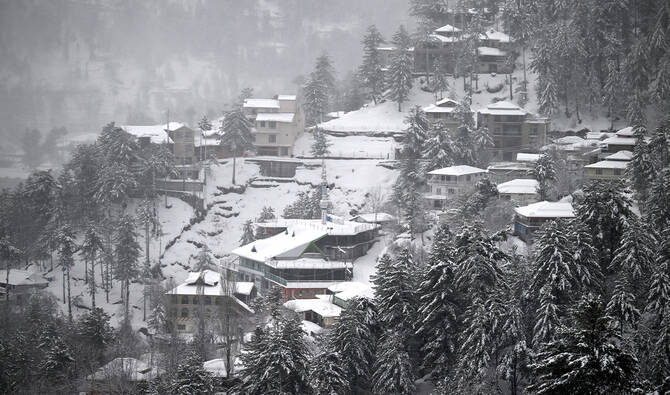
ISLAMABAD: Heavy snowfall blanketed parts of northern Pakistan on Tuesday, paralysing daily life, closing major roads and stranding residents in freezing temperatures, officials and locals said, as authorities scrambled to clear highways and warn travelers of hazards.
The fresh spell disrupted travel and power supplies across Gilgit-Baltistan, where temperatures in upper areas plunged below minus 15 degrees Celsius.. Up to six inches of snow fell in districts including Skardu, Astore, Ghanche, Shigar, Kharmang, Hunza, Nagar and Ghizer, blocking key arteries like the Karakoram Highway (KKH), the Ghizer-Shandur Road and Baltistan Road.
Residents reported compounded hardships, particularly for communities recovering from recent disasters. They said roads to upper parts of the district, including Shounter, Dasskharam, Tirshing, Rattu, Gultari, Minimarg and Bobin, were cut off. In Hunza, Nagar, Shigar and Ghanche, slippery roads isolated several localities, with conditions especially dire for earthquake-hit families in Chipurson and flood-affected groups in Ghizer, many still in tents or temporary shelters. Around 200 families had been struggling since the quake, and the snowfall had worsened their plight while hampering relief efforts.
In Diamer district, snowfall since Monday night halted life in upper areas like Tangir, Daril, Thak Babusar and Goharabad, with blocked links raising fears of food shortages amid electricity outages. Travel between Gilgit-Baltistan and the rest of the country remained suspended on sections of the KKH due to slippery conditions from snow and rain. Authorities issued advisories warning of rockfall risks in the Gilgit-Kohistan stretch and urged avoidance of unnecessary trips. In Ghizer, officials said land links to upper Yasin, Phander and Ishkoman were severed, with prolonged power cuts adding to residents’ woes.
Caretaker Chief Minister Justice (retd) Yar Muhammad directed the Gilgit-Baltistan Disaster Management Authority, district administrations and the Communications and Works Department to clear snow from highways and prevent damage from ongoing weather, according to a statement. He called on remote-area residents to avoid travel due to accident risks and instructed departments to deploy all resources to alleviate hardships.
Snow also hit Murree and surrounding hills in Punjab province, where the district administration reopened the GT Road after temporary curbs. A meteorological official said nine inches were recorded at the Murree observatory, with one to two inches in upper hills, and temperatures dropped to minus 3 degrees Celsius. The weather was expected to clear by Wednesday morning, but colder conditions could persist in Murree and nearby cities. A westerly wave affecting upper Pakistan was likely to continue in northern areas until Wednesday. Officials said traffic restrictions were lifted in the afternoon after snowfall eased. Earlier, movement on the GT Road had been limited to locals and visitors with hotel bookings, while the Murree Expressway stayed open. Main roads were cleared, though some link roads remained snow-covered, with clearance ongoing. Officials were deployed on roads, hospitals operated normally with ample medicine, and there were no power breakdowns in the hill station.
In southwestern Balochistan, Quetta valley and nearby areas saw heavy snowfall on Tuesday, with Ziarat and towns in northern and central parts also affected, disrupting daily routines and traffic on highways and inter-provincial routes. Snow started around midnight in Quetta and lasted until noon with pauses, welcomed by residents for ending a dry spell.
Ziarat’s overnight heavy snow, continuing into Tuesday noon, closed the Quetta-Ziarat Road, suspending traffic, district officials said. Snowfall hit Zhob, Muslim Bagh, Qila Abdullah, Chaman, Khojak Pass, Kan Mehtarzai, Khanozai, Toba Kakari, Toba Achakzai, Qila Saifullah, Harnai, Duki, Sanjavi, Mastung, Kalat, Surab, Noshki, Dalbandin and Taftan.The Quetta-Zhob-Dera Ismail Khan highway was impacted by snow and ice, slowing inter-provincial movement.
A senior meteorological official said the ongoing cold wave would persist across much of Pakistan until month’s end, with freezing conditions in northern mountains likely into mid-February amid forecasts of more rain and snow. “The cold wave in the country will continue until February 1, but in Murree, the Galyat region, and other hilly areas, this wave will persist until February 15.”
Pakistan has faced a harsh winter, with heavy snow at hill stations prompting vehicle restrictions and extra personnel for traffic and emergencies, especially in tourist spots like Murree. Authorities urged tourists to skip unnecessary travel during snow, with local teams handling clearance, diversions and emergencies. Tens of thousands visit Pakistan’s north each winter for snowfall, often ignoring disaster warnings. In January 2022, at least 21 people, including children, died in a Murree snowstorm after being trapped in freezing conditions.
Copyright © 2021 Independent Pakistan | All rights reserved