By Staff Reporter
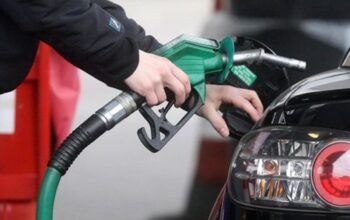
ISLAMABAD: The government cut the retail price of petrol while raising diesel for the second consecutive day, a divergence that has become routine since Islamabad scrapped weekly fuel pricing in favour of daily reviews two months ago.
The Petroleum Division said in a notification that petrol will drop 3.13 rupees a liter to 345.87 rupees, while high-speed diesel will rise 3.74 rupees to 378.05 rupees, effective Saturday through Monday. A day earlier, for Sept. 4 alone, the government had raised both fuels together — petrol by 2.84 rupees and diesel by 2.28 rupees. Measured against the price in place before that Sept. 4 move, petrol is now down a net 0.29 rupees over the two days, while diesel is up a net 6.02 rupees.
The back-to-back adjustments reflect a pricing mechanism Petroleum Minister Ali Pervaiz Malik introduced July 17, when he moved Pakistan from weekly to daily fuel-price reviews. Malik has said the daily rate tracks a seven-day rolling average of international prices, a method he has called consistent with global practice. The shift came as renewed fighting between the US and Iran unsettled oil markets for a second time this year, reviving concerns about supply that first surfaced after the broader conflict began Feb. 28, when Israel and the US struck Iran and Tehran responded by shutting the Strait of Hormuz, the passage that had carried roughly a fifth of the world’s seaborne oil trade.
That conflict has driven extreme swings in Pakistan’s fuel prices this year. Diesel — the fuel that moves the country’s trucking fleet, buses, power plants and large generators — hit a record 520.35 rupees a liter on April 3, after a sharp run-up from prices in the low 300s just weeks earlier. Petrol, more heavily used in private cars, rickshaws and motorbikes, peaked the same day at roughly 458.40 rupees. Both fuels were cut in mid-April as the crisis briefly eased, before climbing back toward current levels over the months since — an uneven path that Pakistani officials have attributed to continued volatility in the Middle East rather than a steady trend in either direction.
Pakistan’s exposure to those swings stems from its heavy reliance on imported energy. The government’s Economic Survey for the 2025-26 fiscal year identifies petroleum products as among the country’s largest import categories, noting that domestic refining meets only part of national demand, with the rest covered by imported crude and refined fuel. That dependence means a rally in global oil prices flows quickly into Pakistan’s import bill, pressuring foreign-currency reserves and adding to inflation.
It also leaves the government with less room to cushion the impact than it once had. Pakistan has previously relied on subsidies and administrative price controls to shield consumers from global crude swings, an approach that came with a fiscal cost: officials often delayed passing higher import costs on to the public, straining oil marketing companies and refiners while widening the budget deficit and adding to public debt.
The risks tied to global supply remain squarely in view. Crude prices continue to hinge on OPEC+ output decisions, the trajectory of the Middle East conflict, sanctions on producer nations, and the security of shipping routes including Hormuz and the Red Sea — any of which could tighten supply and lift freight costs with little warning. Given Pakistan’s reliance on imports, such shocks tend to reach the pump within days.
Copyright © 2021 Independent Pakistan | All rights reserved