By Staff Reporter
ISLAMABAD: Pakistan on Monday hailed a ruling by the Permanent Court of Arbitration (PCA) in The Hague that reaffirmed its right to the “unrestricted use” of waters from the western rivers under the Indus Waters Treaty (IWT), dealing a blow to India’s attempts to control the shared resource in a tense dispute between the nuclear-armed neighbors.
The decision, announced on Friday, follows India’s April move to hold the IWT in abeyance after an attack in occupied Kashmir’s Pahalgam that killed 26 people, an incident New Delhi blamed on Islamabad without evidence. Pakistan called the suspension an “act of war,” noting the 1960 treaty lacks provisions for unilateral action.
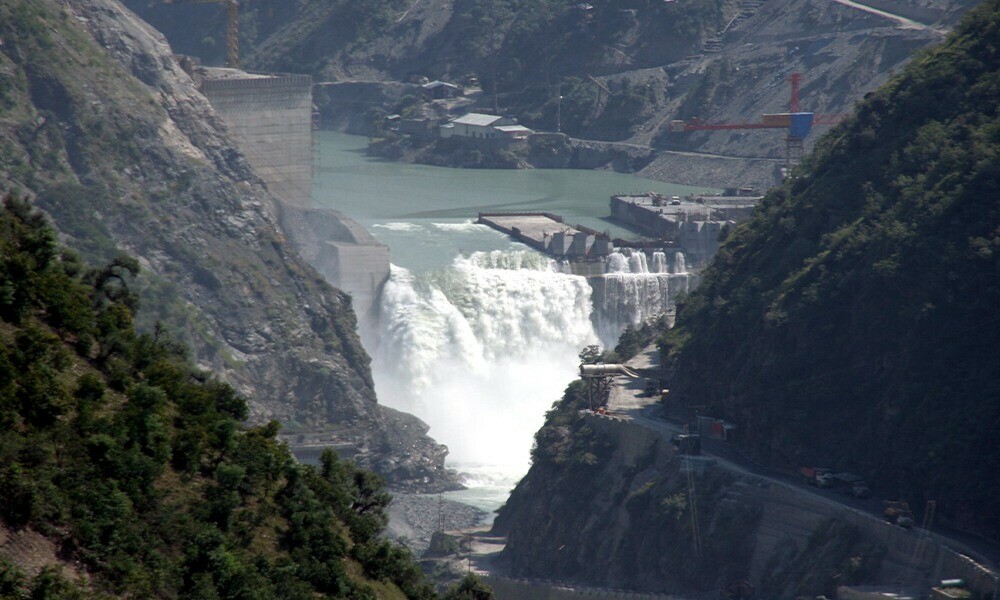
The PCA’s Monday press release detailed the award, stemming from an arbitration Pakistan initiated against India on August 19, 2016, under Article IX and Annexure G of the IWT. The case concerns the treaty’s application to the design of run-of-river hydroelectric plants India may build on the Indus, Jhelum, and Chenab river tributaries.
“The general rule is that India shall ‘let flow’ the waters of the western rivers for Pakistan’s unrestricted use,” the PCA said, adding that exceptions for hydroelectric power must strictly follow treaty requirements, not India’s preferred engineering standards.
The court stressed that notification, objection, and dispute resolution procedures must balance both nations’ rights and obligations, in line with the IWT’s goal of mutual cooperation.
India has not participated in the arbitration and has repeatedly challenged the PCA’s jurisdiction. The court ensured New Delhi was informed of proceedings and given participation opportunities, drawing on records from the Permanent Indus Commission and India’s prior submissions to ascertain its views. Pakistan’s claims were rigorously tested through additional submissions, questioning, and historical evidence.
The “binding and without appeal” award clarified Article 3 and Paragraph 8 of Annexure D, which governs new run-of-river plants. It confirmed that arbitration awards and neutral expert decisions are final and binding, with controlling legal effect on subsequent proceedings.
The PCA underscored the treaty’s role in addressing Pakistan’s vulnerability as the downstream state, aiming to delimit rights and obligations while fostering dispute resolution to avert conflict over shared water resources.
The ruling specified that Paragraphs 8(d), 8(e), and 8(f) of Annexure D impose strict requirements on low-level outlets, gated spillways, and turbine intakes to address Pakistan’s concerns about water flow and sediment release, even if these diverge from engineering best practices. Maximum pondage must be calculated based on a seven-day period at minimum mean discharge, not exceeding twice the required amount for firm power.
India’s dam designs must include only the freeboard needed for safety, per international standards, with early cooperation required to address Pakistan’s concerns. “India bears the burden of establishing that its designs are treaty-compliant,” the PCA said.
The award did not cover the Kishenganga and Ratle hydroelectric projects raised in Pakistan’s request. The PCA will determine next steps after consulting the parties.
Pakistan’s Foreign Office hailed the ruling, noting its significance amid India’s recent actions. “The award carries special significance in the wake of India’s recent announcement to hold the IWT in abeyance, and its earlier decision to boycott the proceedings,” it said, calling the decision an “endorsement of Pakistan’s historical stance.”
Islamabad urged India to resume normal treaty operations and implement the award. “Pakistan remains committed to full implementation of the IWT,” the statement added.
India, which rejected a June PCA supplemental award barring unilateral suspension, has consistently dismissed the court’s authority.
The IWT, brokered by the World Bank, remains a cornerstone of water-sharing between the nuclear-armed neighbors despite strained ties. Pakistan’s earlier warning that suspending its water share could be an “act of war,” citing the 1969 Vienna Convention on the Law of Treaties, underscored the issue’s gravity.
Copyright © 2021 Independent Pakistan | All rights reserved