By Staff Reporter
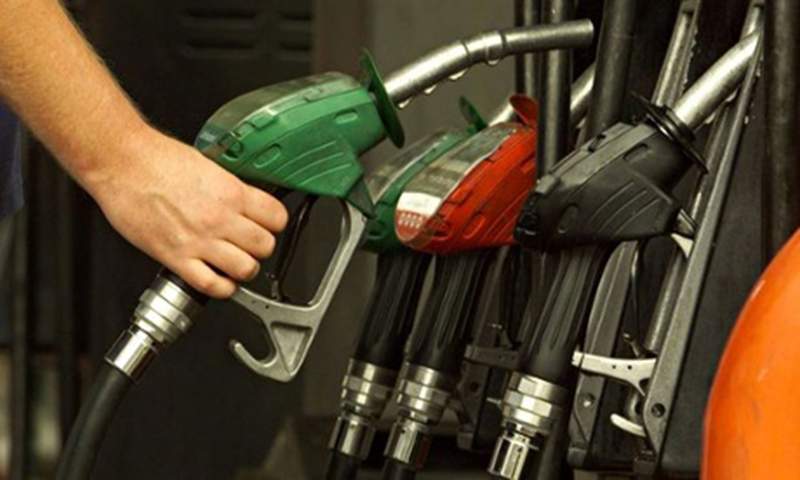
ISLAMABAD: Pakistan is considering moving to daily or twice-weekly reviews of petrol and diesel prices, as the government scrambles to insulate consumers from a renewed spike in global oil prices triggered by the closure of the Strait of Hormuz.
Ali Pervaiz Malik, petroleum minister, said on Monday that existing fuel prices remained justified even after a sharp increase last week, telling a government committee that Pakistani pump prices were still lower than in several regional economies.
The comments came hours after Donald Trump, US president, said Washington would reinstate a naval blockade of Iran and impose a 20 percent fee on cargo passing through the Strait of Hormuz, after Tehran declared the strait closed. The announcement sent oil prices sharply higher, with Brent crude up more than 9 percent to above $83.30 a barrel.
Pakistan, which imports the bulk of its oil, raised petrol prices by Rs13.18 to Rs310.71 a litre and diesel by Rs13.80 to Rs323.30 a litre on July 10, reversing a brief period of relief the previous week when both fuels were cut by roughly Rs2 a litre.
The increase reflected the reimposition of the US blockade and the closure of the strait, through which about a fifth of the world’s seaborne oil trade passes.
Malik was chairing the fourth meeting of a committee established by Shehbaz Sharif, prime minister, to overhaul the way Pakistan sets petroleum prices — an exercise that has taken on new urgency as the conflict between the US and Iran threatens to disrupt energy markets for a prolonged period.
The minister told the meeting that the committee’s task had “assumed greater significance” in light of the renewed closure of the strait and the uncertainty it had introduced into global energy markets, according to a statement issued after the meeting.
Under Pakistan’s current system, fuel prices are typically reviewed every two weeks, a schedule that has periodically triggered shortages when international prices move sharply between reviews. During earlier bouts of turmoil stemming from the Iran-US conflict, the government temporarily shifted to weekly reviews to avert supply disruptions. India, by contrast, adjusts its retail petrol and diesel prices daily.
KPMG, the consultancy advising the committee, presented an analysis of the trade-offs between daily and twice-weekly price reviews, while cautioning that further oil price shocks were likely for as long as the strait remained closed. Officials said proposals on the pricing schedule would be finalised at the committee’s next meeting, along with the sources of financing for the proposed stabilisation fund.
The committee also discussed the establishment of a fund intended to smooth the impact of volatile international prices on domestic consumers. Malik said any such mechanism needed a clearly defined structure to prevent its use being driven by political considerations, adding that the purpose was to provide relief to consumers rather than serve short-term political ends.
Malik cited a study showing that petrol prices in Pakistan remained lower than in Bangladesh, Sri Lanka and Türkiye, and were broadly comparable to those in India. He said the government had proposed changes to its refinery policy aimed at increasing domestic diesel production and reducing reliance on imported diesel, as part of a wider effort to strengthen the country’s energy security.
As an immediate measure, the committee recommended that the Oil and Gas Regulatory Authority publish daily Platts pricing data on its website, giving the public access to the international benchmark used to calculate domestic fuel prices. It also agreed that a recently established Petroleum Price Stabilisation Fund should operate under a fully rules-based framework, with clearly defined mechanisms for funding and disbursements, to guard against arbitrary decision-making. Members separately called for the digitisation of Pakistan’s oil supply chain.
Malik said the committee’s next meeting would be its last, after which its recommendations would be submitted to the prime minister for consideration.
The meeting was attended by Ahad Khan Cheema, minister for economic affairs, Bilal Azhar Kayani, minister of state for finance, Nabeel Awan, chairman of the oil and gas regulator, along with representatives from KPMG, the finance division, Pakistan State Oil, the law ministry and the petroleum division.
The volatility in Islamabad’s pricing deliberations mirrors the broader uncertainty gripping global oil markets. The recent strikes by Iran and the US on Hormuz control have unravelled the truce forged through Pakistan’s months-long diplomacy. Analysts have warned that prices could rise above $150 a barrel if the closure of the strait persists.
Copyright © 2021 Independent Pakistan | All rights reserved