By Staff Reporter
ISLAMABAD: Pakistan has condemned a Houthi missile strike on Riyadh’s main airport that killed at least 12 people and wounded 309, six of them Pakistani nationals, and has pledged to stand by Saudi Arabia under a defence pact the two countries signed with Turkey two months ago.
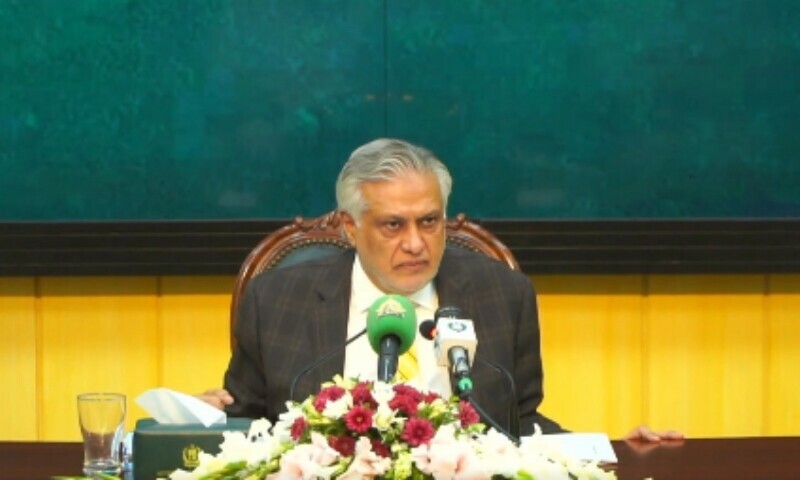
Deputy Prime Minister and Foreign Minister Ishaq Dar said on Sunday that he was “deeply concerned” by the attack on King Khalid International Airport. In a post on X, he said Pakistan condemned it “in the strongest terms” and prayed for the swift recovery of the injured, including the six Pakistanis.
Dar said attacks on civilians and civilian infrastructure were “totally unacceptable”, violated international law and threatened regional peace and security. He said Islamabad was in touch with the Saudi authorities and had directed its embassy in Riyadh to help the injured Pakistanis in any way it could.
Prime Minister Shehbaz Sharif separately called the strike a “heinous attack” and offered condolences to the bereaved. He said Pakistan’s commitment to Saudi Arabia’s sovereignty, territorial integrity and security was “steadfast”, citing the Makkah Joint Defence Agreement and what he called the enduring bonds of brotherhood between the two countries. He added that the embassy in Riyadh was in close contact with the Saudi authorities and assisting the affected families.
The Foreign Office went further, describing the targeting of a civilian airport as “a heinous act of terrorism” and a “flagrant violation of international law”. It said such “brazen and indiscriminate acts of aggression” could not be justified in any circumstances. It called on the international community to take “a firm and unequivocal stand” and urged the Houthis to stop their attacks.
The statement said Pakistan’s commitment to the kingdom was “firm and unshakeable”. It also backed Saudi Arabia’s right to defend its territory, people and cities against all threats.
The Saudi civil aviation authority said a missile struck the airport on Saturday, killing 12 people and wounding 309, some critically. It was the deadliest attack on the kingdom in more than a decade. The dead included four Saudis, two Bangladeshis, and one person each from the United States, Egypt, Jordan, Syria, Palestine and Sudan.
The Saudi-led military coalition blamed the Iran-backed Houthis and called the strike a “full-fledged war crime”. The Houthis have not formally claimed responsibility for the latest attack, though on Sunday they renewed their warning to airlines, airport workers and travellers to avoid Saudi airports and airspace, and said the kingdom bore responsibility for any “failed interceptions”. A senior Houthi official, Nasr al-Din Amer, appeared to acknowledge the attack on X, writing: “We shut down Riyadh international airport.”
Airport operations were suspended, and flights were cancelled or diverted. Schools across Riyadh were told to move to remote learning for a week, and several airlines have halted services to Saudi destinations. Western governments have told their citizens to avoid the area.
It was the third attack on the airport this week. On Thursday, Saudi authorities said a Houthi strike had killed three Saudi nationals, including an airline pilot. The Houthis have repeatedly targeted the facility, as well as other Saudi airports, oil installations and tankers, since a truce in their war with Yemen’s internationally recognised government unravelled in July.
Saudi Arabia has said it will retaliate “firmly”. Mr Trump called the attack “not acceptable” and, asked whether the US might join military operations against the Houthis, said: “We may.” He did not announce a decision, and said he planned to speak to Crown Prince Mohammed bin Salman. US media have reported that Washington is already providing intelligence-sharing and planning assistance for the Saudi-backed offensive. Secretary of State Marco Rubio confirmed that an American was among the dead, and UN Secretary-General António Guterres also condemned the strike.
The fighting inside Yemen has also widened. Government forces launched an offensive on 4 October to retake Houthi-held territory, including the port of Mocha, while the Houthis have tightened their siege of Taiz. The Yemeni government says it has killed at least 1,150 Houthi fighters, but these claims could not be independently verified. Dania Thafer of the Gulf International Forum told Al Jazeera that Riyadh probably still wanted to avoid a long-term escalation, but that the Houthis were making that “very difficult”.
Pakistan’s statements came days after Islamabad, Riyadh and Ankara agreed at an emergency meeting of the Makkah Joint Defence Agreement (MJDA) committee in Riyadh to ensure the “rapid deployment” of agreed military forces and capabilities in Saudi Arabia. The Foreign Office said this would happen under “approved arrangements” and in line with the national laws of the three countries.
The pact was signed on 7 August. It aims to strengthen collective deterrence and lets its signatories treat an attack on one as an attack on all.
Defence Minister Khawaja Asif, a member of Pakistan’s delegation at the meeting, said Pakistan and Turkey have been supporting Saudi operations against the Houthis. In a telephone interview with Geo News, he said both countries had a “presence in theatre”, but that only Saudi troops were involved in combat.
On 18 September, Lieutenant General Ahmed Sharif Chaudhry, director general of Inter-Services Public Relations, said Pakistan would go to “any extent” to defend the kingdom and that its commitment to Saudi security was “unconditional”. Mr Asif has said Pakistan will stand by Saudi Arabia “practically and diplomatically” if the situation escalates.
Islamabad maintains that the alliance is defensive in nature and intended for collective deterrence.
Copyright © 2021 Independent Pakistan | All rights reserved