By Staff Reporter
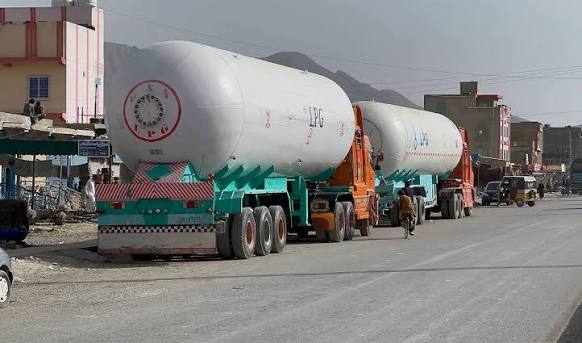
ISLAMABAD: Pakistan received its first bulk shipment of liquefied petroleum gas under a new state-led import system, a 15,000-metric-ton cargo the government called the country’s largest, in an effort to ease a winter shortage that has pushed cylinder prices far above the official cap.
The vessel berthed at Engro Vopak Terminal Ltd. at Port Qasim near Karachi, the Petroleum Division said in a statement on Wednesday. SSGC LPG Ltd., a unit of state-run Sui Southern Gas Co., arranged the cargo through competitive bidding. The government said it came from Abu Dhabi. SSL hasn’t disclosed the price.
The division called it the first “major” import under new LPG guidelines meant to keep the fuel available at affordable rates. Officials said SSL would publish a breakdown of the pricing components on its website within days. They also claimed the shipment had already cut market prices by Rs100 to Rs120 per kilogram. The ministry gave no figures showing whether cylinder prices have fallen, and no timetable for later deliveries.
Petroleum Minister Ali Pervaiz Malik told reporters informally that a second cargo, arranged by Pakistan State Oil Co., is headed to Karachi and should arrive within two days, with others to follow. He said better availability would correct distortions in the market.
One cargo goes only so far. Malik has put annual consumption at about 2.4 million tons, so 15,000 tons covers a little more than two days of national demand. The follow-on shipments matter as much as this one.
The shortage traces to mid-October. Pakistan closed the Gabd-Rimdan and Taftan crossings with Iran on Oct. 17, cutting off an overland supply route. Balochistan’s government cited security concerns and smuggling, while Iran initially pointed to technical issues. Pakistan imports more than half of its LPG, and traders said the price of a 12-kilogram cylinder rose from Rs4,500 ($16) to Rs7,000 within days. Trucks resumed moving through Gabd-Rimdan about a week later, though it’s unclear whether volumes have recovered.
LPG, often called the poor man’s fuel, is the main cooking and heating source for households without reliable piped gas. Supplies were tight even before winter set in. Some sellers charged Rs700 to Rs800 per kilogram, against a November maximum of Rs295 set by the Oil and Gas Regulatory Authority, or Ogra.
Earlier this month the federal cabinet approved new pricing guidelines that put state-owned enterprises at the center of LPG procurement. The government wants four of them to buy on government-to-government and business-to-business terms: PSO, Pakistan LNG Ltd., SSL and Parco-LPG. They have been in talks with suppliers in Saudi Arabia and Oman. The aim is to create competition and flood the market.
The government said formal-sector companies had largely withdrawn from imports because regulations stopped them from recovering their procurement costs.
Under the new rules, Ogra will stop issuing price notifications for local and imported LPG. The state companies will instead post a base price on their websites each month. It will be a free-on-board price linked to the Saudi Aramco contract price, plus premium, freight, insurance, incidental costs and import taxes, based on the previous month’s average landed cost. If the state companies import nothing in a given month, the previous month’s premium, incidentals and taxes will apply to the current month’s contract price. That mirrors how petrol and diesel are priced.
The private sector has pushed back on the Saudi benchmark, arguing that most imports come from other origins, including Iran and Oman. Industry stakeholders have also questioned how much experience state companies have in LPG imports.
Margins for LPG marketing and import companies will rise to a floor of Rs50,000 per ton (about $178) from Rs35,000, an inflation adjustment on the 2016 LPG policy.
The cabinet also ended the quota system that gave influential groups access to domestically produced LPG. Local producers, meaning refineries and exploration and production companies, will auction their output in lots of 5 to 10 tons under Ogra and Petroleum Division supervision. Ten percent will go to state-owned marketers at the producer price, to supply the north, Gilgit-Baltistan and other remote or hilly areas through cylinders and existing air-mix plants. The remaining 90% will be sold through a monthly auction to prequalified bottlers, with a floor price equal to 5% of PSO’s import-parity price. The government said the auction includes safeguards against cartelization and is meant to draw investment in storage, cylinders and distribution.
The gap between the producer price and PSO’s base price will go into a dedicated account that funds a subsidy through the Benazir Income Support Programme. The government plans to supply the “most deserving and vulnerable” at Rs300 to Rs350 per kilogram. Ogra will also hold regular product review meetings, as it does for oil products, to track the import plan and winter stocks. It can instruct the state companies to bring in specific volumes.
Copyright © 2021 Independent Pakistan | All rights reserved