By Staff Reporter
ISLAMABAD: The Foreign Office on Saturday dismissed as “cynical and diversionary” India’s expressions of concern over the treatment of Pakistan’s Shia community, framing the remarks as an attempt to deflect attention from New Delhi’s own record of violence and discrimination against religious minorities.
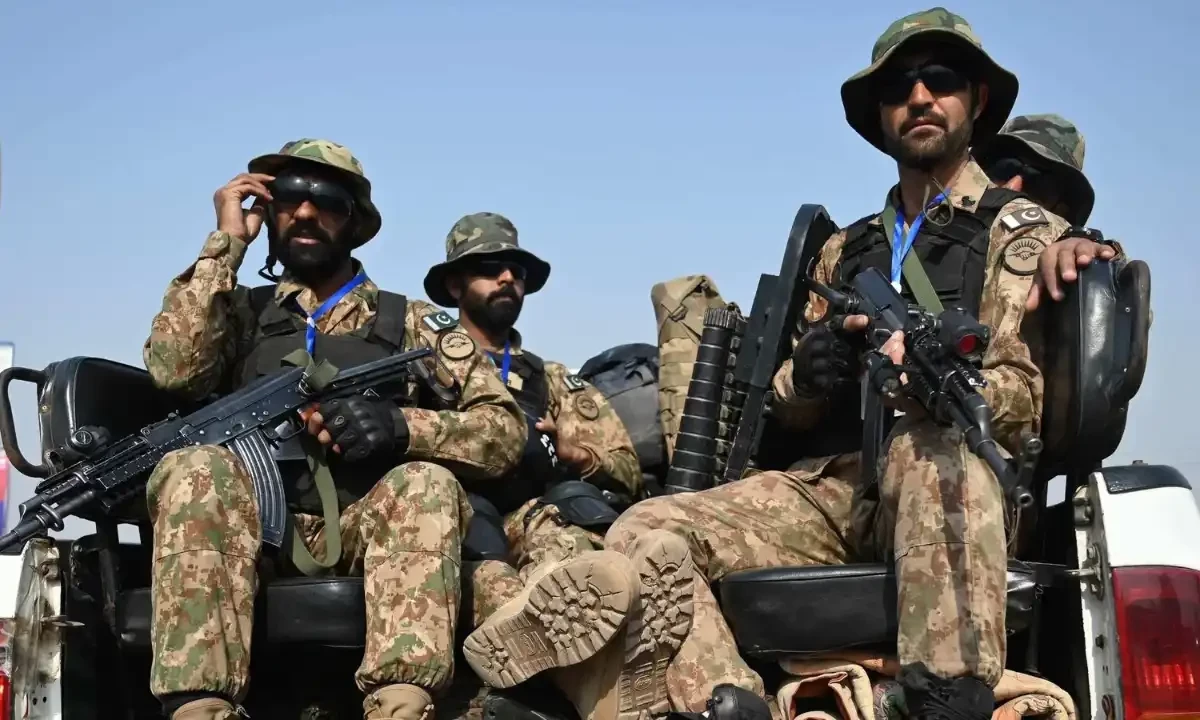
The sharp rejoinder came one day after India’s Ministry of External Affairs responded to reported comments by Pakistan’s Chief of Army Staff and Chief of Defence Forces, Gen. Asim Munir. During a closed-door meeting with Shia clerics in Rawalpindi earlier this month, Munir told participants that those responding violently to events in Iran should take their grievances there, according to an attendee who spoke on the condition of anonymity to discuss a sensitive conversation. The general also described Iran as facing pressure from major powers and insisted that Pakistani territory was not being used against Tehran, the participant said.
The Inter-Services Public Relations, the Pakistani military’s media wing, described the meeting as a discussion of national security and the role of religious scholars, or ulema, in promoting societal harmony. In a statement, the ISPR said Munir had stressed that religious sentiments must not be exploited to incite violence inside Pakistan.
India seized on the reported remarks. On Friday, Ministry of External Affairs spokesman Randhir Jaiswal told reporters, via the Indian news agency ANI, that such statements exemplified Pakistan’s “systemic victimisation of minorities.”
Pakistan’s Foreign Office spokesman Tahir Andrabi responded Saturday with a detailed rebuttal. “Pakistan rejects India’s remarks as cynical and diversionary — an exercise in deflection masquerading as concern,” he said in a statement. India’s comments, he added, could not “mask its own record of the steady normalisation of discrimination and violence against Muslims, Christians, and other marginalised communities — from curbs on worship to mob vigilantism and the targeting of homes and livelihoods.” “These patterns are well-documented,” Andrabi continued.
He cited what he described as an “escalating wave of mob lynchings targeting Muslims,” saying more than 55 Muslims were reportedly lynched in India in 2025 and that more than 19 had been killed by violent mobs since January 2026. Extremist groups had also “unlawfully sought the destruction of 11 mosques,” he said, adding that perpetrators of crimes against Muslims “often act with impunity, enabled by state patronage, and are seldom held to account.”
The statement concluded by urging India to “address these serious and well-documented concerns within its own borders,” protect its Muslim, Christian and other minority communities in line with its constitutional and international obligations, and “refrain from making unfounded and politically motivated statements about others.”
The exchange fits a pattern of escalating rhetorical friction between the two nuclear-armed neighbors. Earlier this week, India’s external affairs minister, S. Jaishankar, reacted angrily to Pakistan’s reported role in indirect peace talks between Iran and the United States. Jaishankar used a derogatory Urdu/Hindi term implying that Pakistan was acting as a “brothel keeper” rather than a legitimate diplomatic intermediary — language widely viewed in South Asia as abusive. Pakistan’s Foreign Office described the rhetoric as “undiplomatic” and reflective of “a deeper sense of frustration.”
Pakistani security officials said the latest Indian criticism forms part of a broader, coordinated effort to undermine Islamabad’s growing diplomatic profile, particularly its mediation in Middle East tensions. They described an Indian disinformation campaign, conducted in collaboration with elements in Afghanistan, aimed at sabotaging Pakistan’s peace efforts between Iran and the United States.
According to officials, the operation involved the creation of ghost accounts on X, formerly Twitter, including handles such as “INN Iran News” and “Iran TV.” Dozens of accounts posing as Iranian users were operated from India and Afghanistan, with Indian accounts shaping the core narrative and Afghan accounts acting as “proliferators” and amplifiers. The campaign spread false allegations that Pakistan was supplying oil to the United States, fabricating anti-Pakistan reactions attributed to Iranian voices to stoke hatred and portray Islamabad as aligned with Western interests against Tehran.
Investigations by experts, the officials said, revealed a structured information-warfare model — “Initiator → Proliferator → Amplifier” — designed to present falsehoods as established facts. The apparent central hub was an India-operated platform referred to as “Times of Iran News,” which continued disseminating the material globally. The goal, they asserted, was to make controversial Pakistan’s role in regional diplomacy, create mistrust within the Muslim world and potentially fuel escalation in the Middle East.
Analysts said the Indian effort is a direct attack on regional peace, diplomacy and stability, not only against Pakistan but also targeting the United States and Iran. By exposing the campaign, they said, Pakistan had once again highlighted its constructive global role while demonstrating that its institutions remain vigilant against attempts to sow division. Security officials warned that the Pakistani public must remain alert to any efforts to erode trust in the government and the military through similar disinformation tactics.
Copyright © 2021 Independent Pakistan | All rights reserved