By Staff Reporter
ISLAMABAD: Pakistan suffered its most violent year in a decade in 2025, with a sharp escalation in terrorist attacks and clashes that claimed more than 3,400 lives, even as a decision to seal its border with Afghanistan in October helped curb cross-border assaults in the year’s final months, according to a report by an independent think tank.
The surge in violence, which has risen steadily since the Taliban regained control in Afghanistan in 2021, was concentrated in the country’s restive northwest and southwest, underscoring persistent threats from militant groups that Islamabad accuses Kabul of harboring. Yet the border shutdown, prompted by deadly clashes, marked a turning point, yielding a 17 percent drop in terrorist attacks in December and a 9 percent decline in November, the report found. “Pakistan recorded a significant drop in cross-border terrorist attacks and violence-linked fatalities after it closed down the border to Afghanistan,” said the Center for Research and Security Studies, a Islamabad-based organization that tracks security trends, in its annual assessment.
The border tensions erupted on the night of Oct. 11, when Afghan Taliban forces and affiliated militants launched unprovoked attacks on Pakistani border posts at Torkham and Chaman, the main crossings between the two nations. The ensuing clashes killed more than 200 Taliban fighters and militants, while 23 Pakistani soldiers died in the fighting. In response, Pakistan carried out precision strikes deep into Afghan territory, targeting militants in Kandahar Province and near Kabul.
Afghanistan requested a temporary 48-hour ceasefire on Oct. 15, and the two sides later agreed to a formal truce on Oct. 19 during talks in Qatar mediated by Doha and Turkey. Despite the late-year respite, which also saw violence-linked fatalities among civilians and security personnel fall by nearly 4 percent in November and 19 percent in December, the overall toll painted a bleak picture. The report documented 3,417 fatalities and 2,134 injuries from 1,272 incidents of violence, including terrorist attacks and counterterrorism operations — a 34 percent increase in violence from 2024, when 2,555 deaths were recorded.“2025 marked another grim year for Pakistan’s security landscape,” the center said, noting that the country has endured escalating violence for five consecutive years, with annual increases of nearly 38 percent in 2021, over 15 percent in 2022, 56 percent in 2023, nearly 67 percent in 2024 and 34 percent last year.
The bloodshed was overwhelmingly focused in Khyber Pakhtunkhwa Province, which borders Afghanistan and has long been a hotbed for insurgents, and in Balochistan, where separatist groups operate. Together, the two provinces accounted for more than 96 percent of all fatalities and nearly 93 percent of violent incidents. Khyber Pakhtunkhwa bore the heaviest burden, with 2,331 deaths — a 44 percent jump from 1,620 in 2024 — representing over 68 percent of the national total and more than 82 percent of the net rise in violence. The province also saw about 63 percent of all incidents, or 795 episodes.
Balochistan recorded 956 fatalities, up 22 percent from 787 the previous year, comprising 28 percent of deaths and over 30 percent of incidents, with 386 events. By contrast, the more populous provinces of Punjab and Sindh experienced far lower levels of strife. Punjab had 25 incidents leading to 40 deaths and 24 injuries, just 1.15 percent of total casualties. Sindh reported 51 incidents, with 56 fatalities and 40 injuries, accounting for 1.73 percent.
The report highlighted worrying signs of violence spreading to calmer areas. Azad Jammu and Kashmir, which saw no fatalities in 2024, recorded 15 deaths. Gilgit-Baltistan, the least affected region, had four fatalities, a fourfold increase from one the year before. Fatalities fell in the Islamabad Capital Territory, from 26 to 15, and in Punjab, from 66 to 40, while Sindh saw a slight rise, from 55 to 56.
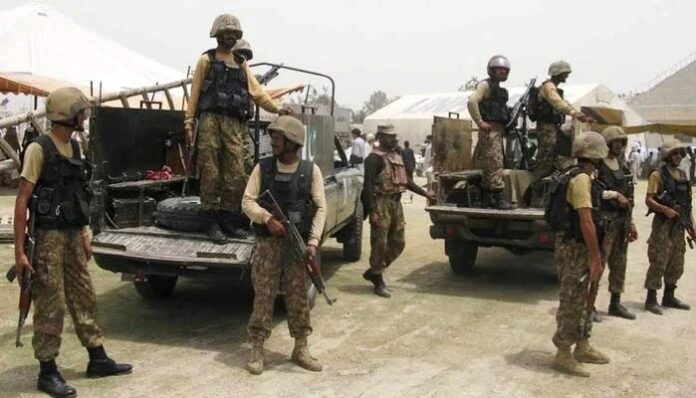
Militants themselves suffered the highest losses, with 2025 proving the deadliest year for them in a decade. Outlaws accounted for over 60 percent of all fatalities, with 2,060 killed in at least 392 security operations — exceeding the combined 1,357 deaths among civilians and security forces, who were slain in around 880 terrorist attacks. Security personnel remained prime targets, with the army and Frontier Corps losing 374 members, including 22 officers, and the police suffering 216 casualties.
The Tehreek-e-Taliban Pakistan claimed the most attacks on forces, followed by the Balochistan Liberation Army, the Baloch Liberation Front and the regional affiliate of the Islamic State. Even so, civilian and security fatalities declined overall from 2024, by 24 percent and 5 percent respectively. Injuries were disproportionately borne by noncombatants, with civilians sustaining 1,187 wounds (56 percent of the total), security officials 793 (37 percent) and outlaws just 154 (7 percent).
Pakistan has long blamed the Afghan Taliban for enabling groups like the Tehreek-e-Taliban Pakistan and the Balochistan Liberation Army to launch attacks from across the border, a charge that Kabul has denied.
Copyright © 2021 Independent Pakistan | All rights reserved