By Staff Reporter
ISLAMABAD: Pakistan has accused the Afghan Taliban of fabricating its account of a day of cross-border fire at Angoor Adda, where officials say a civilian was killed and five others were injured in shelling on the Pakistani side.
The information ministry rejected on Wednesday a statement from Afghanistan’s defence ministry that had cast Islamabad as the aggressor in the fighting on Tuesday, calling it a “fabrication of lies” that “again confirms their deceitful character”.
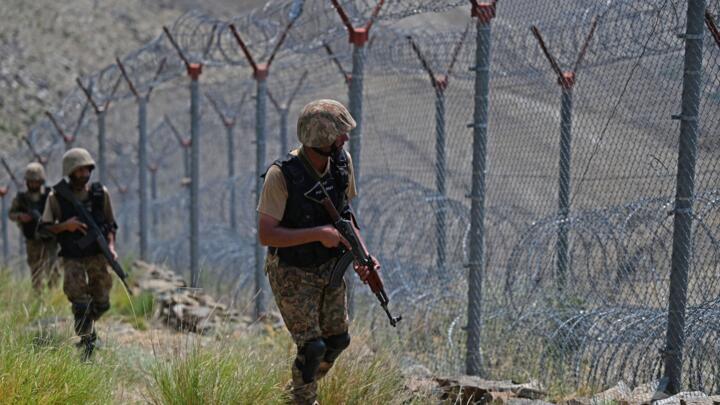
Officials said Afghan forces opened fire from posts inside Afghan territory on Pakistani army positions and residential areas in the Angoor Adda area of Lower South Waziristan. One person was killed, and five members of a family were injured when a mortar round landed on their home.
Afghanistan’s defence ministry offered a different version in a post on X. It said Pakistani forces had, “without any provocation or justification”, launched drones at the Angoor Adda bazaar and the commissioner’s office in Paktika province, carrying out what it described as “four strikes” on the office and nearby security installations. The ministry said Afghan forces then “launched retaliatory strikes against a nearby Pakistani military base and outposts”. Afghan outlet Khaama Press, citing local sources, reported that heavy clashes began after midday in the Angoor Ada area of Barmal district and that residents fled their homes.
Pakistan’s response came through the fact-checking account run by the information ministry. It said Afghan forces had “initiated unprovoked fire and mortar shelling on unarmed civilians on [the] Pakistani side”, describing them as “cowardly” and accusing them of acting on the “pattern and instructions” of India, which it called their “proxy masters”.
The ministry said Pakistan’s security forces had delivered an “immediate, effective and disproportionate” response that silenced the Afghan guns, inflicted heavy casualties and destroyed seven posts. It dismissed the Taliban’s “so-called official spokespersons” as tellers of a “litany of fabricated stories”, aimed mostly at Afghans “suffering under their imposed and non-representative regime”.
Security sources said the army engaged several Afghan border posts, mortar positions and defensive bunkers with small arms and artillery, forcing Taliban fighters to abandon their positions. The sources said troops remained on high alert along the frontier and that Pakistani forces had full control of the area.
Faisal Karim Kundi, the governor of Khyber Pakhtunkhwa, condemned the “unprovoked and blatant aggression by the Afghan Taliban regime”. “Let the Afghan Taliban regime have no illusions: Pakistan will never tolerate attacks on its people or violations of its sovereignty,” he said on X. He saluted the armed forces for their “swift, forceful and decisive response”, and said the province had “sacrificed thousands of lives in the fight against terrorism”.
“Any aggression against Pakistan will be confronted with unwavering resolve,” he said. “Our armed forces have the full backing of the nation to defend every inch of our soil, and no threat or hostile act will weaken our determination to protect Pakistan.”
Angoor Adda is one of the most sensitive points on the frontier. It is a major trade route and one of the main crossings for people travelling between the two countries. Local tribespeople have long borne the cost of any fighting there, in lost trade and disrupted daily life.
The incident is the latest in a conflict that has run for most of the year. Pakistan launched Operation Ghazab lil Haq on the night of 26 February after unprovoked cross-border firing by Afghan Taliban forces. Defence minister Khawaja Asif said Pakistan was in “open war” with Afghanistan after Kabul launched attacks over earlier Pakistani airstrikes. The fighting eased briefly when the two sides agreed a week-long ceasefire before Eidul Fitr on 18 March, after requests from Turkey, Saudi Arabia and Qatar. It has since returned in repeated bursts.
Islamabad says the Taliban administration shelters militants, above all the banned Tehreek-i-Taliban Pakistan, who carry out attacks inside Pakistan. Kabul denies this and calls the militancy Pakistan’s domestic problem. Officials in Islamabad say repeated appeals to dismantle the groups’ sanctuaries have gone unheeded.
In September, Pakistan carried out “calibrated” airstrikes after major attacks in Khyber Pakhtunkhwa, saying more than 28 terrorists were killed. Pakistan said it shot down eight drones that crossed into its airspace near Torkham and Kohat, and carried out “precision aerial and drone strikes” at 10 locations in Afghanistan in response. The Foreign Office delivered a demarche to the Afghan side on 26 September over the 23 September airspace violation.
On 1 October, Pakistan again struck terrorist hideouts in Afghanistan, with the information ministry reporting the deaths of “multiple terrorists”. Around the middle of the month, state media said troops had returned fire in Upper Kurram, firing artillery at the Afghan Taliban’s Topsar post and Shipola base camp along the Ghuzgarhi border. Security sources said several Afghan personnel were reportedly killed and that Shipola was completely destroyed.
Diplomacy has made little headway. A Qatari-mediated ceasefire ended the worst of the fighting in October last year, but several rounds of talks in Turkey in November failed to produce a lasting deal. The Foreign Office said in mid-October that talks with Kabul could not be unconditional, while rejecting suggestions that Islamabad was unwilling to engage. It said it would welcome sincere efforts by friendly countries to help resolve the dispute. At talks in Urumqi, China, in April, Pakistan put three core demands to the Taliban. It wants Kabul to formally declare the Tehreek-e-Taliban Pakistan a terrorist organisation, dismantle its infrastructure and provide verifiable proof that it has done so. Sources say Pakistan’s negotiating position has hardened as security concerns persist.
Copyright © 2021 Independent Pakistan | All rights reserved