By Staff Reporter
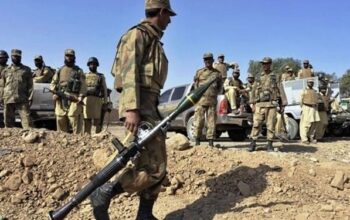
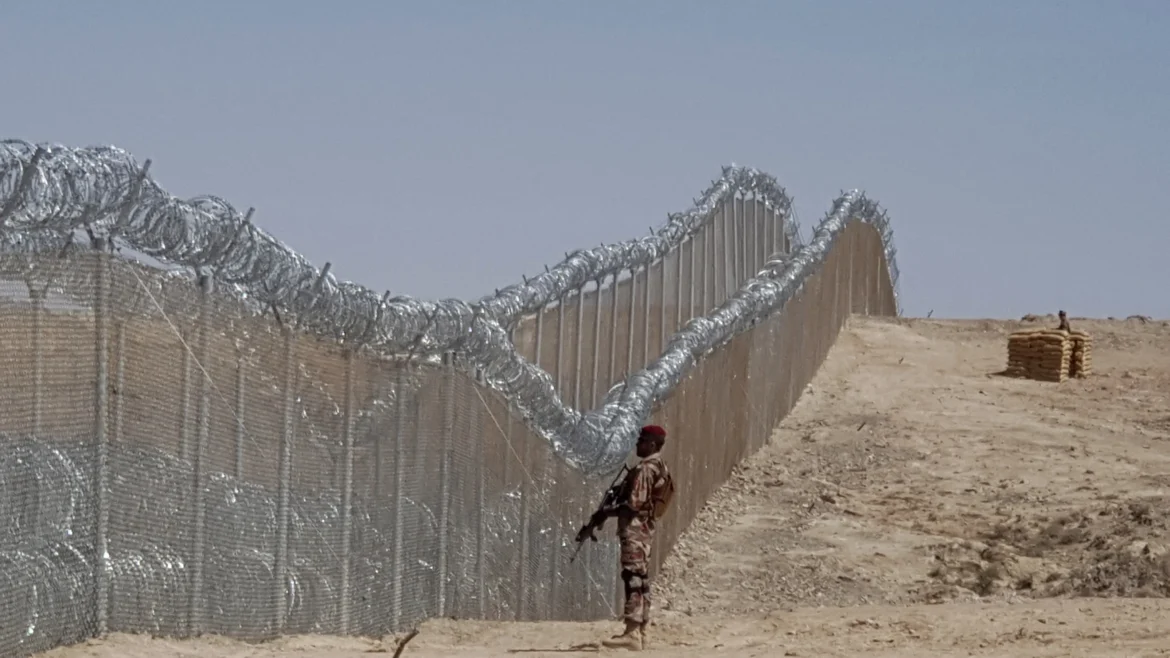
ISLAMABAD: Pakistan’s air defence systems shot down eight drones launched from Afghanistan early on Wednesday, four of them near the Torkham border crossing and four in the mountains around Kohat, as the military accused the Taliban administration in Kabul of a “cowardly attempt” to strike civilian areas.
Security sources described the interceptions as the work of “active and vigilant” air defence systems, crediting the Pakistan Army and the Pakistan Air Force with professionally thwarting the incursion. They characterised the attempt as further evidence of a s direct support by the Taliban administration for militant groups operating out of Afghan territory.
Separately, the security forces had also foiled an attempted infiltration overnight by fighters from Fitna al-Khawarij — the label Pakistani officials increasingly use for Tehreek-e-Taliban Pakistan (TTP) militants — attempting to cross from Afghanistan into the Kurram sector. In response to provocative firing, Pakistani forces reportedly struck several outposts and hideouts linked to the Afghan Taliban in the same area.
The drone incursions come only two days after Pakistan carried out “calibrated” airstrikes against militant hideouts and safe havens along the border, in direct response to a string of recent attacks in Khyber Pakhtunkhwa.
The information ministry said on Monday that the strikes had killed more than two dozen militants, with initial figures put at 28 after Pakistani jets hit suspected hideouts and a facility allegedly used to train suicide bombers. Pakistan said three targets were destroyed, along with stockpiles of weapons and ammunition.
The airstrikes followed a well-planned intelligence-based ground operation on 20 September against militants in Kohat and Hangu districts, in which officials said nine terrorists were killed. That same day, a separate exchange of fire between a security convoy and armed combatants in Hangu left two officers and four other personnel dead; eight militants were reported killed in the clash.
The renewed escalation was triggered by an attack the previous Friday on the old Police Lines compound in Kohat, in which a bombing and subsequent gun rampage killed at least 23 people — among them at least 15 police officers — and injured close to 100 others. Eight attackers were killed during an overnight clearance operation to secure the site. A group calling itself Ittihad-ul-Mujahideen Pakistan, reportedly led by Kabul-based commander Hafiz Gul Bahadur, later claimed responsibility for the assault.
A pattern of cross-border drone incidents
Wednesday’s interceptions extend a run of similar incidents stretching back several months. In July, security forces said they shot down four “rudimentary” drones launched into Balochistan; two further drones were intercepted in June in the districts of Qila Abdullah and Chagai. Pakistani officials have consistently described these devices as crude, commercially adapted aircraft rather than sophisticated military hardware — reflecting the fact that Taliban forces do not possess a functioning air force and have instead relied on modified drones to strike border areas.
Islamabad has repeatedly called on the Taliban administration to dismantle TTP sanctuaries on Afghan soil, warning that appeals for action have gone unanswered. Kabul, for its part, has consistently rejected the accusation, insisting that the militancy inside Pakistan is a domestic problem for Islamabad to resolve rather than one rooted in Afghan territory.
The current phase of hostilities dates back to clashes that erupted in October last year, which have killed scores of people on both sides of the border, with the heaviest toll falling on Afghan communities. Pakistan launched Operation Ghazab Lil Haqq — Wrath for the Truth — toward the end of February, after Afghan Taliban forces opened fire on several locations along the frontier, prompting a swift military response.
Fighting escalated further after Afghanistan launched a border offensive, in retaliation for earlier Pakistani airstrikes on militant positions. The two sides agreed to a week-long ceasefire ahead of Eid-ul-Fitr on 18 March, brokered with the involvement of Turkey, Saudi Arabia and Qatar, though the truce did little to resolve the underlying dispute.
In April, Pakistan set out three core demands during peace talks held in Urumqi, in China’s Xinjiang region: that Kabul formally designate the TTP a terrorist organisation, dismantle its infrastructure inside Afghanistan, and provide verifiable proof that action had been taken. Sources close to the negotiations say Islamabad’s position has hardened in the months since, amid continuing security concerns.
Pakistan’s allegations have found strong support in international assessments. A United Nations Security Council monitoring report formally implicated the banned Balochistan Liberation Army alongside groups operating from Afghan territory, pointing to tactical collaboration and shared operational logistics between separatist and militant networks. Reporting from UN member states cited in the assessment suggested BLA militants had trained alongside TTP terrorists at facilities inside Afghanistan.
It was not the first such finding. A UN report in 2023 stated that the TTP had established a new base in Khyber Pakhtunkhwa in the middle of that year, and highlighted close ties both between the TTP and the Afghan Taliban and between the TTP and other groups, including al-Qaeda. Khyber Pakhtunkhwa recorded more than 500 militant attacks last year alone, a 50 percent increase on the year before, underscoring the scale of the security challenge facing Pakistani forces in the province.
Copyright © 2021 Independent Pakistan | All rights reserved