By Staff Reporter
ISLAMABAD: Pakistan on Monday accused India of violating the Indus Waters Treaty by issuing a flood warning through diplomatic channels rather than the treaty’s mandated mechanism, branding the move a “serious violation of international law” as tensions simmer between the nuclear-armed rivals.
The charge came after the Indian High Commission in Islamabad warned on Sunday of high flood levels in the River Tawi in occupied Kashmir, which feeds into Pakistan’s Chenab River. The alert followed India’s April announcement suspending the 1960 treaty after a deadly Kashmir attack it blamed on Pakistan without giving any evidence. Pakistan rejected the claim and demanded an international probe.
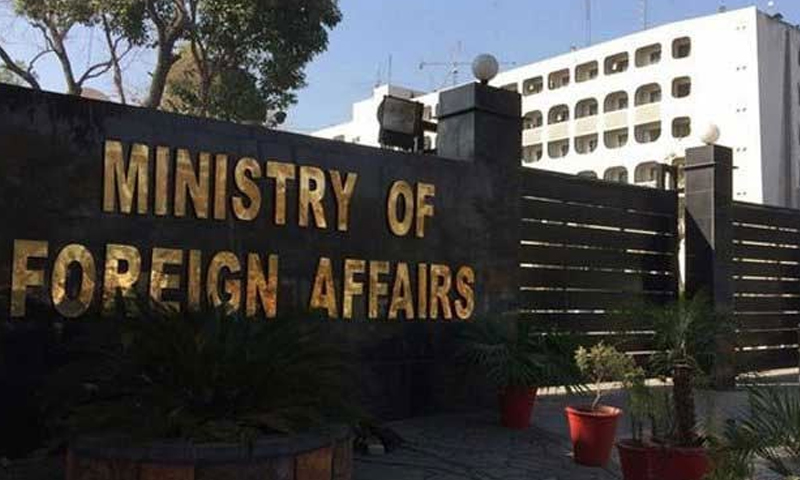
“On 24 August 2025, India communicated flood warnings through diplomatic channels, not via the Indus Waters Commission as required by the treaty,” Pakistan’s Foreign Office said. It warned that India’s move to hold the treaty in abeyance risks “significant negative consequences for peace and stability in South Asia.”
“India is obligated to fully comply with the treaty. Its unilateral suspension is a serious violation of international law and could have significant negative consequences for peace and stability in South Asia,” Foreign Office spokesperson Shahfqat Ali Khan said.
Under Article IV, paragraph 8 of the treaty, parties must share information on extraordinary water discharges or flood flows that may affect the other “as far in advance as practicable.” Pakistan has warned that any attempt to halt or divert its water share would be “an act of war,” a stance it reiterated after India’s April suspension.
The River Tawi flows through Pakistan’s border districts of Gujrat and Sialkot in Punjab, merging with the Chenab, one of the western rivers allocated to Pakistan under the treaty. The World Bank-brokered Indus Waters Treaty grants Pakistan rights to the Indus, Jhelum, and Chenab, while India controls the eastern rivers—Ravi, Beas, and Sutlej—but may use the western rivers for limited purposes without significantly altering their flow.
A letter from the Indian High Commission, seen by AFP, stated: “River and site: Tawi, Jammu. Date/Time: 24 August 2025, 10:00 hrs. Flood data: high flood.” The warning prompted Punjab’s Provincial Disaster Management Authority to issue a flood alert, ordering district officials to activate monitoring and early warning systems.
An Indian government source, speaking anonymously to Reuters, said the warning was issued on “humanitarian grounds” due to heavy rains in Kashmir, not under treaty obligations.
Pakistan is reeling from monsoon rains that have killed nearly 800 people since June 26, with flash floods and landslides devastating swathes of the country. On Saturday, Punjab authorities evacuated thousands along the Sutlej River after it hit a high flood level at Ganda Singh Wala, recording a flow of 129,866 cusecs.
Local media reported Monday that India made a second contact within 24 hours, warning Pakistan of potential flooding in the Sutlej River, diplomatic sources told Geo News. The Indian High Commission shared details with Pakistan’s Foreign Ministry, noting such data exchanges have occurred during past flood events.
The dispute highlights strained ties between the two nations, which have fought three wars since 1947, two over Kashmir. The Indus Waters Treaty, a rare point of cooperation, has endured past conflicts, but India’s suspension and Pakistan’s sharp response signal a deepening divide with potential regional fallout. Pakistan had reacted strongly to India’s suspension of the IWT, warning that any attempt to stop or divert its guaranteed share of waters would be considered “an act of war.”
Copyright © 2021 Independent Pakistan | All rights reserved