By Staff Reporter
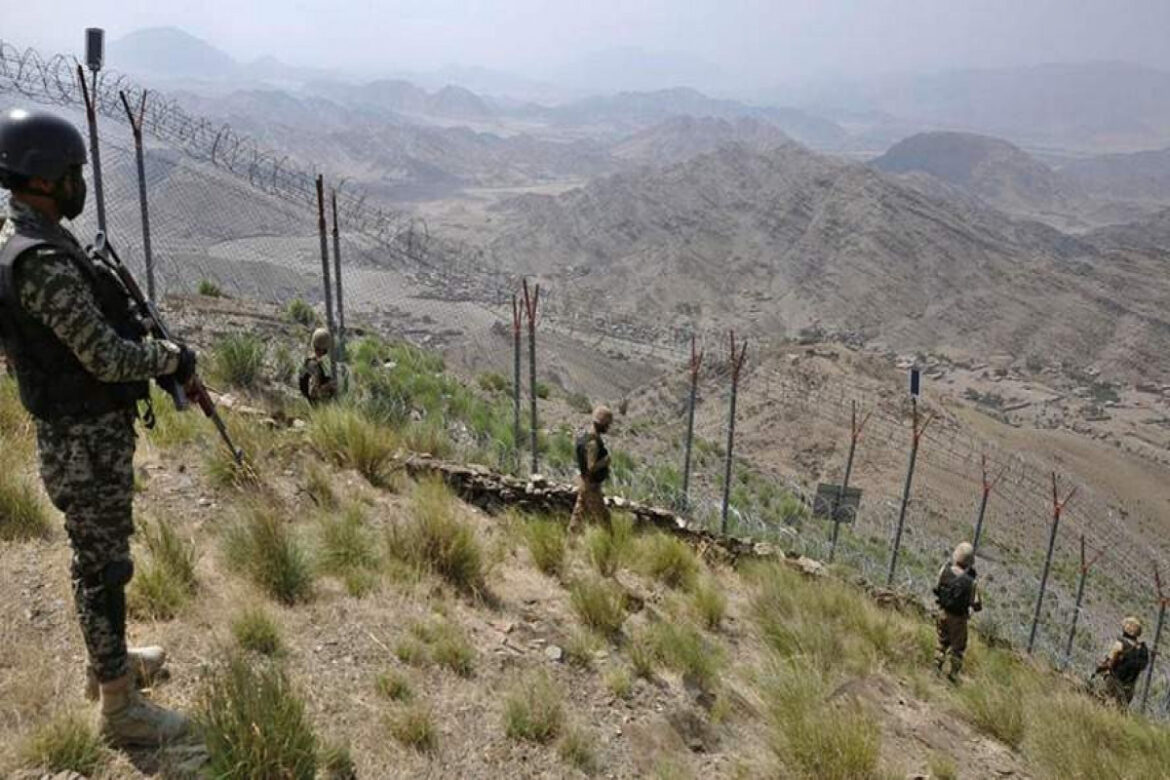
ISLAMABAD: Pakistan carried out airstrikes on militant hideouts along its volatile northwestern border with Afghanistan on Wednesday, killing 26 fighters, the government said, in retaliation for a string of deadly attacks that have claimed the lives of soldiers and police officers across the country’s restive frontier provinces in recent weeks.
The strikes — which Afghan authorities said had killed 13 civilians in the eastern provinces of Khost, Kunar and Paktika — drew fresh denials from Islamabad and deepened one of South Asia’s most combustible bilateral standoffs.
Information Minister Attaullah Tarar confirmed the operation on Wednesday, saying it had been “precise and calibrated” and based on “credible intelligence.” It targeted training centers, ammunition caches and command nodes linked to the Tehreek-e-Taliban Pakistan, the militant group Islamabad refers to by the Arabic pejorative Fitna-al-Khawarij — meaning, roughly, a seditious and heretical rebellion.
“Four targets were completely destroyed, including a training center, a hideout, an ammunition cache and command centers belonging to Fitna-al-Khawarij Commander Aleem Khan Khushali and Commander Akhtar Muhammad Jani Khel,” Tarar said in a post on X, without naming the locations that were struck.
Pakistan did not directly address the Afghan claims of civilian deaths. The government’s official fact-checking account on X accused Afghan Taliban spokesman Zabihullah Mujahid and associated accounts of being “habitual propagandists known for fabricating civilian casualty narratives,” adding that militants routinely embed families within terrorist infrastructure to use them as “collateral insurance” against airstrikes. “Pakistan’s targeting is precise and based on confirmed intelligence,” the post said.
The Afghan Taliban denied that characterization and accused Islamabad of violating Afghan sovereignty — a charge Kabul has leveled repeatedly as cross-border strikes have become a recurring feature of the two countries’ deteriorating relationship.
Wednesday’s operation was the culmination of weeks of escalating violence. Tarar cited three specific attacks as having triggered the strikes. The most recent came Tuesday, when militants stormed a Federal Constabulary checkpoint in the Musa Dara area on the outskirts of Peshawar. Security officials said dozens of attackers armed with firearms, grenades and mortar shells overwhelmed the post, killing six paramilitary personnel and abducting three others, while eight were killed in retaliatory fire. On June 2, a vehicle-borne suicide bomber targeted a military post in North Waziristan in what Islamabad said was a foiled attack. And on May 9, a suicide bombing at a police station in Bannu’s Fateh Khel area killed two police officers. All three incidents occurred in Khyber Pakhtunkhwa, the northwestern province that borders Afghanistan and has long been the epicenter of militant violence in Pakistan.
Following the Bannu attack, Islamabad summoned the Afghan chargé d’affaires and lodged a formal diplomatic protest.
The latest strikes come amid a broader counterterrorism campaign that Pakistan has branded “Azm-i-Istehkam” — Resolve for Stability — which Prime Minister’s government says has been sanctioned by the country’s apex national security body. “Our relentless counterterrorism campaign will continue at full pace to wipe out the menace of foreign-sponsored and supported terrorism from the country,” Tarar said.
Pakistan has long accused Kabul of allowing TTP fighters to plan and launch attacks from Afghan soil. The TTP, a separate organization from the Afghan Taliban but ideologically aligned with it, was largely driven out of Pakistani territory following major military offensives a decade ago and reconstituted itself across the border. Islamabad says repeated appeals to the Afghan Taliban government to dismantle those sanctuaries have been ignored. Kabul dismisses the allegations, insisting that militancy in Pakistan is a domestic problem and that cross-border strikes constitute violations of its sovereignty.
The current episode is the latest in a cycle of escalation that has defined relations between the two neighbours since the Taliban returned to power in Afghanistan in 2021. Ties deteriorated sharply in October, when Pakistani strikes on militant targets inside Afghanistan triggered deadly border skirmishes and the closure of key crossing points. A ceasefire brokered by Qatar and Turkey halted the immediate fighting, but hostilities resumed in February, when Pakistan launched what it called Operation Ghazab lil-Haq after what it described as unprovoked fire from across the border. That operation was paused during the Eid al-Fitr holiday in March.
Beijing has attempted to mediate. In April, China hosted representatives of both governments in Urumqi, in the Xinjiang region, for what officials described as initial talks aimed at defusing the standoff. A second round of talks is being planned, according to people familiar with the discussions. A period of relative calm followed the Urumqi meeting — until Wednesday.
Pakistan’s Foreign Office has made clear that any normalization of relations with Kabul depends on credible counterterrorism guarantees, specifically a verifiable commitment that Afghan territory would not be used to plan or execute attacks inside Pakistan. That demand has so far gone unmet, and with each new attack and each new strike, the diplomatic window for de-escalation narrows further.
Copyright © 2021 Independent Pakistan | All rights reserved