By Staff Reporter
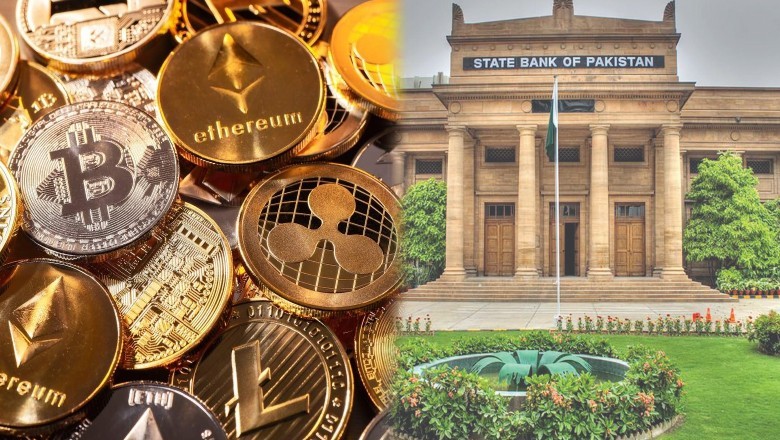
KARACHI: Pakistan has enlisted Japanese blockchain developer Soramitsu to launch a pilot for a central bank digital currency (CBDC), a move to modernise its $400 billion economy, Nikkei Asia reported Tuesday, just weeks after the government passed the Virtual Assets Act 2025 to regulate digital assets and boost financial inclusion.
The collaboration with Soramitsu, a Tokyo-based firm behind Cambodia’s Bakong digital currency, marks the first step in Pakistan’s drive to integrate digital currencies into its financial system, serving its 250 million population. Funded by Japan’s Ministry of Economy, Trade and Industry through its Global South Future-Oriented Co-Creation Project, the pilot will leverage Soramitsu’s CBDC platform to test a digital Pakistani rupee, targeting high cash distribution costs, particularly in rural areas.
“Many transactions in rural areas are cash-based, even for wage payments, and the rate of people with bank accounts is low,” Masato Toriya, an associate professor at Tokyo University of Foreign Studies and Pakistan specialist, told Nikkei Asia.
Soramitsu is also developing offline CBDC capabilities for smartphone transactions without internet access, a feature that could transform financial access in remote regions and position Pakistan as a model for developing economies. The initiative builds on the State Bank of Pakistan’s (SBP) 2021 banking digitization roadmap, with momentum growing in recent months.
Speaking at the Reuters NEXT Asia summit in Singapore last month, SBP Governor Jameel Ahmad confirmed the central bank’s preparations. “We are building up our capacity on the SBP digital currency,” Ahmad said, adding that the pilot would launch soon.
He noted that the Virtual Assets Act would “lay down the foundations for the licensing and regulation” of the virtual assets sector, with the SBP already engaging tech partners. The Virtual Assets Act, approved on July 9, establishes the Pakistan Virtual Asset Regulatory Authority (PVARA), an independent body tasked with licensing and supervising virtual asset entities.
Service providers must obtain licenses, meet incorporation and compliance standards, and adhere to strict reporting obligations. To foster innovation, the Act introduces a regulatory sandbox for testing new technologies under PVARA’s oversight, while “no-action” relief letters may be issued under specific conditions to encourage experimentation with accountability.
In line with Pakistan’s Islamic finance principles, a shariah advisory committee will guide PVARA on the permissibility of virtual asset products, with licensed firms offering Islamic financial services required to comply. A virtual assets appellate tribunal, staffed with experts in law, finance, and technology, will handle appeals against PVARA decisions, ensuring an independent review process. Pakistan’s move aligns with global trends, with China, India, Nigeria, and Gulf states testing CBDCs amid rising interest in blockchain-based payment systems.
Yet, global caution persists, with many central banks hesitant to regulate digital currencies due to financial stability concerns. In Pakistan, recent discussions in Islamabad with bankers, currency dealers, and experts underscored growing government interest in digital assets. The government has furthered its ambitions through the Pakistan Crypto Council (PCC), established in March to drive virtual asset adoption.
The PCC is exploring bitcoin mining with surplus energy, has appointed Binance founder Changpeng Zhao as a strategic adviser, and plans a state-run bitcoin reserve. Talks with US-based crypto firms, including Trump-linked World Liberty Financial, reflect Pakistan’s global outreach.
In May, the SBP clarified that virtual assets were not illegal but advised financial institutions to wait for a formal licensing framework. The Virtual Assets Act addresses this, providing clarity for the sector. Ahmad emphasized the law’s role in enabling responsible innovation while finalizing regulations alongside the CBDC pilot.
Copyright © 2021 Independent Pakistan | All rights reserved