By Staff Reporter
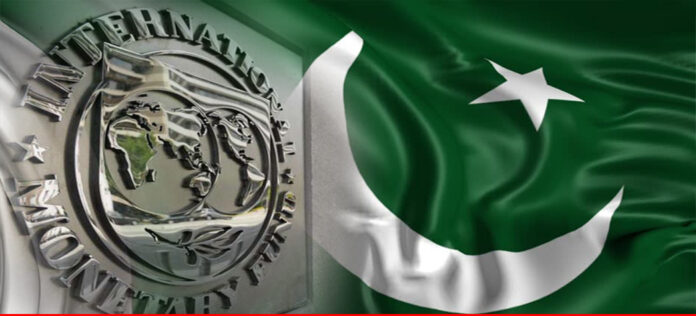
KARACHI: The International Monetary Fund said the immediate risk of a sovereign default in Pakistan has receded, yet the cash-strapped South Asian nation remains mired in a fragile stabilisation mode plagued by anemic growth, towering debt loads and scant relief for its 240 million citizens.
In projections released early Tuesday alongside approval of a fresh $1.2 billion disbursement under its bailout program, the IMF forecast Pakistan’s gross domestic product to expand 3.2% in fiscal 2026, up modestly from 2.6% in the year ended June 2024. That pace barely outstrips population growth, leaving per capita income stuck around $1,677 and underscoring a trajectory of containment rather than robust rebound. Pakistan’s population, pegged at 240.5 million, is still expanding at a brisk clip, 2.55% according to mid-2025 official estimates, or 1.8%-1.9% based on World Bank data. While down from historical highs, the rate poses a formidable hurdle to development amid constrained resources.
The most dramatic shift comes on inflation, where the IMF sees consumer prices cooling sharply to an average 4.5% in fiscal 2025 from 23.4% the prior year, before edging up to 6.3% in 2026. End-period inflation is expected to drop to 3.2% this fiscal year from 12.6% in 2024, then climb to 8.9% next. This disinflation stems from stringent monetary policy, subsidy cuts and demand suppression under the IMF pact, though the anticipated uptick signals enduring price fragility.
Labor markets offer little solace, with unemployment projected to dip only slightly to 7.5% in 2026 from 8.3% in 2024, highlighting the economy’s feeble capacity to generate jobs. Fiscal consolidation is underway in earnest. Government revenue and grants are seen rising to 16.3% of GDP by 2026 from 12.7% in 2024, while spending holds steady around 20% of GDP. That’s set to shrink the budget deficit to -4.0% from -6.8%, with a primary surplus, a key IMF yardstick, climbing to 2.5%.
Even so, public debt stays onerous. Total general government debt, including IMF loans, is forecast to linger at 72%-73% of GDP, while government and guaranteed debt hovers near 76%. Domestic borrowing, comprising almost half of GDP, keeps interest expenses elevated amid lofty local rates. Externally, pressures have abated but risks linger.
The current account is projected near balance, swinging to a 0.5% of GDP surplus this year from a 0.6% deficit in 2024, before tipping back into a minor shortfall in 2026. Foreign reserves are expected to build to $17.8 billion by 2026 from $9.4 billion, boosting import cover to 2.7 months from 1.6, better, but still below safety thresholds.
Foreign direct investment remains tepid at 0.5%-0.6% of GDP, reflecting lingering wariness among investors despite macro gains. Monetary policy stays restrictive, with broad money growth in the 14%-16% range and private credit expansion improving to 15% from 6%, though hampered by high borrowing costs. The six-month Treasury bill rate hit 21.5% in 2024, amplifying the strain of domestic funding. The rupee’s 15.4% real effective appreciation last fiscal year marks a pivot to stability after steep slides, but it threatens export edge in a textile-heavy economy where shipments tallied $17.3 billion. Overall, the IMF’s outlook paints a picture of short-term steadiness won via aggressive fiscal and monetary clamps, but saddled by debt overhang, investment drought and sluggish hiring.
Prime Minister Shehbaz Sharif hailed the payout as “proof that Pakistan is making progress in implementing the necessary steps for economic stability and growth,” according to state broadcaster Radio Pakistan. “The IMF’s expression of satisfaction with the effective implementation of economic reforms and measures in Pakistan is a clear testament to the hard work of Finance Minister Muhammad Aurangzeb and his team,” Sharif said in a statement. He credited Chief of Defence Forces and Chief of Army Staff Field Marshal Syed Asim Munir for “a key role in supporting the implementation of the reform agenda and paving the way for Pakistan’s economic development.” Steering the nation “from the brink of default toward stability and growth was a challenging phase, requiring collective sacrifice from everyone,” Sharif added. “Political parties sacrificed politics, and the nation endured economic hardships to make the impossible possible.”
The premier voiced pride that Pakistan’s reforms and digitization drive had “become a successful case study and an example for the world,” expressing confidence the “dream of Pakistan’s economic development will soon be realised.” While “stability had been achieved, more efforts are needed to move the economy toward growth,” he said, vowing to toil for public prosperity and “completely freeing the country from foreign debt.” Sharif is “confident that time is not far when Pakistan will achieve economic self-sufficiency after getting rid of debt.”
Finance Minister Aurangzeb echoed the optimism, saying the IMF reviews’ completion “reflects the country’s strengthened economic position and resilience, despite challenges posed by recent devastating floods.” In a Finance Division statement, he thanked federal ministries, agencies, provincial governments and others for advancing structural reforms that fueled the success. Aurangzeb noted the IMF’s praise for Islamabad’s handling of the flood crisis without an immediate global aid plea, crediting built-up fiscal and external buffers. “This coordinated effort will help consolidate progress toward economic stability,” he said, calling the $1.3 billion total disbursement a “significant milestone.”
Copyright © 2021 Independent Pakistan | All rights reserved