By Staff Reporter
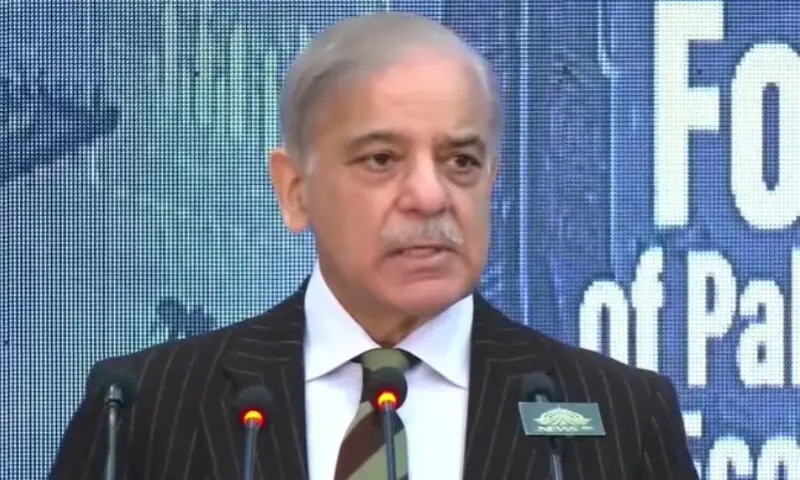
ISLAMABAD: Prime Minister Shehbaz Sharif announced a Rs4.4 cut in electricity tariffs per unit for the industrial sector on Friday, along with other measures aimed at easing costs for businesses and spurring exports amid efforts to sustain economic recovery.
The reductions, including a drop in wheeling charges to less than Rs9 and a cut in the export refinance rate from 7.5% to 4.5%, were unveiled at a ceremony in Islamabad honouring leading exporters and business figures for their contributions to the economy.
“A Rs4.4 reduction is being made in the electricity unit rate for industries,” Sharif told the gathering, which included Deputy Prime Minister and Foreign Minister Ishaq Dar, federal ministers, entrepreneurs and exporters. “If it were in my control, I would reduce it by another Rs10. However, my hands are tied, as you all know well.”
Sharif said the lower wheeling charges would help industries sell power to neighbouring units, while the reduced refinance rate came with the cooperation of Pakistan’s banks to provide immediate relief and accelerate export-led growth. The prime minister personally presented awards to prominent exporters from across the country and declared them “ambassadors at large,” granting them blue passports as a mark of recognition.
At the outset, Sharif praised the business leaders for their “hard work and efficiency for achieving major milestones in their relevant sectors in the past year.” “The billions of rupees you have earned for Pakistan, the entire nation congratulates you.”
Sharif recalled the precarious economic situation in 2023, when the country teetered on the brink of default. “Day and night, there were reports that Pakistan was going to default,” he said, describing it as a “big challenge for the nation.”
He detailed a meeting with International Monetary Fund (IMF) Managing Director Kristalina Georgieva in Paris that year, where she highlighted Pakistan’s inconsistency in previous programmes. “I was told that time was running out and it would be difficult to offer a new structure,” Sharif recalled her saying. “I told her that I give you my word of honour that we will ensure implementation and commit to the agreement in letter and spirit.”
Upon returning to Pakistan, Sharif said Georgieva called him to confirm that IMF teams would engage, provided commitments were honoured. “This is how Pakistan was saved from default,” he added.
Turning to the current outlook, Sharif noted that foreign exchange reserves had doubled in the third quarter, though this included loans from friendly countries. Sharif declared without hesitation that “Pakistan has become a stable economy,” pointing to inflation in single digits and a policy rate at 10.5%.
He contrasted this with earlier conditions, when the policy rate stood at 21.5-22% and inflation was surging. “We faced a lot of difficulties, and our industrialists and businessmen faced these difficulties head-on,” Sharif said. “There was hope that maybe there would come a better time, and Pakistan would be on its way to progress.”
But he cautioned that stability alone was insufficient, citing rising poverty and unemployment, and industries’ struggles to compete due to high costs. “Electricity is expensive, and despite the policy rate coming down, if there is no more reduction, you will be unable to utilise your resources fully to counter the competition.”
He stressed that the government could not dictate private sector decisions and called for sustainable, export-led growth. “We have to grow our economy, and it has to be sustainable, and we must encourage export-led growth. There is no other way.” Sharif advocated support for small and medium-sized enterprises, urging the private sector and government to “hold the hand of SMEs.”
Copyright © 2021 Independent Pakistan | All rights reserved