By Staff Reporter
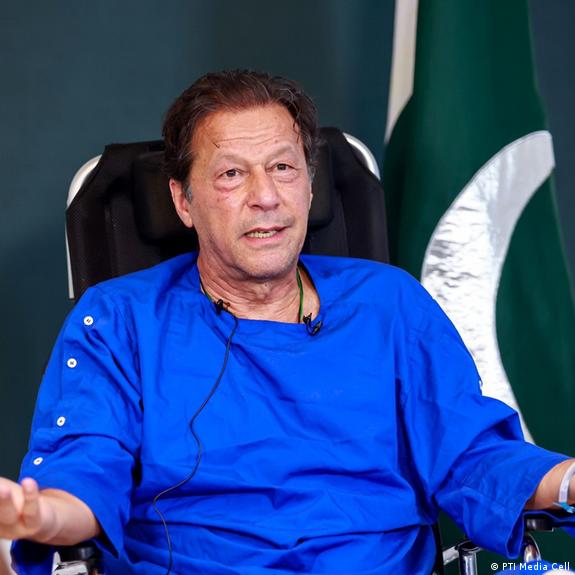
ISLAMABAD: The federal government has asked the Supreme Court to overturn its own ruling ordering the transfer of jailed former prime minister Imran Khan to a private hospital in Islamabad, setting up a fresh legal confrontation just a day after the original order was issued.
Islamabad’s Advocate General, Naveed Hayat Malik, filed the review petition on Wednesday on behalf of the federal capital’s chief commissioner, arguing that Tuesday’s interim order directing Khan’s move to Shifa International Hospital was unlawful, discriminatory, and issued without proper regard for prison regulations.
The petition describes the court’s ruling as suffering from “errors of law floating on the surface of the record” and argues the order was passed “in excess of jurisdiction.” At the heart of the government’s case is a procedural rule it says the court failed to consider: Rule 197 of the Pakistan Prison Rules, 1978, which governs how and when prisoners can be moved to hospital for treatment.
Under that rule, government sanction for a prisoner’s hospital transfer must normally be obtained through the Inspector General of Police. Only in genuine emergencies can a jail superintendent authorise a transfer independently — and even then, he must notify the IG immediately afterwards. The rule also specifies that hospital visits tied to a procedure such as an operation should be timed as closely as possible to that procedure, with the prisoner returned to the prison hospital as soon as practicable.
“Had the court taken note of the above-noted provision of law, the order under review could not have been passed,” the petition states.
The government argues that ordering treatment at a private hospital — based on a medical report that, in its view, disclosed no condition requiring urgent care — risks unravelling the wider prison system. It points to Article 25 of the Constitution, which guarantees equal treatment under the law, warning that granting Khan special arrangements not available to other prisoners invites a wave of similar claims the state would be unable to accommodate.
“If the interim order is not recalled, it will open a floodgate of prisoners seeking similar relief, which under the prevalent law, cannot be granted,” the petition warns.
Procedural objections
Beyond the prison rules argument, the government’s petition raises a string of procedural complaints. It notes that the Islamabad district election commissioner, named as a respondent in Khan’s original petition, was never issued notice before Tuesday’s order — a lapse it says breaches natural justice.
It also invokes Article 10-A of the Constitution, which guarantees the right to a fair trial, arguing that due process was not observed because the underlying criminal appeal had only just been listed, with no hearing notice issued and no leave to appeal granted.
The petition further contends that serious questions about whether Khan’s original petition was even maintainable were raised by government law officers in court, only for the bench to set that question aside and proceed to form a preliminary view — based on a report submitted in a separate matter — that Khan’s health was deteriorating. The government disputes that reading of the report altogether, asserting nothing in it indicated any worsening of his condition.
It also argues the court overstepped its own established caution in medical matters, noting the Supreme Court has previously held that judges should defer to expert opinion on questions requiring specialised or technical knowledge. Rather than ruling on the medical report itself, the petition suggests, “the proper course for the court was to seek advice of the medical expert on the report.”
“There is no gainsaying that Imran Khan is a convict and has to be treated in accordance with law like any other convict,” the petition states.
The government further argues that by granting all four requests sought in Khan’s original petition — hospital transfer, access to personal physicians, family contact, and disclosure of medical records to his lawyers — the court effectively delivered final relief at an interim stage, something it says is inconsistent with settled legal principle. “There is nothing left to adjudicate upon,” the petition argues, adding that such a course “has always been frowned upon by the Supreme Court.”
The review petition has not yet been listed for hearing. Under Order IV, Rule 28 of the Supreme Court Rules, as amended in 2025, it must be placed before the same three-judge bench that issued the original order — headed by Justice Shahid Waheed, alongside Justices Naeem Akhtar Afghan and Ishtiaq Ibrahim. Should Justice Waheed, as the author of the judgment, recuse himself or resign, the case would pass to a bench made up of one or more judges from the original panel. Once a review application is finally disposed of, the rules bar any further review petition on the same matter from being filed.
Additional documents submitted
Separately, Khan’s sister, Dr Uzma Khan, submitted a further set of documents to the Supreme Court, largely consisting of media coverage and related material. These included reporting on Maryam Nawaz’s earlier petition to the Lahore High Court seeking permission to visit her father, Nawaz Sharif, during his detention at Kot Lakhpat Jail; the LHC’s acceptance of a PML-N challenge to travel restrictions on Nawaz Sharif; his eventual departure from Lahore to London by air ambulance; letters from international cricketers calling for improved conditions for Khan; a UN human rights report on his confinement; UK parliamentary exchanges raising concern over his health; and orders from accountability courts relating to his examination by private doctors.
The Supreme Court is due to resume hearing the petitions concerning Khan’s hospital transfer on September 16.
The review petition emerged alongside a coordinated government messaging push. Information Minister Attaullah Tarar and Minister of State for Interior Talal Chaudhry both appeared on television on Wednesday to confirm the government’s intention to challenge the court’s order.
Tarar said medical treatment was every prisoner’s right, but stressed the need to clarify whether such facilities should be extended equally to all prisoners rather than selectively. He insisted the government had sought throughout to keep Khan’s health separate from politics. “We have always tried not to politicise this,” he said, before turning his criticism on the PTI, accusing the party of previously mocking the PML-N over the health of its own leadership when the roles were reversed. “You have never, one single day, heard us say anything regarding [Khan’s] illness,” he said.
Chaudhry echoed the message, saying the government had consistently maintained that none of the PTI’s demands would be met through pressure tactics — what he described as “arm twisting, any threats, dictation, blocking roads, holding rallies or attacking people” — and that decisions on Khan’s treatment could only be made in line with jail regulations and court rulings.
He challenged the PTI to identify a single instance of any PML-N figure, from the prime minister downward, publicising details of Khan’s medical reports, contrasting this with what he characterised as the PTI’s habitual politicisation of health issues. Chaudhry noted the court had explicitly warned against turning the ruling into a political matter, suggesting the bench had anticipated exactly that response. He argued that following the events of November 26 and the May 9 protests, the PTI now had only one strategy left: what he called “the sympathy card.” He also remarked that he believed the medical findings submitted to the court would likely resemble those of any young person examined in Pakistan today — a comment aimed at downplaying the significance of the report — and dismissed speculation that Khan might move from hospital to his properties in Bani Gala or Nathia Gali, saying instead, “He will return to the place he came from.” He closed by urging the PTI not to make Khan’s health part of its political agenda.
Tuesday’s interim ruling had directed the government to transfer Khan to Shifa International Hospital within two days for assessment by a multidisciplinary medical board, while permitting his personal physician and sister to remain involved in his care and instructing authorities to facilitate regular contact with his family.
The court described the measures as an interim arrangement, issued without prejudice to either side’s broader legal arguments, and ordered they be followed “in letter and spirit” by the government and its agencies until the next hearing on September 16. It also required the government to submit Khan’s complete medical record dating back to his arrest — covering tests, prescriptions, medical opinions and treatment details — along with a full account of meetings between Khan and his family or lawyers over the preceding three months, and details of every case in which he has been accused, arrested, tried or convicted.
Family visits were to be permitted weekly, with telephone contact with his sons allowed twice a week. At the same time, the court barred Khan’s family, PTI members and his legal team from disclosing his health condition or medical reports to the media, and prohibited any public gathering at the hospital or political use of information about his health, warning that breaches could result in the withdrawal of facilities granted under the order. The government was also told to arrange adequate security for the duration of his hospital stay.
Hours after the ruling, Law Minister Azam Nazeer Tarar said in a video statement that the government intended to seek “suitable modifications” to the order, including a proposal to shift Khan to a government hospital rather than a private one.
The original order followed a set of petitions filed by the PTI, Khan himself, and his family, seeking his transfer to Shifa International, access to his personal doctors, family and legal counsel, and disclosure of his medical records. It came a day after the superintendent of Adiala Jail, where Khan has been held since August 2023, submitted a report to the court on his condition.
That report stated Khan was receiving adequate healthcare, with medical officers visiting him three times daily to monitor his meals, blood pressure, heart rate and oxygen levels. But an annexure disclosed that Dr Akhtar Ali Bandeshah of the Pakistan Institute of Medical Sciences, who examined Khan on August 1, had recorded complaints of uncontrolled and fluctuating blood pressure, palpitations, headaches and restlessness. Khan attributed some of his symptoms to infrequent meetings with his wife and family, along with a lack of access to newspapers and television. The doctor recommended more frequent family contact, access to reading material, a CT coronary angiography, and an increase in his blood pressure medication, noting the 74-year-old faced a risk of complications.
A further examination on August 10, prompted by complaints of head pressure and palpitations, saw a medical board of PIMS specialists recommend a daily hour-long walk, relaxed prison routine, and access to newspapers, magazines, television and books, along with more frequent contact with his immediate family to help manage his anxiety and blood pressure.
Khan’s health has become an increasingly contentious issue between the government and the PTI in recent months, particularly since an eye condition — right central retinal vein occlusion — came to light in late January, resulting in multiple visits to PIMS for treatment. The two sides have repeatedly traded blame, with the government accusing the PTI of lacking transparency over his care. Jail authorities have said his vision has largely recovered following intervention by senior ophthalmologists.
Copyright © 2021 Independent Pakistan | All rights reserved