By Staff Reporter
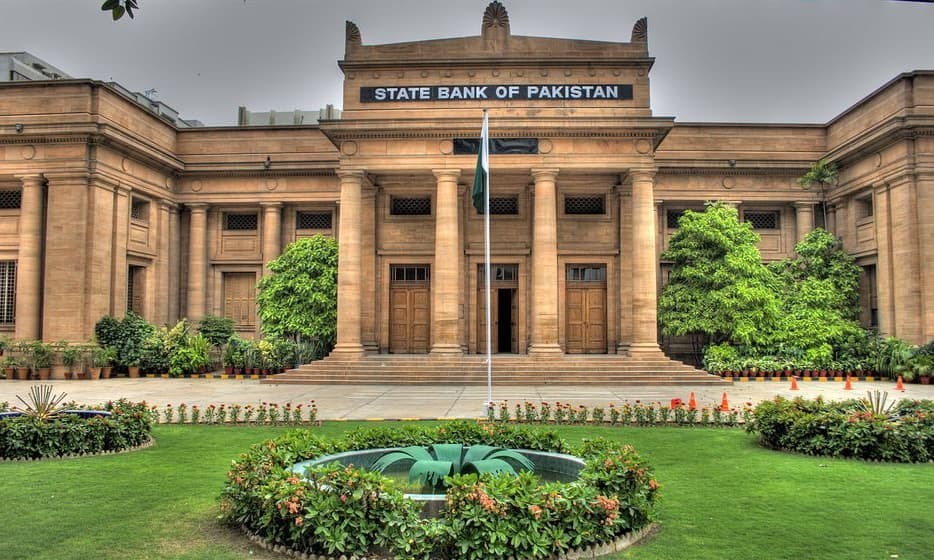
KARACHI: Pakistan’s central bank left its benchmark interest rate unchanged for a third straight meeting, judging that a stable policy stance can still steer inflation back toward its medium-term target even as a widening conflict in the Middle East threatens to push up energy costs and disrupt trade routes.
The State Bank of Pakistan’s Monetary Policy Committee voted seven-to-three to hold the rate at 11.5%, matching the forecasts of most economists surveyed before the decision. The vote was the panel’s sixth of the calendar year and its second since the start of the 2026-27 fiscal year in July.
The committee’s statement pointed to a familiar tension shaping its deliberations: domestic price and growth data are coming in largely as expected, even as an escalating conflict in the Middle East threatens to disrupt the improving external position that has given policymakers room to hold rates rather than raise them further.
Consumer prices rose 11.1% from a year earlier in August, up from 9.2% in July, the central bank said, while core inflation came in slightly below its own projections. The committee characterized the broader run of domestic data as consistent with its expectations, a signal that the inflation pickup was largely anticipated rather than a surprise that might have forced a more aggressive response.
Pakistan’s external accounts, a persistent source of strain in recent years, showed further signs of stabilizing. Remittances from overseas workers and financial inflows helped keep external pressures contained, the SBP said, while economic activity — after slowing in the final quarter of the last fiscal year — has begun picking up again, based on high-frequency indicators the bank tracks.
Even so, the committee flagged rising uncertainty tied to the deteriorating security situation in the Middle East, a risk that has loomed over recent policy meetings as global oil prices remain elevated. Policymakers said they continue to view the current policy rate as sufficient to guide inflation toward the SBP’s target range of 5% to 7% over the medium term, but stopped short of ruling out future adjustments should the external environment worsen further.
Rating Upgrade, Bond Sale Bolster Buffers
The committee cited a string of favorable developments since its last meeting in July. Moody’s Investors Service upgraded Pakistan’s sovereign credit rating to B3 with a stable outlook, a vote of confidence that came as the country returned to international capital markets for the first time in years. Islamabad raised $3 billion through a Eurobond sale, a transaction that, combined with continued foreign-currency purchases by the central bank, helped push reserves above $21 billion.
The improved external picture stood in contrast to souring sentiment closer to home. Inflation expectations among both businesses and consumers rose in September, the SBP said, even as confidence among both groups weakened — a divergence that suggests households and firms are bracing for higher prices without a corresponding improvement in economic outlook.
Large-scale manufacturing offered another note of caution. Output in that sector fell 3.5% in June from a year earlier, the central bank said, capping cumulative growth for the last fiscal year at 5%.
On the fiscal side, the government’s consolidation efforts outpaced budget targets during the last fiscal year, the SBP said. Tax collection by the Federal Board of Revenue has stayed on target in the first two months of the current fiscal year, while the central bank transferred 1.9 trillion rupees in profit to the government, well above the 1.4 trillion rupees budgeted.
The committee also noted a broader shift in posture among global central banks, which it said have turned more cautious as they navigate an increasingly uncertain international economic backdrop.
Food and Energy Prices Drive Inflation
The MPC attributed the recent rise in inflation largely to food prices, pointing to elevated costs for wheat and related products as well as perishable goods. The intensifying conflict in the Middle East has kept energy inflation elevated as well, the committee said, though a change in Pakistan’s pricing mechanism for high-speed diesel helped ease some of that pressure. The adjustment led to a sharp drop in diesel prices in August, partially offsetting the impact of higher global oil costs on domestic inflation.
Positive real interest rates, calculated on a forward-looking basis, should help keep demand-side pressures in check and limit the risk of food and energy price increases spilling over into broader inflation, the committee said. Taking those dynamics together, the SBP left its inflation outlook for the current fiscal year largely unchanged from its previous assessment, still projecting a gradual decline toward the upper end of its 5%-to-7% target range by June 2027 — even as it acknowledged that risks to that forecast have grown.
Among the chief risks the committee identified: volatility in global commodity prices, the scale of upcoming adjustments to electricity and natural gas tariffs, potential supply disruptions, and unpredictable swings in food prices tied to worsening El Niño conditions.
Adverse geopolitical events and weather-related disruptions have both become more frequent in recent years, the committee said, and continue to weigh on the macroeconomic outlook. Policymakers called for maintaining a prudent mix of monetary and fiscal policy alongside continued efforts to build buffers against supply shocks — measures they said, together with timely structural reforms, are needed to strengthen the economy’s resilience, lift productivity and support sustainable growth over the longer term.
A Pattern of Steady Rates
Monday’s decision marks the third straight hold since the SBP raised its policy rate by 100 basis points in April 2026 — its first increase in nearly three years — in response to climbing global energy prices and supply-chain risks. The central bank has since kept the rate unchanged at 11.5% at each subsequent meeting, on June 15, July 27, and now September 14.
The April hike followed a surprise 50-basis-point cut in December 2025 and came after the bank had held rates steady at 10.5% in January and March.
The current rate stands in sharp contrast to the record 22% reached in June 2023, when inflation was running at multi-decade highs. The SBP has since cut the policy rate by a cumulative 1,050 basis points as price pressures eased, before reversing course this year amid the Middle East-driven spike in energy costs.
Analysts Had Expected a Hold
The decision to stand pat aligned with the consensus view among analysts heading into the meeting. In a poll conducted by Topline Securities, 84% of respondents expected the SBP to leave the rate unchanged, while 14% anticipated a 50-basis-point increase and 2% expected a full percentage-point hike.
Ismail Iqbal Securities had forecast a hold, saying it expected the central bank to maintain a balanced approach amid improving external buffers and renewed price pressures. While the firm expected forward inflation to average in the single digits, it warned that intensifying energy costs and regional uncertainty could sustain upside risks, warranting a cautious approach from policymakers.
Topline Securities pointed to a favorable real interest-rate spread and an improving external outlook — bolstered by the recent Eurobond sale — as the main drivers behind its own hold forecast. Market expectations were also shaped by inflation projections that, at oil prices near $95 a barrel, are expected to stay below 9% on average for the fiscal year, implying a real rate spread of more than 250 basis points, in line with historical norms.
Still, the brokerage cautioned that persistently high oil prices and food inflation could force the central bank’s hand at coming meetings, potentially prompting a rate increase of 50 to 100 basis points as soon as October or December.
JS Global struck a similar note, projecting a hold at this meeting but warning that continued geopolitical tension heading into the December quarter would likely tip the central bank toward tightening. The brokerage said that risk has grown increasingly credible, noting that a third of respondents in its most recent survey expect a rate increase by December.
Copyright © 2021 Independent Pakistan | All rights reserved