By Staff Reporter
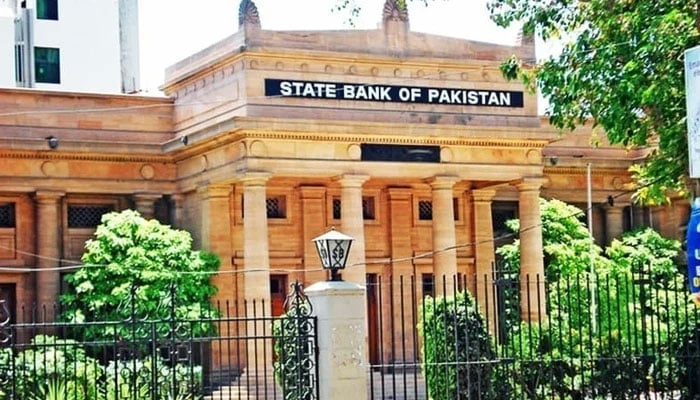
KARACHI The State Bank of Pakistan (SBP) on Thursday raised its benchmark interest rate by 300 basis points to 25-year high of 20 percent to tame runaway inflation and also to win back a stalled $1.2 billion loan tranche from the International Monetary Fund.
The inflation, however, analysts said, is expected to quicken further as the country takes highly inflationary measures to resume the fund’s bailout programme.
They said the consumer price inflation could potentially increase more with fiscal actions related to subsidy removals and exchange rate weakness. Price inflation jumped 31.5 percent in February as food, beverage and transportation prices surged more than 45 percent.
The key rate of the State Bank of Pakistan (SBP) now stands at 20 percent, its highest level since October 1996, with consumer price inflation now at its highest level for almost 50 years.
At its last policy meeting in January the bank raised the rate by 100 bps to 17 percent. It has now put up rates by a total of 1025 bps since January 2022.
The central bank had brought forward its Monetary Policy Committee (MPC) meeting from an original date of March 16, with analysts saying the rate hike was a key requirement to get the IMF funding released. SBP will hold its next monetary policy review on April 4.
“The MPC noted that the recent fiscal adjustments and exchange rate depreciation have led to a significant deterioration in the near term inflation outlook and a further upward drift in inflation expectations, , as reflected in the latest wave of surveys,” the central bank said in a policy statement. “The short-term costs of bringing down inflation are lower than the long-term costs of allowing it to become entrenched.”
The statement said the average inflation this fiscal year ending June is now expected in the range of 27 percent-29 percent against the November projection of 21 percent–23 percent it said. Price gains quickened for a third month in February to 31.55 percent, the most since the 1960’s.
“The Committee expects inflation to rise further in the next few months as the impact of these adjustments unfolds before it begins to fall, albeit at a gradual pace,” the statement said. “In this context the MPC emphasised that anchoring inflation expectations is critical and warrants a strong policy response.”
On the external side, the central bank said despite a substantial reduction in the current account deficit (CAD), vulnerabilities continue to persist.
“In January 2023, the CAD fell to $242 million, the lowest level since March 2021. Cumulatively, the CAD – at $3.8 billion in July-Jan FY23 – is down 67 percent compared to the same period last year. Notwithstanding this improvement, scheduled debt repayments and a decline in financial inflows amid rising global interest rates and domestic uncertainties, continue to exert pressure on FX reserves and the exchange rate.”
The central bank said the foreign currency reserves remain low and concerted efforts are needed to improve the external position. In this regard, conclusion of the ongoing 9th review under the IMF’s EFF will help address near-term external sector challenges. “Furthermore, the MPC stressed on the urgent need for energy conservation measures to alleviate pressure on the external account and meet the import requirements of other sectors.”
Pakistan’s central bank foreign exchange reserves stood at $3.814 billion as of Thursday, the state bank said in a statement, up from the previous week.
“…Scheduled debt repayments and a decline in financial inflows amid rising global interest rates and domestic uncertainties continue to exert pressure on FX reserves and the exchange rate,” it added.
The SBP said any significant fiscal slippages will undermine monetary policy effectiveness in the context of achieving the price stability objective.
It also assessed the impact of further monetary tightening on financial stability and the near-term growth outlook.
“The Committee views that the risks to financial stability remain contained, given that financial institutions are broadly well capitalised. On growth, however, there exists a trade-off. The MPC, nonetheless, reiterated its earlier view that the short-term costs of bringing down inflation are lower than the long-term costs of allowing it to become entrenched.”
“Barring unexpected future shocks, the MPC noted that today’s decision has pushed the real interest rate in positive territory on a forward-looking basis. This will help anchor inflation expectations and steer inflation to the medium-term target of 5-7 percent by end FY25.”
Copyright © 2021 Independent Pakistan | All rights reserved