By Staff Reporter
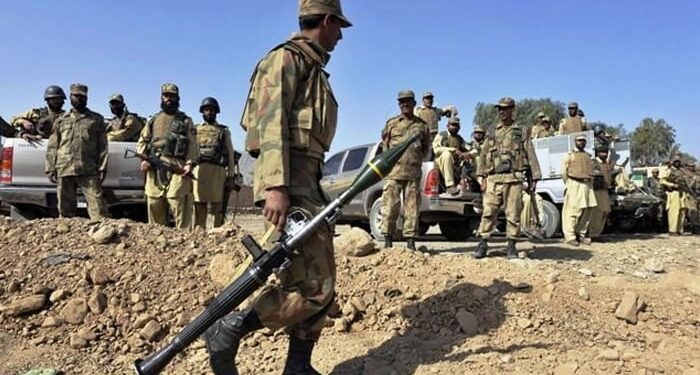
QUETTA: Security forces have killed 75 militants in a widening counterterrorism campaign across the restive southwestern province of Balochistan since July 5, officials said on Friday, as the government presses a large-scale crackdown following a string of separatist attacks that killed dozens of people earlier this month.
The officials, speaking on condition of anonymity, said the toll includes 39 militants killed in Operation Shaban, the military operation launched after gunmen stormed a police post in the Mangi area, and additional militants killed in a series of separate raids elsewhere in the province. On Friday morning, forces repelled an attack on a police station in the Zaidi area of Khuzdar, killing eight more militants, the officials said. They said they had received unconfirmed reports that five to six additional militants were killed in helicopter strikes, though those deaths could not be independently verified.
The operations follow a bloody stretch even by the standards of Balochistan, Pakistan’s largest and least populous province, where separatist militants have fought the state for two decades over control of the region’s mineral wealth. The Pakistani military said this week that 42 people, most of them security personnel, were killed in three coordinated attacks since July 4 — assaults that prompted Islamabad to escalate what officials are now describing as a sustained campaign to root out militant networks in the province’s mountainous interior.
The most serious of those attacks unfolded at the Mangi Dam police checkpoint, according to an account given Wednesday by the Pakistani military’s chief spokesman, Lt. Gen. Ahmed Sharif Chaudhry. Chaudhry said militants his office described as India-backed opened fire on the checkpoint, and that police fighting back killed 15 of the attackers in the initial exchange. Nine police officers were killed in that first engagement, he said, and militants then took additional officers hostage.
Security forces spent the following days tightening a cordon around the militants in the mountains near Ziarat, holding back, Chaudhry said, because captured officers were still being held. “Our children were being held hostage,” he said, explaining the cautious approach. According to Chaudhry, the militants killed 18 more police hostages once they realized the cordon was closing in — bringing the toll from the Mangi attack and its aftermath to 27 police officers dead and 26 militants killed in that operation alone.
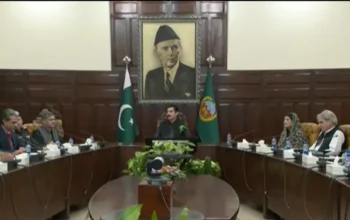
Prime Minister Shehbaz Sharif, addressing a meeting of the provincial Apex Committee on the National Action Plan in Quetta on Thursday, vowed that the military campaign would continue “until the last terrorist in Pakistan is eliminated.” He told the gathering that Pakistan’s civil and military leadership remained united against what he called the “nefarious designs” of militant networks, and said the country would commit all available resources to the fight.
Sharif also renewed accusations that India was behind the recent violence, telling officials that Pakistan’s “eastern neighbor” was responsible for the attacks and that Afghan territory was being used to stage them. He said Pakistan’s adversaries were “unable to digest” the country’s recent diplomatic gains, though he did not elaborate.
A day before Sharif’s remarks, Pakistan’s top military officer, Field Marshal Asim Munir, delivered a similar message at a ceremony at the National Defence University, saying the armed forces were tracking what he described as state-sponsored efforts by hostile intelligence agencies to destabilize the country. Munir said such networks, operating he said under the direction of foreign intelligence services, would not be permitted to undermine Pakistan’s security or economic development.
The violence in Balochistan has coincided with a separate deadly clash roughly 800 miles to the north, in Khyber Pakhtunkhwa province, where police said Friday they killed four militants in a shootout near the Khattak Dam, along the boundary between Karak and Kohat districts.
Karak police said they received intelligence early Friday morning that militants were operating in the area and launched a joint operation with police from neighboring Kohat around 5 a.m. Police spokesman Shaukat Khan said the militants opened fire first and that officers returned fire, resulting in what he called an intense exchange that left four members of a group he identified as the “Commander Zahid Group” dead. Khan said the group has been linked to the killing of several police officers in the region. Police cordoned off the area afterward and opened a search operation, he said.
Interior Minister Mohsin Naqvi praised the operation, crediting Khyber Pakhtunkhwa police with foiling what he called the plans of “Indian-sponsored terrorists” and pledging continued efforts to eliminate militant activity in the province.
Khyber Pakhtunkhwa, which borders Afghanistan, has absorbed the brunt of a rise in militant activity in recent years, with the Pakistani Taliban and allied groups routinely targeting police convoys and checkpoints. According to the Centre for Research and Security Studies’ Annual Security Report 2025, fatalities tied to militant violence in the province rose sharply last year, climbing from 1,620 in 2024 to 2,331 in 2025.
Pakistani officials have blamed the broader surge in militancy in the country’s western regions on fighters operating from Afghan soil, an allegation the Taliban government in Kabul has consistently denied.
Copyright © 2021 Independent Pakistan | All rights reserved