By Staff Reporter
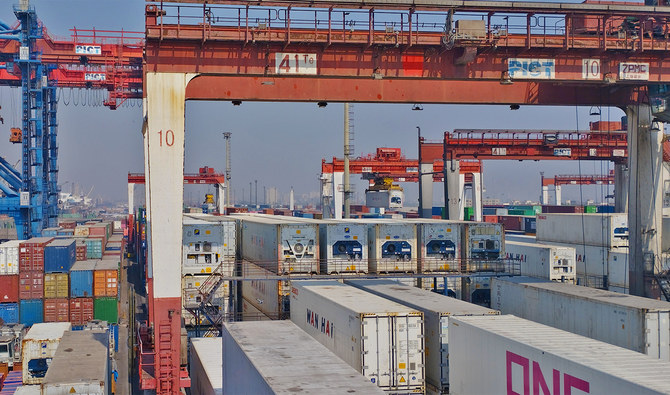
ISLAMABAD: The trade deficit widened by 39 percent to $12.7 billion in the July-October period of fiscal year 2025-26, as exports fell nearly across the board except for textiles and imports surged, led by a sharp rise in petroleum purchases, official data showed on Tuesday.
The Pakistan Bureau of Statistics, in an advance release of external trade statistics, said exports declined 4 percent year-on-year to $10.4 billion in the first four months of FY26, while imports rose 15.5 percent over the same period, pushing the gap to its widest level for the period in recent years. In October alone, exports dropped 4.5 percent year-on-year but rose 14 percent from September to $2.8 billion. Imports in the month jumped 21.65 percent year-on-year and 4.84 percent month-on-month to $6.13 billion.
Food group exports, one of the hardest-hit categories, plunged 35 percent in July-October. Rice exports led the decline, falling 46.4 percent overall, with Basmati rice down 39 percent and IRRI-6/9 varieties down 49.65 percent. Vegetable exports fell 41 percent and tobacco exports dropped 28.5 percent, both still feeling the effects of last year’s floods. Within the food group, only fish and fish preparations (up 12.8 percent) and fruits (up 11.78 percent) posted gains.
Textiles, Pakistan’s largest export sector, provided the only major bright spot, with shipments rising a modest 4 percent in the four-month period. Tents, canvas and tarpaulin recorded the strongest growth at 32.34 percent, followed by knitwear (up 8.23 percent), cotton yarn (up 7.74 percent), non-cotton yarn (up 7.50 percent), bedwear (up 6.94 percent), and readymade garments (up 5.11 percent). Cotton cloth exports, however, fell 12.75 percent, towels declined 0.28 percent, and art silk and synthetic textile slipped 0.98 percent.
Other traditional exports remained weak. Carpets, rugs and mats dropped 12 percent, tanned leather fell 2.45 percent, and leather products edged down 0.34 percent. Sports goods bucked the trend with a 17.74 percent rise, driven by footballs (up 26 percent), though gloves fell 9.18 percent. Footwear exports rose a marginal 1.12 percent.
On the import side, petroleum remained the main driver of the surge. Petroleum crude imports rose 13.57 percent and petroleum products imports climbed 10.47 percent in July-October, while LNG imports fell 29.18 percent. Among textile-related imports, synthetic fibre jumped 37 percent and worn clothing rose 12 percent.
In October specifically, petroleum crude imports soared 79.84 percent year-on-year and were flat (up 0.15 percent) from September. Petroleum product imports increased 38 percent year-on-year and 33.6 percent month-on-month. Palm oil imports rose 19 percent from a year earlier but fell 10 percent from September. Iron and steel scrap imports gained 17 percent year-on-year and 9 percent sequentially.
Completely knocked-down and semi-knocked-down motor vehicle kits saw imports leap 155 percent year-on-year and 12.73 percent month-on-month, while mobile phone imports declined 16 percent year-on-year and 27.5 percent from September.
Month-on-month export categories in October showed mixed results: knitwear rose 3.27 percent, readymade garments climbed 12.46 percent, and bedwear increased 1.04 percent. Rice categories recovered somewhat from September, with IRRI-6/9 up 71 percent and Basmati up 31.3 percent, though both remained deeply negative year-on-year (IRRI-6/9 down 62.5 percent, Basmati down 20.29 percent); knitwear fell 0.80 percent and bedwear rose 7.25 percent on an annual comparison.
The sharply wider deficit adds fresh pressure on Pakistan’s balance of payments at a time when foreign reserves remain under strain despite an IMF programme. Analysts have warned that continued heavy spending on energy and industrial raw materials, combined with sluggish non-textile export growth, will keep the trade gap elevated unless global commodity prices ease or domestic production recovers more strongly.
Copyright © 2021 Independent Pakistan | All rights reserved