By Staff Reporter
ISLAMABAD: The White House said on Tuesday it was examining Iran’s latest proposal to unblock the Strait of Hormuz, even as Tehran declared that the United States was no longer in a position to “dictate” policy to other nations and President Donald Trump publicly described the Islamic Republic as being in a “state of collapse.”
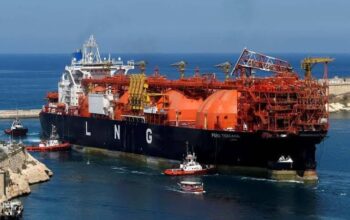
Iran has blockaded the narrow waterway — through which about one-fifth of the world’s traded oil and natural gas normally flows — since the US-Israeli offensive began two months ago, sending shock waves through global energy markets and driving up prices for fuel, fertilizer and food. A fragile ceasefire has halted the fighting, but negotiations to end the war permanently and restore normal shipping have repeatedly stalled.
“The proposal is being discussed,” White House spokeswoman Karoline Leavitt told reporters at a briefing. Trump met Monday with his top national security advisers to review the plan after Iranian officials passed “written messages” to Washington through Pakistani intermediaries outlining Tehran’s red lines on the nuclear program and the strait, according to Iran’s Fars news agency.
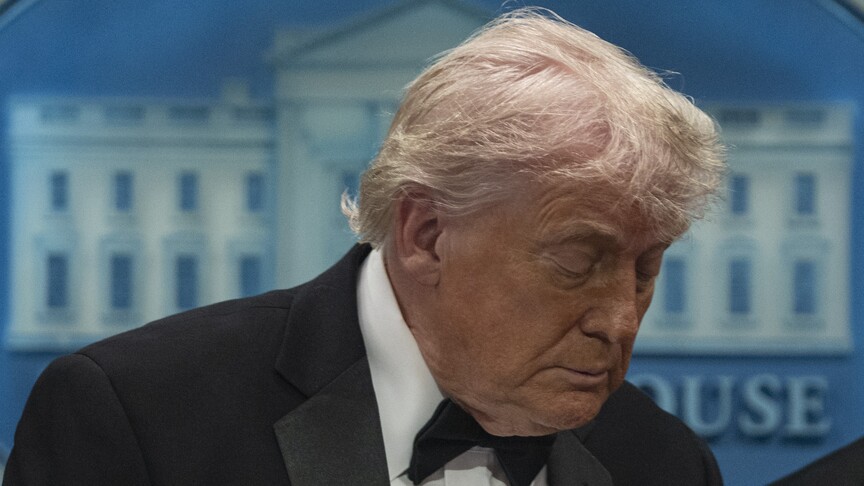
On Tuesday, Trump himself weighed in on Truth Social, saying Iran had informed the United States that it was in a “State of Collapse” and wanted the Hormuz Strait opened “as soon as possible” while it sorted out its leadership situation. “I believe they will be able to do it!” he wrote. It was not immediately clear how or through what channel the message had reached the White House.
A US official told Reuters that Trump remains unhappy with the substance of Iran’s latest proposal. The plan would reportedly have Tehran ease its chokehold on the strait in exchange for Washington lifting its retaliatory naval blockade of Iranian ports, while broader negotiations — including over Iran’s nuclear program — continue in stages. The approach would defer the nuclear dispute, something the Trump administration has repeatedly rejected as a nonstarter.
“The United States is no longer in a position to dictate its policy to independent nations,” Reza Talaei-Nik, a spokesman for Iran’s Defence Ministry, said on state television. Washington would eventually “accept that it must abandon its illegal and irrational demands,” he added.
Secretary of State Marco Rubio offered a somewhat more measured assessment on Fox News, describing the Iranian proposal as “better than what we thought they were going to submit.” But he questioned its sincerity. “They’re very good negotiators,” Rubio said, “and we have to ensure that any deal that is made, any agreement that is made, is one that definitively prevents them from sprinting toward a nuclear weapon at any point.”
Rubio also flatly rejected any Iranian attempt to impose fees or control access to the strait, which he called an international waterway. “They cannot normalise — nor can we tolerate them trying to normalise — a system in which the Iranians decide who gets to use an international waterway, and how much you have to pay them to use it,” he said on Fox’s “America’s Newsroom.”
Iranian Foreign Minister Abbas Araghchi, speaking during a visit to Russia, blamed Washington’s “excessive demands” for the collapse of the first round of direct talks, which Pakistan had hosted. Russian President Vladimir Putin promised Moscow’s full support in ending the conflict. Hopes for a second round of negotiations in Islamabad over the weekend evaporated after Trump called off a planned visit by his envoys. Trump has said that if Iran wants to talk, “they can call us.”
Tehran has insisted it will need ironclad guarantees that neither the United States nor Israel will launch another attack before it can offer security assurances for shipping in the Persian Gulf, Iran’s ambassador to the United Nations said. Ebrahim Azizi, chairman of the national security commission in Iran’s parliament, said Monday that lawmakers were preparing legislation that would place the strait under the authority of Iran’s armed forces and require vessels to pay transit fees in Iranian rials.
The head of the UN maritime agency, Arsenio Dominguez, said there was “no legal basis” for imposing such fees. Trump faces growing domestic pressure to find an off-ramp. Gasoline prices have climbed sharply, the war remains unpopular with many Americans, and midterm elections are only seven months away. Polls show his approval ratings slipping as the economic fallout spreads.
The latest diplomatic flurry comes after weeks of inconclusive maneuvering. Pakistan has tried to revive stalled talks, but both sides remain dug in. Iran has offered to lift its disruption of Hormuz shipping if the United States ends its blockade, yet the nuclear question — which Trump has called a central reason for launching the war — continues to divide them. The 2015 nuclear accord that once curbed Iran’s program collapsed after Trump withdrew the United States from it in his first term. For now, the strait remains closed, oil prices are climbing, and the two sides appear no closer to a permanent settlement. The White House has continued to insist it will not negotiate through the media, while Iranian officials maintain that Washington must accept the new realities created by the conflict.
Copyright © 2021 Independent Pakistan | All rights reserved