By Staff Reporter
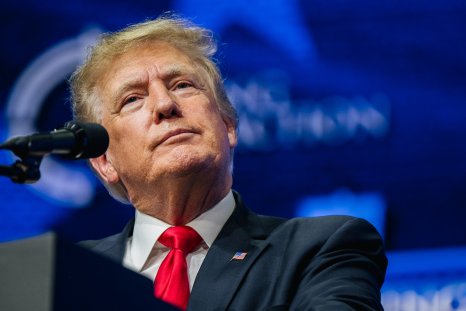
ISLAMABAD: President Donald Trump said on Saturday that a memorandum of understanding aimed at ending the three-month-old war with Iran has been “largely negotiated,” with final details expected to be announced within days and the critical Strait of Hormuz reopened as part of the agreement.
In a series of posts on Truth Social, Trump said the understanding, reached after a day of intensive telephone diplomacy, would be finalised among the United States, Iran, and a coalition of regional powers that helped broker the talks. He described separate conversations with the leaders of Saudi Arabia, the United Arab Emirates, Qatar, Egypt, Jordan, Bahrain, and Turkey, as well as a call that included Pakistani Prime Minister Shehbaz Sharif and Army Chief Field Marshal Syed Asim Munir.
Trump also said he spoke separately with Israeli Prime Minister Benjamin Netanyahu, describing that conversation as having “gone very well.” The announcement came as Pakistan, which has emerged as the primary intermediary, signalled it was prepared to host a second round of direct negotiations “very soon.” Sharif, in a post on X, congratulated Trump on his “extraordinary efforts to pursue peace” and called the day’s multilateral call “very useful and productive.” He added that the discussions had offered “a useful opportunity to exchange views on the current regional situation and how to move the ongoing peace efforts forward to bring lasting peace in the region.”
Turkish President Recep Tayyip Erdoğan, in remarks relayed by the Turkish presidency, welcomed the developments and said Ankara stood ready to provide “every kind of support” during implementation of any deal. Erdoğan described the prospect of an agreement ensuring free passage through the Strait of Hormuz as vital for regional stability and the global economy, adding that “a just peace would have no losers.”
The apparent progress marks the latest turn in a conflict that began Feb. 28 when the United States and Israel carried out wide-ranging strikes on Iran, killing senior officials, including the supreme leader and halting nuclear negotiations for the second time in less than a year. Iran retaliated with attacks on Israel and US-allied targets in the Gulf. A ceasefire took hold April 7 and has largely held, but the economic fallout has been severe: Iran effectively closed the Strait of Hormuz to commercial shipping, and the United States imposed a naval blockade on Iranian ports beginning April 13.
US Central Command reported Saturday that its forces had redirected more than 100 vessels, disabled four, and permitted 26 humanitarian aid ships to pass since the blockade began. Admiral Brad Cooper, the Centcom commander, described the operation as “highly effective” in halting trade into and out of Iranian ports.
The proposed memorandum, according to a US official familiar with the draft, would establish a 60-day framework — renewable by mutual consent — that includes several immediate steps. Iran would agree to clear mines it has placed in the Strait of Hormuz, allow unrestricted shipping with no tolls, and reopen the waterway. In return, the United States would lift its port blockade and issue limited sanctions waivers permitting Iran to resume oil sales. The official described the approach as “relief for performance,” noting that broader sanctions relief and the unfreezing of Iranian assets would come only after verifiable concessions.
Nuclear issues, which have been central to more than two decades of tensions, would be addressed in the coming weeks rather than in the initial memorandum. Iran has repeatedly stated that its current focus is ending the war on all fronts, including the parallel conflict in Lebanon involving its ally Hezbollah, and securing the lifting of sanctions explicitly included in the text. Nuclear questions — including suspension of uranium enrichment and removal of highly enriched uranium stockpiles — would be negotiated during the 60-day period, the US official said. Iran has given verbal commitments through mediators on the scope of those concessions, according to two sources with knowledge of the talks.
Iranian officials struck a more measured tone. Foreign Ministry spokesman Esmaeil Baqaei told state television and the official IRNA news agency that US and Iranian positions had been “converging” over the past week but warned against assuming agreement on core issues. He described the emerging text as a “framework agreement” that would allow further talks within 30 to 60 days toward a final deal. Nuclear matters, he said, were not part of the immediate negotiations. “Our focus at this stage is on ending the war on all fronts, including Lebanon,” Baqaei said, adding that lifting sanctions “has explicitly been included in the text and remains our fixed position.”
Iranian state media, including Fars news agency, which is close to the Revolutionary Guard, pushed back on Trump’s characterisation of the deal, saying his assertion that an agreement was nearly final was “inconsistent with reality.” Fars reported that management of the Strait of Hormuz — including routes, timing, methods of passage, and permits — would remain under Iranian discretion.
The first round of face-to-face talks, hosted by Pakistan six weeks ago and led on the US side by Vice President JD Vance, ended without agreement. Since then, Pakistan’s army chief, Munir, has played a pivotal role, traveling to Tehran earlier this week to meet with Iranian President Masoud Pezeshkian, Foreign Minister Abbas Araghchi, and parliamentary speaker Mohammad Bagher Ghalibaf, Iran’s chief negotiator. A revised proposal drafted by Iran and Pakistan was then submitted to Washington.
The memorandum would also address the war in Lebanon, where a fragile US-brokered ceasefire between Israel and Hezbollah has been in place since shortly after the Iran conflict began. Netanyahu expressed concerns about aspects of the draft during his call with Trump, according to officials on both sides, particularly provisions related to Hezbollah. US officials described the Israeli prime minister’s tone as respectful and said the agreement would not impose a one-sided ceasefire; Israel would retain the right to respond to any rearming or attacks by the group.
The developments come against a backdrop of internal US tensions. Trump has oscillated in recent days between pursuing diplomacy and preparing fresh military strikes. On Friday, anonymous administration officials told US media that new strikes were under consideration. Trump himself posted that he would skip his son Donald Jr.’s wedding to remain in Washington “during this important period of time.” He has repeatedly told interviewers he would only accept a deal that gives the United States “everything we want,” including ironclad guarantees against Iran acquiring a nuclear weapon.
The prospective agreement drew sharp criticism from some Republican hawks. Former secretary of state Mike Pompeo denounced the emerging terms on social media as reminiscent of the 2015 nuclear deal that Trump withdrew from in 2018. White House communications director Steven Cheung responded bluntly, telling Pompeo he had “no idea what the fuck he’s talking about” and should “shut his stupid mouth.”
Whether the momentum holds remains uncertain. US officials acknowledged that “last-minute disputes” could still derail the effort. Iranian parliamentary speaker Ghalibaf warned that if Trump resumes hostilities, Iran’s rebuilt forces would deliver a response “more crushing and more bitter” than at the war’s outset. Yet both sides have indicated the next 48 hours could prove decisive.
Copyright © 2021 Independent Pakistan | All rights reserved