By Staff Reporter
ISLAMABAD: A United Nations Security Council report has warned that Tehreek-i-Taliban Pakistan (TTP) receives preferential treatment among terrorist groups operating from Afghanistan under Taliban rule, raising fears among member states that the militant outfit could evolve into an extra-regional threat.
The alert came in the 37th report of the U.N. Security Council’s Analytical Support and Sanctions Monitoring Team, which covered the period from July to December 2025. “In Afghanistan, the de facto authorities continued to provide a permissive environment for a range of terrorist groups, notably Tehreek-i-Taliban Pakistan,” the report stated. It highlighted a stark contrast in the operational freedom granted to the TTP compared with other militant organisations, tying this imbalance directly to a marked worsening in Pakistan’s security landscape. “TTP, however, was accorded greater liberty and support from the de facto authorities, and consequently, TTP attacks against Pakistan increased, amplifying regional tensions,” the report said.
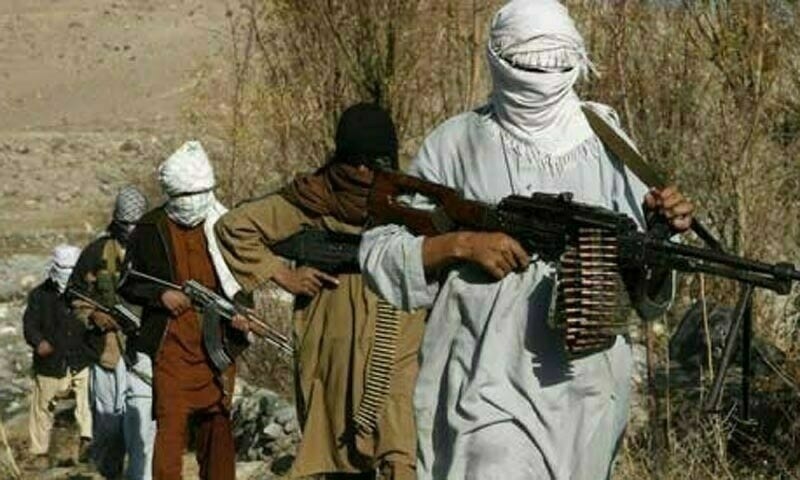
The monitoring team recorded more than 3,500 terrorist attacks attributed to the TTP over the past year, with over 2,100 of those occurring in the second half alone. The report described the TTP as operating as one of the largest terrorist groups in Afghanistan, underscoring its deep-rooted presence across several provinces and its ongoing capacity to orchestrate cross-border strikes. The group maintains a significant footprint in Afghanistan’s eastern and south-eastern border areas, including Kunar, Nangarhar, Khost, Paktika – encompassing the Barmal district – and Paktia provinces.
Reports from various U.N. Security Council Monitoring Team assessments pointed to new or expanded training centers in these regions, frequently under the sway of networks like the Haqqani Network. The TTP has benefited from Taliban tolerance or outright assistance, including access to safe houses such as guesthouses in Kabul for its senior leaders, movement passes, weapons permits and logistical support, according to the monitoring team.
These accommodations have continued despite internal debates within the Taliban, where some factions have regarded the TTP as a potential liability amid frayed ties with Pakistan. Conservative estimates pegged the number of TTP fighters in Afghanistan at around 6,000, with the group drawing recruits from Afghan Taliban ranks and gaining operational boosts through such alliances.
Member states voiced growing alarm not just over the scope of the TTP’s activities but also over its possible trajectory, the report noted. “Some member states expressed concern that TTP may deepen its cooperation with Al Qaeda-aligned groups in order to attack a wider range of targets, potentially resulting in an extra-regional threat,” it said. These worries were framed within a wider web of terrorist collaborations in Afghanistan, where Al Qaeda “acted as a service provider and multiplier for other terrorist groups in Afghanistan in terms of training and advice, principally to TTP,” according to the report.
Fears among member states centered on the possibility that tighter ties could foster more formalized alliances, shared planning and broader access to fighters and resources, thereby extending potential targets beyond Pakistan.
Although the report stopped short of claiming the TTP was presently conducting attacks outside the region, it captured mounting international unease that the permissive setting in Afghanistan under Taliban control could enable the group – bolstered by Al Qaeda – to develop capabilities and aims stretching past South Asia. The report further cautioned about shifts in Al Qaeda’s regional affiliate.
“There were concerns that AQIS was increasingly focused on external operations. Such operations would likely be unclaimed or deniable operations, perhaps as part of the umbrella group Ittihad-ul-Mujahideen Pakistan (not listed), which declared itself in April, so as not to create difficulties for the Taliban as hosts of AQIS,” it stated. Outlining the presence of Al Qaeda in the Indian Subcontinent (AQIS), the report said: “Al Qaeda in the Indian Subcontinent (AQIS) remained active in south-eastern Afghanistan, where the Haqqani Network exerts considerable influence. Osama Mahmoud, the ’emir’ of AQIS, and Yahya Ghauri, his deputy, were reported to be in Kabul, with the media cell of AQIS based in Herat.”
On Islamic State in Iraq and the Levant-Khorasan (ISIL-K), the report observed that the group stayed resilient throughout 2025 despite intense counterterrorism efforts and setbacks. “Islamic State in Iraq and the Levant-Khorasan was under sustained counterterrorism pressure, but it retained a potent capability, coupled with intent to conduct external operations,” it said.
The monitoring team detailed significant losses for ISIL-K stemming from security operations by regional states and ongoing military actions by the Taliban within Afghanistan. These pressures curtailed the total number of attacks but failed to erode the group’s core operational infrastructure or its regenerative power.
ISIL-K “was active mainly in northern Afghanistan, particularly Badakhshan, and areas close to the Pakistani border,” where it sustained cell networks to mount regional threats and possibly operations farther afield, the report added. Even under duress, the outfit preserved “significant operational and combat capability and the ability to rapidly replace fighters, including through online recruitment,” according to the assessment.
The anti-ISIL-K drive also prompted the group to pursue partnerships with other armed factions throughout Afghanistan as it adjusted to changing security dynamics. The monitoring team highlighted ISIL-K’s persistent push to broaden its influence via technology, noting that both ISIL and Al Qaeda “continued their efforts to build cybercapabilities,” a development viewed by member states as bolstering propaganda, recruitment and attack coordination. The team’s evaluation of the group’s robust recruitment channels and growing cyber prowess in 2025 suggested contributing elements to its capacity for orchestrating incidents like the Feb. 6 gun-and-bomb assault on a Shia mosque on the outskirts of Islamabad.
The report also flagged escalating concerns over militant crossovers, with member states reporting that the Balochistan Liberation Army worked alongside the TTP and ISIL-K “through shared training camps and resources, coordinating attacks and meetings between commanders.” Terrorism represents the gravest challenge confronting the Taliban, the report asserted. It dismissed the Taliban’s claims that terrorist groups lack any presence in Afghanistan and do not launch operations from its soil as lacking credibility.
A broad array of member states have repeatedly documented the existence of Islamic State in Iraq and the Levant-Khorasan (ISIL-K), Tehrik-e Taliban Pakistan (TTP), Al-Qaida, the Eastern Turkistan Islamic Movement and other entities within the country, the report said. It emphasized that TTP strikes against Pakistan originating from Afghan territory pose a particularly acute issue, triggering cross-border military clashes, fatalities and economic fallout from border closures between Afghanistan and Pakistan. This matter constitutes “the greatest short-term threat” to the Taliban’s stability, according to the report
Copyright © 2021 Independent Pakistan | All rights reserved