By Staff Reporter
ISLAMABAD: Senators on Tuesday lambasted the power regulator’s decision to overhaul contracts for solar energy users, accusing the government of betraying citizens who invested in green power, while the energy minister defended the move as essential to shield the broader public from rising costs.
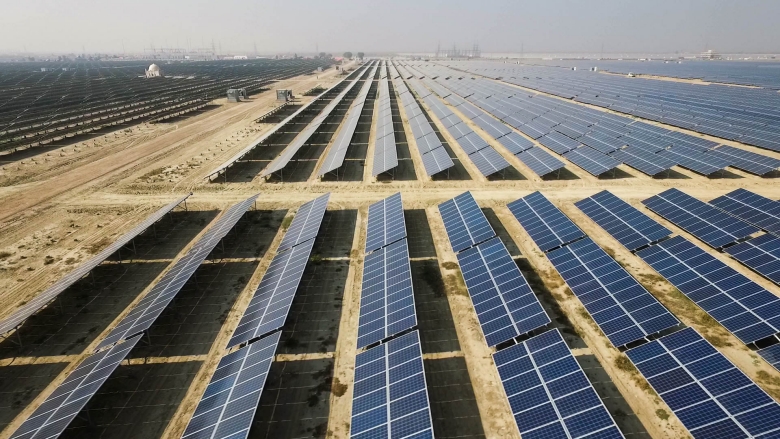
The National Electric Power Regulatory Authority (Nepra) issued a notification on Monday that scrapped the existing net-metering system for all current and future solar consumers, known as prosumers, and replaced it with a net-billing regime. The change aims to curb the growing adoption of solar energy and safeguard the state-owned power grid, which officials describe as costly and inefficient.
In the upper house of parliament, opposition lawmakers decried the shift as a breach of trust that undermines Pakistan’s push toward sustainable energy and deters investment amid economic strains. PTI Senator Syed Ali Zafar, speaking on a motion in the Senate, condemned the withdrawal of net-metering benefits as a severe violation of commitments made to the public. “A promise, once made, must be honoured and when that promise came from the state, it became sacrosanct,” Zafar said, recalling government assurances that citizens investing in solar panels would receive equitable net-metering terms.
He described the policy as not just a financial incentive but a national imperative to cut reliance on imported fuels, reduce energy expenses and advance clean energy goals. Zafar said the government had pledged to resolve issues with independent power producers as more people turned to self-generated solar power, prompting widespread investments across households, businesses and farms. “Families diverted their life savings, sold assets, and even took loans, which they were still repaying, to install solar systems,” he said. Yet the government had abruptly reversed course and sought to nullify its pledges retroactively, Zafar charged, labeling the retrospective withdrawal and imposition as a profound injustice.
He invoked the legal principle of promissory estoppel, which permits enforcement of promises to avert unfairness, and called the decision “the most cruel act of the government” – equivalent to detonating a bomb in the lives of citizens grappling with skyrocketing electricity bills and hardship. “How can the government expect foreign investment when it failed to honour commitments made to its own people?” Zafar asked. He dismissed claims that Nepra operated independently, insisting the regulator followed government instructions, and urged officials to retract the decision to demonstrate sincerity. Failure to do so, he warned, would erode public confidence, harm the investment environment and penalize those who invested in good faith for the nation’s benefit.
PPP Senator Sherry Rehman also criticized the government decision, saying the Nepra ruling defied comprehension and left the middle class wondering why incentives for solar adoption were offered only to be revoked. “How can you do this to your country and citizens who are being affected the most by climate change?” she asked, pinpointing flaws in the power distribution system and questioning the signal sent to investors through repeated tariff alterations. “You have made electricity bills an instrument through which various taxes are being imposed,” Rehman said, contrasting Pakistan’s approach with other nations establishing artificial intelligence centers while local consumers faced escalating bills. She advocated for affordable electricity for manufacturers and households, warning that high taxes and energy costs were driving major industries out of the country.
Jamiat Ulema-i-Islam — Fazl Senator Kamran Murtaza and PTI Senator Zeeshan Khanzada voiced similar objections.
Power Minister Awais Leghari, however, staunchly backed the regulator’s action, asserting it fell squarely within Nepra’s authority and was designed to alleviate pressure on ordinary consumers. “Changing regulations according to the law and the Constitution is a regulator’s job,” Leghari said, refusing to yield on the issue. “This is not policy; there should be clarity on that,” he added. “This is a change in regulations, which was conducted according to the Constitution and Pakistan’s laws.”
He said consultations, including seminars with solar associations, consumers and stakeholders, had occurred, with agreements reached last June. “The Solar Association of Pakistan — whose bread and butter is installing and investing in these systems — conveyed to us that what the government was doing was not just necessary, but without it, public interests could not be saved,” the minister said. The association had cautioned that up to 95 percent of people could face “greater damages and increased burdens” without the change, he added, though it recommended a five- or six-month delay for a smooth transition. “Nepra, a regulator with the responsibility of maintaining its consumers’ interests, was formed to watch consumer interest and protect people from increases in electricity prices,” Leghari said.
Addressing concerns over retroactivity, he insisted the new rules imposed no such effects. “I am proud to say that in this regulation, our regulator did not reverse one clause on these contracts, which used to last seven years,” he said, countering Zafar’s reference to 20-year terms and criticising the previous PTI administration under Imran Khan for soaring power prices. “Under that, Imran Niazi, electricity prices were touching the sky and we are trying to deal with it right now,” Leghari said, clarifying that contracts were limited to seven years and remained untouched until expiration. “Nobody in this country has dared to insert new terms and conditions in the contract. Nepra has not done this either,” he stated.
Of Pakistan’s more than 30 million power consumers, 466,506 have net-metering setups contributing 7,000 megawatts, Leghari said. The remaining 30.04 million – many in apartments, slums or unable to afford solar – would otherwise bear a 200 billion rupee ($718 million) burden from the old system, potentially rising to 550 billion rupees, he warned.
Nothing changes for existing contracts, but future ones will involve purchasing solar-generated power at the grid’s average rate, the minister explained. “These are policies formed by innovative thinking which evolve with time, and these aren’t even policies, they are just regulations,” he said. “This is not the first time regulations have been changed, or rates have been revised.”
Copyright © 2021 Independent Pakistan | All rights reserved