By Staff Reporter
ISLAMABAD: American and Iranian negotiators have reached the outlines of a sweeping 60-day memorandum of understanding that would freeze their three-month-old war, reopen the Strait of Hormuz to unrestricted shipping, and launch direct negotiations over Iran’s nuclear program — but President Trump has yet to give his blessing, and the Gulf itself offered a stark reminder Thursday of how easily the arrangement could unravel.
Even as diplomats in the background were putting finishing touches on the accord, Iranian forces fired on a United States air base in Kuwait and US Central Command struck an Iranian drone control station in the port city of Bandar Abbas — a volley of tit-for-tat exchanges that rattled oil markets, set sirens wailing in northern Israel, and thrust the fragile ceasefire, now entering its eighth week, back to the edge.
Two U.S. officials with direct knowledge of the negotiations, as well as a regional source involved in the mediation effort, confirmed the agreement’s existence to Axios. Iran has not publicly confirmed its acceptance. Trump, briefed on the final terms, told mediators he wanted a few more days to consider them.
“This is an agreement to get everybody to the table,” one of the U.S. officials said. “We will work out the details in the negotiations.”
The memorandum, if signed, would represent the most consequential diplomatic development since the conflict began Feb. 28, when US and Israeli strikes ignited a war that has killed thousands and sent global energy prices surging. A final settlement — one that addresses Trump’s core demand that Iran abandon its nuclear ambitions — would still require months of intensive talks. But the accord would formalize the ceasefire that took effect in early April and establish the architecture for those conversations.
A Deal Taking Shape
US officials said the terms were largely settled as of Tuesday, with both governments still awaiting approval from senior leadership. Iranian negotiators subsequently indicated they had secured the necessary sign-offs and were prepared to sign, according to the U.S. officials. Tehran has not confirmed that account.
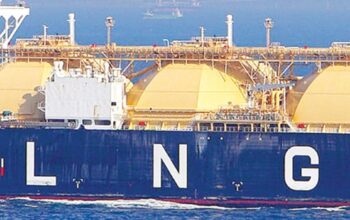
Under the framework’s terms, passage through the Strait of Hormuz — which handled roughly a fifth of the world’s oil and liquefied natural gas traffic before the war — would be declared “unrestricted,” with no tolls and no harassment of vessels. Iran would be required to remove all mines from the strait within 30 days. The existing U.S. naval blockade would be lifted in proportion to the restoration of commercial shipping.
Washington would also issue sanctions waivers to allow Iran to sell oil on the open market. The memorandum would include an Iranian commitment not to pursue a nuclear weapon, and the first items on the negotiating agenda would be the disposal of Iran’s stockpile of highly enriched uranium and the future of its enrichment program. In return, the United States would agree to discuss sanctions relief and the release of billions in frozen Iranian funds.
The accord would also address humanitarian concerns, establishing a mechanism for Iran to begin receiving goods and aid, and it would formally declare an end to the war between Israel and Hezbollah in Lebanon — a matter on which Trump and Israeli Prime Minister Benjamin Netanyahu have had at least one sharply contentious exchange, according to people familiar with the discussions.
US officials were explicit about what they see as Tehran’s incentive. “There are people in their system that understand that it is an opportunity to go in a different direction,” one official said. “We will find out during the 60-day negotiations if that’s the case.”
Officials also stated there would be no secret clauses or side deals on sanctions relief. “The more the Iranians are willing to give the more they will get,” one said.
Trump Pulls Back
The president’s hesitation came hours after he publicly distanced himself from the entire process. At a Cabinet meeting on Wednesday that was open to cameras, Trump dismissed an Iranian state television report describing an unofficial 14-point draft agreement — one that would have restored commercial shipping within a month and placed the strait under joint management by Iran and Oman.
“Nobody’s going to control” the strait, Trump said, his voice hardening. “It’s international waters, and Oman will behave just like everybody else, or we’ll have to blow them up. They understand that, they’ll be fine.”
The threat against Oman — a Gulf state with decades-long military and economic ties to Washington that has served as a back channel for the negotiations — drew no immediate response from the White House or the Omani embassy. Iran, however, expressed solidarity with Muscat. The Iranian Revolutionary Guards separately announced that they had stopped two vessels and permitted 26 others to pass through the strait in the previous 24 hours — a figure that underscores how dramatically traffic has fallen from the prewar daily average of more than 100 ships.
Trump added that he was not yet satisfied with the state of negotiations and said the United States was not discussing easing sanctions — one of Tehran’s central demands. “If they won’t” comply, he said, turning toward Defense Secretary Pete Hegseth, “then the man on my left is going to finish them off.”
The White House called the Iranian state media report of a draft deal a “complete fabrication.” Tehran did not respond.
Secretary of State Marco Rubio said at the same Cabinet session that the coming hours and days would determine whether meaningful progress was possible. His bottom line: “Iran’s never going to have a nuclear weapon.”
Drones Over the Gulf
The diplomatic impasse was shadowed by a dangerous Thursday morning in the waters off southern Iran.
US Central Command said American forces shot down five Iranian attack drones that posed a threat near the Strait of Hormuz and struck a ground control station in Bandar Abbas that was preparing to launch a sixth. Iran’s Islamic Revolutionary Guard Corps retaliated, saying it had targeted the US base responsible for the Bandar Abbas strike, and warning that any repeat would be met with “a more decisive response.”
Kuwaiti military forces subsequently intercepted a ballistic missile aimed at their territory. Kuwait — which hosts a large American military installation — condemned the attack and demanded that Iran immediately halt what it called a serious escalation. The IRGC did not specify which base it had targeted; Kuwait did not identify the origin of the strike.
A US official, speaking on condition of anonymity to discuss military operations candidly, described the initial American actions as “measured, purely defensive and intended to maintain the ceasefire.” US Central Command called the Iranian ballistic missile strike “an egregious ceasefire violation.”
Oil prices rebounded sharply on the news. US crude futures gained roughly 3 percent after having fallen more than 5 percent on Wednesday, when hopes for a diplomatic breakthrough had briefly buoyed markets.
The escalation was the second flare-up of the week, coinciding with the Eid al-Adha holiday across the Muslim world. In Lebanon, Israel said it had struck Hezbollah infrastructure in Tyre and carried out an attack in Beirut. The Lebanese army reported one of its soldiers killed. Air-raid sirens sounded in northern Israel.
Iran’s Demands and Domestic Pressures
Iranian officials offered their own reading of the diplomatic landscape on Thursday, with mixed signals on flexibility.
Ali Bagheri Kani, deputy secretary of Iran’s National Security Council, reiterated that Tehran was insisting on the release of Iranian funds as a precondition. Ebrahim Azizi, who chairs the Iranian parliament’s national security committee, said Trump’s rhetoric would not force Iran to yield on its demands to enrich uranium, exercise authority over the strait, or secure sanctions relief.
“It is obvious Trump, seeking a way out of this strategic deadlock, alternates between issuing threats and appealing for an agreement,” Azizi wrote on X.
Iranian Supreme Leader Mojtaba Khamenei, in a letter to parliament, declared that Iran had emerged from the war strengthened and urged legislators to preserve national unity while attending to economic hardship and corruption at home.
The US Treasury Department on Wednesday moved to tighten the pressure, adding Iran’s newly formed Persian Gulf Strait Authority — the body Tehran created to oversee traffic through the strait — to its list of sanctioned entities, describing the arrangement as “a new attempt by Iran’s Islamic Revolutionary Guard Corps to monetize its campaign of state-sponsored terror.”
Pakistan’s Quiet Hand
Threading through the diplomacy is Pakistan, which has emerged as one of the conflict’s most active mediators since hostilities began.
Prime Minister Shehbaz Sharif spoke by telephone with Iranian President Masoud Pezeshkian on Wednesday, expressing solidarity with Tehran and voicing hope that a peace deal could be “finalized soon.” He framed the stakes in regional terms: “This would help unlock the true economic potential of Iran and benefit the entire region.”
Sharif also spoke with Kuwait’s Crown Prince Sheikh Sabah Al Khaled, conveying condolences for lives lost in the conflict and underscoring “the importance of dialogue, diplomacy and collective efforts for lasting peace.” He had earlier briefed Malaysian Prime Minister Anwar Ibrahim on Islamabad’s efforts.
Pakistan’s Army Chief, Field Marshal Syed Asim Munir — who recently visited Tehran — has become a central figure in the diplomatic push. Iran’s president expressed gratitude to both Sharif and Munir for their role, and acknowledged that Saudi Arabia, Qatar, and Turkey were also engaged in the peace effort.
A War Still Without an End
What remains striking about the current moment — the skirmishes, the near-deal, the public bluster — is how much it resembles earlier stages of a conflict that has stubbornly defied resolution. Trump has declared a deal imminent on multiple occasions, only for talks to stall.
The fundamental obstacles have not changed. Iran insists on sanctions relief, the release of frozen assets, and the lifting of the naval blockade. Washington insists on the dismantlement — or at least the radical curtailment — of Iran’s nuclear program, a demand that Tehran has resisted and that some in Trump’s own political coalition would accept nothing less than in full.
Iranian sources have indicated the nuclear issue will be addressed in subsequent rounds of talks over 60 days, a sequencing that may not satisfy Trump’s most hawkish supporters.
Yet neither government appears to be seeking a return to the all-out war that defined the conflict’s first six weeks, when American and Israeli jets flew thousands of sorties across Iran, and Tehran responded with mass drone and ballistic missile salvoes against U.S. bases, Gulf partners, and Israel.
US officials said Thursday that if negotiations made clear Iran could not deliver on the nuclear question, Trump retained all options — economic and military. The withdrawal of American forces sent to the region, they said, would be contingent on a final agreement, not the memorandum alone.
Copyright © 2021 Independent Pakistan | All rights reserved