By Staff Reporter
KARACHI: Pakistan is preparing to build its first strategic petroleum reserves and invite international traders to hold commercial stocks on its soil, a push aimed at shielding the economy from supply disruptions after years of relying on shipments through the volatile Strait of Hormuz, Reuters reported.
The country imports as much as 90% of its crude oil and liquefied natural gas through the narrow waterway, leaving it exposed to price spikes and delivery delays amid ongoing conflict involving Iran. Yet it maintains no government-held emergency stocks, a vulnerability compounded by the strict fiscal limits of its International Monetary Fund lending program.
A government framework document outlines a multi-pronged strategy to address those gaps. The energy ministry is proposing both state-owned strategic reserves and new commercial storage capacity, to be developed through bonded terminals, existing refineries and oil marketing companies. It is also calling for stepped-up domestic exploration and production, refinery upgrades and consolidation in the downstream sector. “Pakistan’s oil security requires both emergency reserves and stronger local supply capacity,” the ministry said in the document.
The proposals were shared with some of the world’s biggest oil producers and traders, including Saudi Aramco, Abu Dhabi National Oil Co., Kuwait Petroleum Corp., QatarEnergy and PetroChina, as well as trading houses Vitol Group and Trafigura Pte. and storage specialist Vopak NV. Trafigura, Vitol and Aramco declined to comment. The remaining companies and Pakistan’s petroleum ministry didn’t respond to requests for comment.
Petroleum Minister Ali Pervaiz Malik acknowledged last week that creating reserves is “easier said than done,” particularly for a nation under an IMF program facing severe budget constraints. Still, he said the government is determined to move from planning to implementation as quickly as possible.
Bonded Storage and Commercial Inventories
A central element of the plan is a new bonded storage regime that would let international suppliers and traders maintain petroleum inventories inside Pakistan. Those stocks could be drawn upon to support domestic supply during emergencies, or potentially held for re-export, the document says. Details on incentives, pricing mechanisms, tax treatment, foreign-exchange rules, offtake obligations or ownership structures have yet to be spelled out.
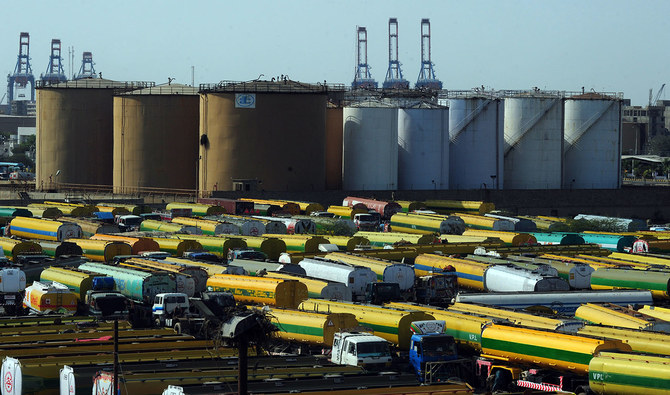
The ministry aims to finalize the bonded-storage framework by the end of June. The document highlights Pakistan’s existing weaknesses: constrained port infrastructure, limited ship-to-ship transfer capacity and inadequate overall storage. Those shortcomings have left the country dependent on smaller, more expensive shipments and vulnerable to any interruption in Hormuz traffic.
Funding and Mandatory Stock Rules
To finance its own strategic reserves, the government intends to create a ring-fenced fund financed by a dedicated 10-rupee per liter slice of the existing petroleum levy. Allocations from that levy are scheduled to begin July 1 and are projected to generate about $700 million annually, according to the document.
Pakistan already levies 58 rupees a liter on diesel and 102.17 rupees on gasoline. In parallel, the plan would impose mandatory inventory requirements on the private sector. Refineries would be required to hold 15 days of crude oil stocks, while oil marketing companies would need to maintain 30 days of finished-product inventories. Those rules would be phased in by June 2028 through updates to refinery policy, margin adjustments and broader downstream consolidation.
Infrastructure Corridor
The document also calls for development of an energy infrastructure corridor centered on the city of Hub and nearby Port Qasim. The project would include single-point mooring facilities, expanded storage tanks and new pipeline connections, designed to accommodate larger vessels and reduce dependence on costlier, smaller shipments.
The initiative comes as Pakistan grapples with the dual challenge of immediate fiscal discipline under the IMF and longer-term energy security in a geopolitically tense region. While the proposals stop short of detailing exact timelines or investment amounts beyond the levy-funded stream, they signal a shift toward blending public reserves with private-sector participation to build a more resilient supply chain.
Copyright © 2021 Independent Pakistan | All rights reserved