By Staff Reporter
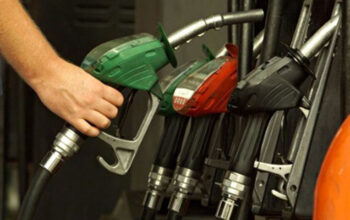
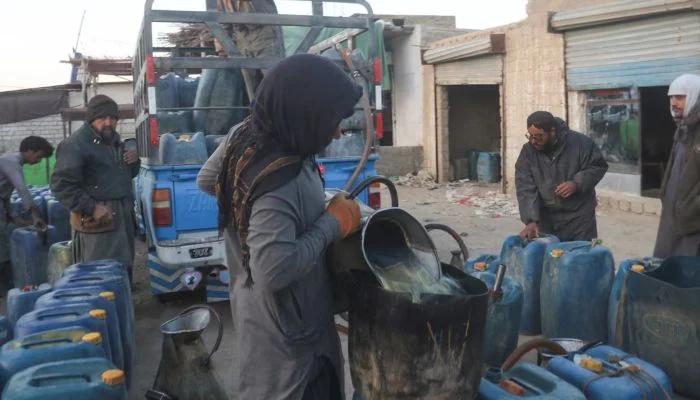
Pakistanis are feeling the first raw edge of a conflict they did not choose. On Friday the government raised the price of petrol and high-speed diesel by 55 rupees a liter — the largest single-day increase in memory. Petrol now costs 321.17 rupees a liter, diesel 335.86 rupees. Kerosene, the lifeline of the poorest households, has nearly doubled.
This is not some abstract market correction. It is a direct, calculated transfer of pain from the state’s balance sheet to the kitchen tables, motorcycle tanks and bus fares of ordinary Pakistanis who had no say in the distant war now roiling the Gulf.
The trigger was the surge in global oil prices after the escalation between the United States, Israel and Iran, with the threat of disruption through the Strait of Hormuz hanging over markets. Brent crude has jumped more than a third; some reports put the rise even higher.
For an import-dependent economy already walking a fiscal tightrope, the spillover was immediate and brutal. The government insists it had no choice. Islamabad, bound by IMF fiscal targets, cannot afford to absorb the blow. Cutting the petroleum levy — now a record 105.4 rupees a liter — would have breached revenue targets the government is already struggling to meet. Finance officials argued that absorbing the full shock through the budget was simply not an option. Prime Minister Shehbaz Sharif spoke of “fully passing on the impact in one go” as a demand-compression measure, a phrase that sounds technocratic until you translate it: make people drive less, cook less, eat less so the budget stays on track. The logic is tidy on a spreadsheet. On the streets of Karachi, Lahore and a thousand smaller towns during Ramadan, it feels like cruelty. The hike landed just days after a routine adjustment and a week before the next scheduled review — now switched to weekly to chase volatile markets.
What makes this decision especially indefensible is the timing and the circumstances. It came when Pakistan already held adequate stocks purchased at far lower prices. The oil in those tanks was bought before the latest spike; passing the full international increase onto consumers who are literally burning yesterday’s cheaper fuel is not prudence. It is a choice to protect elite fiscal targets rather than shield citizens already crushed by 7 percent inflation and stagnant wages.
Ride-hailing drivers who already work 16-hour days now see their margins evaporate while customers resist higher fares. Construction laborers commuting from city outskirts watch bus tickets climb again with no corresponding rise in daily wages. Small shopkeepers know that every rupee added to transport will ripple into the price of flour, vegetables and milk. The Lahore Chamber of Commerce has pointed out that higher fuel prices move through supply chains with merciless speed, squeezing exporters already grappling with elevated energy tariffs and financing costs. Textile exporters, the backbone of the $18 billion industry, face 25 to 30 percent higher inland freight costs at a moment when their global orders are already fragile. And for millions of low-income families, the near-doubling of kerosene is not an inconvenience; it is a threat to every meal.
Economists are already revising their forecasts downward. Growth that had shown tentative signs of reaching 3.75 to 4.75 percent this year may stall. Inflation, already at a 16-month high, is projected to climb another 0.7 to 1 percentage point and could hit 8 or 9 percent by May. The State Bank of Pakistan kept rates steady at 10.5 percent in January; most analysts now expect either stasis or a modest hike when it meets next week. The IMF, ever vigilant, will almost certainly insist on continued tightness. In other words, the very households being asked to absorb this shock will soon face higher borrowing costs and tighter credit as well.
The political backlash has been swift and unusually broad. Even coalition partners — the Pakistan Peoples Party, the Muttahida Qaumi Movement-Pakistan — have publicly rebuked the prime minister, demanding parliament be consulted and relief measures announced first. Opposition voices from the Pakistan Tehreek-e-Insaf to Jamiat Ulema-i-Islam-Fazl and Jamaat-i-Islami have called the move callous, anti-people, an “inflation bomb.” Their rhetoric is partisan, yet the underlying grievance is not: why was the Rs400 billion contingency fund set aside under IMF terms not deployed? Why are there no visible austerity measures for the ruling class — no cuts to official convoys, no tightening of elite lifestyles — while ordinary Pakistanis are told to work from home or close shops earlier during the holiest month of the year?
This is not merely bad luck. It is the recurring consequence of decades of economic mismanagement. Pakistan imports nearly all its petroleum products — $16 billion last year, the largest single item in the import bill. Every $5 increase in global crude adds roughly $1 billion to that bill. Successive governments have treated the petroleum levy as an easy cash machine instead of broadening the tax base, building genuine fiscal buffers or investing seriously in public transport, renewables or energy efficiency. The result is a country that remains structurally hostage to every tremor in the Strait of Hormuz. When the next shock comes — and with the Pentagon reportedly preparing for a conflict that could last until September, more shocks are probable — Islamabad will face the same impossible choice.
The crisis also exposes the fragility of regional supply lines. The KCCI president has warned of potential gas shortages if Qatar curtails production amid the turmoil. Industries already coping with power cuts could face further disruption. Exports, which fell 7.3 percent in the first eight months of the fiscal year while imports rose, may weaken further. A widening trade deficit — already up 25 percent to $25 billion — will put renewed pressure on the rupee and on foreign exchange reserves that have only recently begun to stabilise. Short-term palliatives are being discussed: work-from-home arrangements reminiscent of the pandemic, earlier market closures during Ramadan, and even a return to online schooling. These may trim a few percentage points off consumption, but they do little for the structural problem. Demand for transport fuel in Pakistan has proved stubbornly inelastic. The only durable answer lies in diversification — more efficient public transit, greater investment in renewables, a serious push toward electric vehicles and, above all, fiscal discipline that does not treat the petroleum levy as an inexhaustible revenue source. No one in Islamabad caused the fighting in the Gulf. Yet Pakistan’s leaders have repeatedly failed to prepare the economy for the inevitable transmission of such shocks. The result is a nation that finds itself once again hostage to events thousands of miles away, its citizens paying at the petrol pump for a war they cannot influence. Until Pakistan’s leaders stop treating citizens as shock absorbers for global crises — and start building an economy resilient enough to withstand them — these moments of sudden, brutal pain will keep returning.
Copyright © 2021 Independent Pakistan | All rights reserved