By Staff Reporter
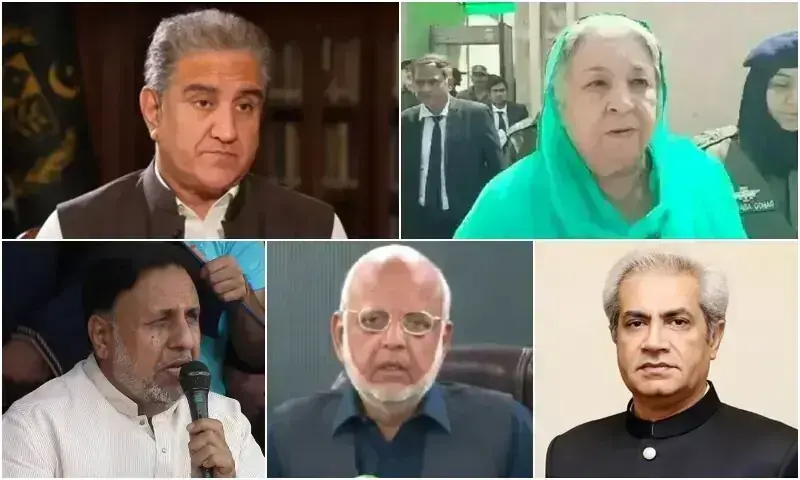
LAHORE: Five senior leaders of opposition Pakistan Tehreek-e-Insaf, currently held in Lahore’s Kot Lakhpat jail, warned on Saturday that “internal divisions and external pressures” are threatening the country’s sovereignty, economy and democratic future, and appealed to all political actors to put aside personal ambitions and institutional rivalries for the sake of national survival.
The leaders — Shah Mahmood Qureshi, Dr. Yasmin Rashid, Ejaz Chaudhry, Mian Mahmoodur Rasheed and Omar Sarfraz Cheema — issued the statement through their counsel. The party promptly shared it on the social media platform X.
The statement comes days after the same group publicly urged the government to reconsider its hardline approach toward both the party and its founder, Imran Khan. In the new message, the five framed the current moment as too perilous for continued political confrontation. They called for an urgent discussion of the “evolving regional and national situation” within the leadership of the opposition alliance Tehreek Tahafuz Ayeen-i-Pakistan, or TTAP, and inside PTI’s own political committee.
The goal, they said, should be “formulating a way forward in a joint session of Parliament.” “Currently, the last thing that Pakistan could afford was an ‘internal crisis on account of political instability,’” the leaders wrote, pointing to rising tensions along the country’s eastern border and a persistent wave of terrorism in Khyber Pakhtunkhwa. External threats, they argued, may not be of Pakistan’s making, but they demand “internal cohesion, coordination and understanding” if their fallout is to be contained. “Pakistan’s political and military leadership cannot ignore the fact that our meagre economic stability, achieved at a high cost [and] paid by the people of Pakistan, is under threat.”
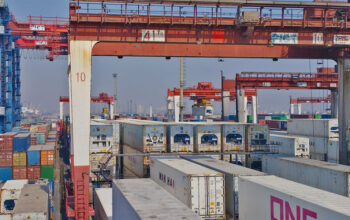
The leaders singled out the distraction of friendly Gulf countries that had been preparing fresh investments in Pakistan. Those plans, they said, are now overshadowed by US-Israeli attacks on Iran. A significant share of Pakistan’s foreign-exchange reserves comes from deposits placed by those same friendly governments, they noted. Global and regional uncertainty will also hit the flow of remittances, a lifeline for millions of Pakistani households. The closure of Gulf ports and sharply higher shipping costs will disrupt trade routes and place fresh pressure on the country’s already stagnating exports. Rising oil and gas prices, meanwhile, will swell the import bill and erase the current-account surplus.
The result, the leaders predicted, would be a new balance-of-payments crisis that leaves Pakistan even more dependent on the International Monetary Fund. “Our desire to exit the Fund programme will remain a dream,” they wrote. Inflation is already climbing again, they added, limiting any prospect of meaningful cuts in the policy rate. At the same time, Pakistan is failing to generate the three million new jobs required each year simply to keep pace with population growth, the statement said.
The agriculture sector is under severe stress, and at the current rate of gross domestic product growth, meaningful poverty reduction remains out of reach. “Business as usual is no longer possible and political confrontation is not desirable,” the leaders declared. “It is time to heal divisions, restore trust and move forward with unity and dignity. Only an internally united Pakistan can deal with the external threats we are facing.”
They appealed directly to every major institution and constituency: political parties, the military establishment, the judiciary, the legal fraternity and the media. All, they said, must “collectively chart a way forward.” Parliamentarians who still believe in parliamentary sovereignty, they added, have a special responsibility “to pull Pakistan out of the current political stalemate.”
Repeating their central warning, the five leaders stated that “internal divisions and external pressures are threatening our sovereignty, economy and democracy.” Every stakeholder — whether in government or opposition, in uniform or judicial robes, inside Parliament or on the streets — must now unite, they said. “Let us put aside personal ambitions, political grudges and institutional pride for the sake of Pakistan.”
The statement also cautioned the government that any future outreach to the opposition must acknowledge the widespread questions about its legitimacy. “The situation today cries out for a fundamental shift in how the country must be run,” the leaders wrote. “We must uphold the Constitution and the rule of law. If we manage our affairs properly, we can find mutually agreed solutions. Pakistan needs a healing touch.” History, they concluded, “will not forgive the existing political leadership if it fails to put its house in order.” The five urged both the TTAP alliance and PTI itself to debate the ideas they had laid out. But the ultimate responsibility for breaking the impasse, they said, rests with the current government.
Copyright © 2021 Independent Pakistan | All rights reserved