By Staff Reporter
Let’s not mince words: Pakistan is getting hammered by the US-Israel-Iran war, and the fallout could shove this perpetually precarious economy right back into the abyss. Oil at $100 a barrel? That’s not a blip—it’s a body blow. And if this mess drags on, as former Finance Minister Hafiz Pasha grimly predicts, Pakistan’s GDP could shrink by 1% to 1.5%, with the rot setting in deeper after six months. We’ve seen this movie before, and it doesn’t end well.
Think about it: Just months ago, Pakistan was patting itself on the back for clawing its way to a semblance of stability. Growth nudging 3%, inflation tamed to single digits, reserves at a cushy $16.4 billion. Now? That’s all unravelling faster than a cheap suit in a monsoon. The Strait of Hormuz, that narrow choke point Pakistan relies on for 85% of its crude from Saudi Arabia and the UAE, is a war zone. Ships attacked, tankers idling in Karachi, insurance premiums through the roof. Pasha nails it: Petroleum imports could spike 25% to 30%, saddling the country with a $12 billion to $14 billion external hit over the next year. Former State Bank Governor Ishrat Hussain breaks it down simply—every $10 jump in oil prices adds $1.5 billion to the import tab. From a pre-war $80 baseline, we’re already staring at a $3 billion shortfall.
But here’s where it gets personal, and frankly, infuriating. Remittances aren’t just numbers on a spreadsheet; they’re the lifeblood keeping millions afloat. Over half come from the Gulf, where oil economies are now sputtering. As demand for labour tanks, Pakistanis get pink slips first— Pasha figures $2 billion to $4 billion in lost inflows. A Tresmark report calls it a “slow-burn risk,” but make no mistake: It’s a ticking bomb that could widen the current account deficit from $2 billion to $6 billion or $7 billion by fiscal year-end. We’re talking a rerun of 2021-22, when reserves cratered to $4 billion, and the rupee went into freefall. Without a miracle in the external environment, Pakistan’s heading straight for that cliff again.
Inflation? Oh, it’s back with a vengeance, and it’s going to hit the poorest like a sledgehammer. We’d just gotten it down to 7% in February, but it’s already topped 10%, and Topline Securities sees March at 7% to 7.5%—the worst in 19 months. Transport costs are exploding 18% month-on-month, petrol up 26.7%, diesel 25%. If Brent hits $120, as it did during Russia-Ukraine, we’re looking at 30% inflation redux, per Pasha. The knock-ons are vicious: Fuel hikes jack up energy, then transport bleeds into food and basics. The State Bank’s holding rates at 10.5%, but real rates could balloon to 300-350 basis points, choking growth while doing zilch for the man on the street.
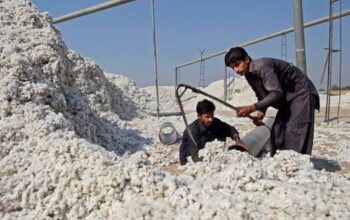
This war is gutting key sectors in ways that expose Pakistan’s chronic vulnerabilities. Transport, 10% of GDP, is grinding to a halt under fuel costs. Industry’s wheezing—LNG from Qatar’s on force majeure, throttling fertilizer, cement, and textiles on captive gas. Agriculture, the backbone employing 37% of workers and churning 23% of GDP, faces a productivity nosedive. Farmers like Aamer Hayat Bhandara in Punjab’s Pakpattan district are blunt: Diesel powers everything from plows to market trucks. “Unavoidable,” he says. Without it, harvests rot, food prices soar, and rural misery deepens.
Yet, in this dumpster fire, there might—just might—be a spark of opportunity. Pakistan’s hooked on imported LNG like a bad habit, and this crisis is forcing a cold turkey. Hussain’s right: Shift to domestic hydro, nuclear, coal, gas, wind, solar. But infrastructure’s a joke—transmission lines for wind and coal are MIA. Short-term, daily fuel tweaks could kill hoarding, as he suggests. The government’s already jacked prices to Rs321 per liter for petrol, Rs336 for diesel, with a 20% March hike to curb panic buying. Tap that Rs390 billion contingency fund before it vanishes in June, as Pakistan Business Forum’s Mehboobur Rehman urges: Absorb Rs80 per liter for two months, drop prices to $1. Hell, ration petrol at 150 liters per vehicle monthly, per economist Kaiser Bengali, and pivot freight to rail for 15%-20% diesel savings.
And then there’s the IMF, that stern uncle holding the purse strings. Pakistan’s $7 billion program is everything— Bengali’s spot-on: A measly $1 billion tranche means survival or bust. The third review’s stalled, thanks to war volatility upending projections. We’re meeting quantitative targets like primary surplus, but flunking on tax revenues—FBR’s short of Rs13.5 trillion, tax net’s a sieve. Schemes like Tajir Dost flop, agriculture dodges provincial taxes, and cross-subsidies linger. The Fund’s patience is thinning; no more dodging. External risks? Oil volatility could torpedo rollovers and miss the $17.8 billion reserve target by June. This review squeaks by, but the next? Dicey without real guts on reforms.
The human cost? It’s gut-wrenching. Workers ditching rickshaws for foot marches, salaries vaporized by fuel. Bengali rips the “austerity theatre”—selling cars, goats, horses? A 40-year punchline. Work-from-home, online schools? Elite nonsense. In Karachi slums, kids share rooms, power flickers, no laptops—classes become “myths.” Eid’s joyless: Markets empty, says trader Shabbir Ahmed; families like Ali Akbar’s skip hometowns, yank kids to walking schools as van fares jump from Rs7,000 to Rs10,000 monthly. “Pakistan is already bankrupt, surviving loan by loan,” Bengali says. “Prolonged disruption could topple it.”
Here’s my take: Pakistan’s leaders have dithered too long on self-reliance. This war’s a brutal wake-up—ditch the import addiction, tax the untaxed, build that damn infrastructure. If not, we’re doomed to cycle through crises. Global finance is tightening; Pakistan’s Eurobonds yields up 100 basis points, CDS widening. FDI? Forget it. Survival demands credibility, multilateral muscle. The war’s endgame is anyone’s guess—a US nod to wind-down could ease the vise. But prolongation? Default’s shadow looms. Pakistan deserves better than this perpetual high-wire act. Time to cut the strings—or watch the whole show collapse.
Copyright © 2021 Independent Pakistan | All rights reserved