By Staff Reporter
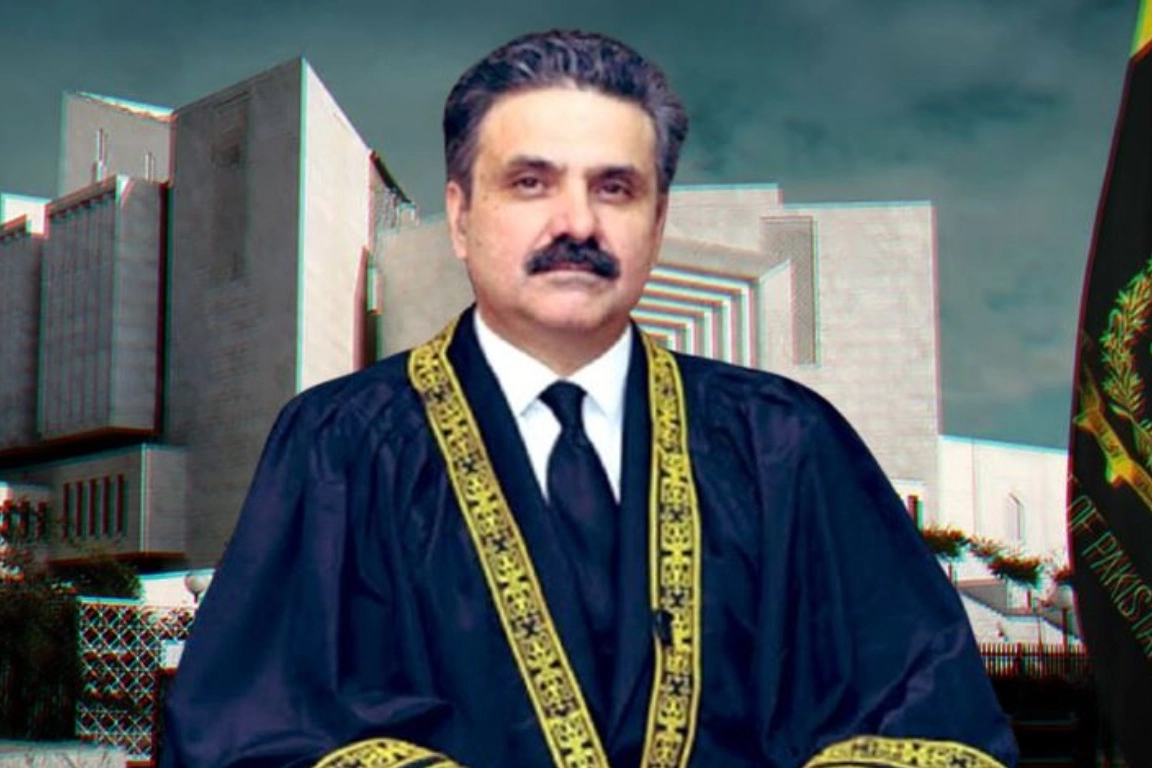
ISLAMABAD: The Chief Justice of Pakistan Yahya Afridi on Thursday summoned an emergency full-court meeting of all Supreme Court judges for Friday morning, bowing to a third judicial plea in as many days for the court to confront the far-reaching 27th Constitutional Amendment that President Asif Ali Zardari formally enacted into law only hours earlier.
The decision came after Justice Salahuddin Panhwar of the Sindh High Court, sitting as a Supreme Court judge, addressed a two-page letter to the chief justice urging an immediate clause-by-clause examination of the amendment’s impact on judicial independence. Two other senior judges — Justice Syed Mansoor Ali Shah, the senior puisne judge, and Justice Athar Minallah — had already written separately to Chief Justice Afridi seeking a full-court session or a judicial conference, only to resign Thursday evening in protest against the amendment itself.
Justice Panhwar was careful to distinguish his request from protest. “I write not in protest,” he said, “but in the duty that binds every judge who has sworn to preserve, protect, and defend the Constitution.” “There comes a time when silence is not caution but abdication,” he continued. “I believe such a time may now be upon us.”
In measured but unmistakable terms, Justice Panhwar warned that the amendment threatened to “unsettle the careful balance that the framers intended” and could affect “the security of tenure, the composition of benches, the appointment and removal of judges, or even the financial and administrative autonomy of courts.”
He proposed that the full court test every provision against a single standard: “Does it strengthen the independence of the judiciary, or diminish it?” If the answer is the latter, he wrote, the judges are obliged to say so — “not in anger but in truth.” The judge also recommended commissioning a technical analysis from the Law and Justice Commission of Pakistan, consulting the National Judicial Policy Making Committee, and inviting the views of the Pakistan Bar Council and provincial bar councils, whom he described as “twin guardians of justice” with the bench.
He urged the court to prepare to protect its powers under Article 190 — which requires all executive and legislative authorities to aid the Supreme Court — in the event of future litigation, so that “judicial commands were not rendered hollow.” “Let our response be principled yet temperate,” Justice Panhwar wrote, “firm in defence of constitutional boundaries, but respectful of the comity due among organs of the State.”
He acknowledged Parliament’s broad amending power but insisted it was “not without limit.” “The Constitution was not clay to be moulded at will,” he said. “It was a covenant between the state and citizen.” The letter closed with a caution that has echoed through courtrooms for generations: “If the judiciary is not free — free from fear, free from influence, free from control — then the rule of law becomes but a phrase, hollow and without breath.”
The full-court meeting, chaired by Chief Justice Afridi, is scheduled to begin before Friday prayers at the Supreme Court building in Islamabad. President Zardari’s assent Thursday transformed the Constitution (Twenty-Seventh Amendment) Bill, 2025, into law. A copy of the signed summary reads simply: “The Constitution (Twenty-Seventh Amendment) Bill, 2025, is assented to, as advised by the prime minister.”
The president is expected to swear in the first chief justice of the new Federal Constitutional Court — a body created by the amendment — as early as Friday at the Presidency. Hours after the amendment became law, Asad Rahim Khan, a prominent lawyer, filed a petition in the Supreme Court asking the court to declare that Parliament cannot, in light of Entry 55 of the Federal Legislative List, abridge or abolish the original jurisdiction conferred on the Supreme Court by the 1973 Constitution. The petition also seeks orders to secure the independence of the judiciary and any further relief the court deems appropriate. With two senior justices already departed and a third sounding what he called a conscience-driven alarm, Friday’s full-court session will take place against the most serious internal crisis the Pakistani judiciary has faced in years.
Copyright © 2021 Independent Pakistan | All rights reserved