By Staff Reporter
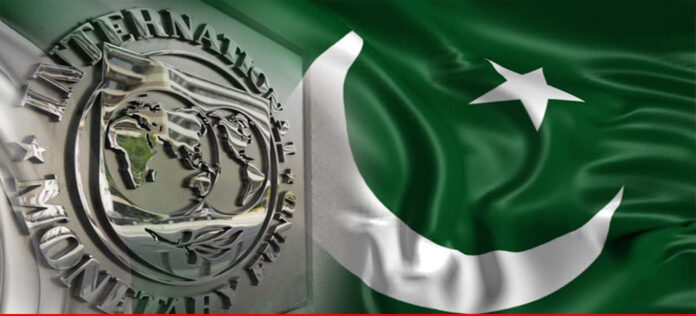
ISLAMABAD: Pakistan faces entrenched corruption vulnerabilities stemming from systemic institutional weaknesses, the International Monetary Fund said in a long-delayed diagnostic assessment that makes publication a prerequisite for the fund’s board to approve a $1.2 billion loan disbursement next month.
The 15-point reform agenda outlined in the Governance and Corruption Diagnostic Assessment, if started within the next three to six months, could lift Pakistan’s economic growth by 5 to 6.5 percentage points over five years, the IMF estimated. “A unifying theme is the emphasis on increasing transparency and accountability in policy formulation, implementation and monitoring,” the report said. “This involves improving access to information and strengthening the capacity of state and non-state stakeholders to participate effectively in governance and economic decision-making.”
The document, which the government had held back since August, calls for immediate steps to curb preferential treatment of powerful state-owned entities, force full transparency from the military-civilian Special Investment Facilitation Council and impose stricter parliamentary oversight on budgetary spending.
The IMF singled out the SIFC, created last year to fast-track investment and privatisation, for particular scrutiny, demanding the “immediate” release of its first annual report detailing every investment it has facilitated, all concessions granted, tax, policy, regulatory and legislative, and the explicit rationale and outcomes for each.
Given the council’s “broad and disparate organisational functions and authority,” the fund said the body must develop explicit protocols and “enhanced transparency arrangements to enable effective oversight and accountability.”
The report also questioned the legal basis for the SIFC’s establishment through an amendment to the Board of Investment law while the original BoI continues to exist, as well as the immunity its staff enjoy from prosecution for decisions taken in “good faith.”
On public procurement, the IMF demanded the elimination of all preferences for state-owned enterprises, including provisions that allow direct contracting without competition, and mandatory adoption of e-procurement for every state transaction within 12 months.
The assessment painted a bleak picture of governance across the state. Corruption control indicators have remained weak for years, dragging down the effectiveness of public spending, revenue mobilisation and public trust in the legal system. Budget reporting is opaque, capital spending and SOE oversight are riddled with risk, and the tax system is overly complex and prone to abuse because of frequent rule changes and inadequate administrative capacity.
The judiciary, the report said, is organizationally fragmented, hampered by outdated laws and efficiency bottlenecks, and suffers from integrity concerns among judges and court personnel, making reliable contract enforcement and property-rights protection nearly impossible.
Fiscal performance has suffered as a result. Pakistan’s tax-to-GDP ratio, already among the lowest in the world, continues to decline, undermined by complexity, instability in tax rules and eroded public trust. Large deviations between approved budgets and actual spending, combined with minimal parliamentary scrutiny, leave spending decisions heavily exposed to political influence and patronage.
“Discretionary allocations are skewed towards districts represented in the government or the senior bureaucracy, reflecting the vulnerability of the system to political influence,” the IMF wrote, noting the resulting low return on public investment.
Both the fund and Pakistani authorities agreed that tackling corruption risks is indispensable for durable economic reform, with the most successful anti-corruption strategies combining stronger governance institutions with direct measures to confront corrupt practices and bolster integrity, the report said. Pakistan is currently operating under a $7 billion Extended Fund Facility approved in September 2024. The upcoming review, which includes the GCDA publication condition, will determine whether the IMF releases the third tranche of roughly $1.2 billion scheduled for December.
Copyright © 2021 Independent Pakistan | All rights reserved