By Staff Reporter
ISLAMABAD: Pakistan and the Asian Development Bank signed agreements on Thursday for $730 million in loans aimed at strengthening the country’s overburdened power transmission network and accelerating reforms in its state-owned enterprises, which have long been plagued by inefficiency and financial losses.
The deals, announced by the bank and Pakistan’s Ministry of Economic Affairs, come as the South Asian nation grapples with chronic energy transmission issues and fiscal strains exacerbated by years of mismanagement in public sector companies. The funding is part of a broader effort by the Manila-based lender to support infrastructure and governance improvements in Pakistan, where state enterprises have racked up billions in losses due to corruption and poor oversight.
The larger of the two loans, valued at $400 million, will back an accelerating state-owned enterprise transformation program, focusing on entities like the National Highway Authority. The initiative aims to enhance operational efficiency, transparency and sustainability across these organizations, many of which have required repeated government bailouts to stay afloat.
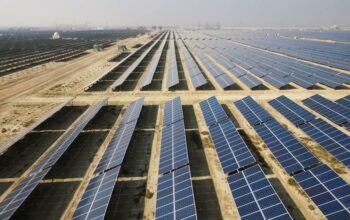
A second loan of $330 million is designated for a power transmission strengthening project, which officials say will help evacuate 2,300 megawatts from upcoming hydropower projects, relieve overloading on existing lines and bolster the grid’s resilience during emergencies.
Muhammad Humair Karim, secretary of Pakistan’s Ministry of Economic Affairs, signed the agreements alongside Emma Fan, the bank’s country director for Pakistan. In a statement released by the ministry, Karim praised the bank’s role in advancing “critical infrastructure and governance reforms.” He described the transmission project as one that would “enable reliable evacuation of 2,300 megawatt from upcoming hydropower projects, relieve overloading of existing transmission lines and enhance resilience under contingency conditions.”
On the enterprise reforms, he noted that the program would improve “operational efficiency, particularly focusing on the National Highway Authority (NHA).” Karim emphasised the broader impact, saying both initiatives were “transformative in nature as the transmission project will secure Pakistan’s energy future by strengthening the backbone of the national grid, whereas the SOE programme will enhance transparency, efficiency and sustainability of state-owned enterprises nationwide.”
Fan, in turn, commended Pakistan’s commitment to the projects. She highlighted the transmission effort’s role in fortifying energy infrastructure and said the state enterprise reforms arrived “at a critical time in Pakistan, and it will further strengthen the reform efforts” underway.
The agreements build on recent collaborations between Pakistan and the bank. Earlier this year, the two signed a $200 million deal to upgrade the country’s faltering power distribution system through network improvements. Last month, the bank approved another $330 million in loans to construct a transmission line from Islamabad to Faisalabad, Punjab’s industrial heartland.
Pakistan’s state-owned enterprises have been a persistent drag on the economy. Entities such as Pakistan International Airlines, which was privatized this week and sold to a private group, have incurred massive losses over the years, often attributed to financial mismanagement and corruption. These companies have leaned heavily on government subsidies, straining public finances.
The Asian Development Bank has been a key partner in Pakistan’s development, committing $43.4 billion in loans, grants and technical assistance across 764 public sector projects to date. Its support has extended to public finance reforms, social protection, post-flood reconstruction, food security and human capital development.
Copyright © 2021 Independent Pakistan | All rights reserved