By Staff Reporter
ISLAMABAD: Pakistan’s top military commander warned on Wednesday that any breach of the country’s territorial integrity, whether direct or indirect, would provoke a firm and decisive response, as he accused Indian-sponsored proxies of fomenting violence and disrupting development in the restive southwestern province of Balochistan.
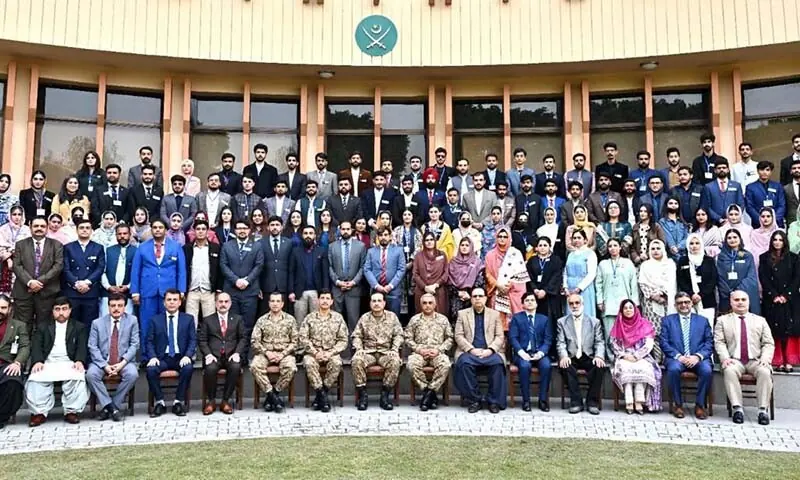
Field Marshal Asim Munir, who serves as both chief of army staff and chief of the defense forces, delivered the remarks during the 18th National Workshop on Balochistan at the military’s General Headquarters here, according to a statement from the Inter-Services Public Relations, the army’s media wing.
The field marshal reaffirmed that such “inimical designs” by these groups “will be thwarted through stern actions” by security forces aimed at eliminating terrorism and unrest in the province. “Pakistan Armed Forces remain committed to protect the lives and well-being of its citizens,” the statement said, underscoring the military’s dedication to regional peace and stability amid escalating tensions with neighbors.
The workshop centered on Balochistan’s socio-economic progress and its strategic significance to Pakistan’s future. In his address, Field Marshal Munir praised the resilience and patriotism of the province’s residents, emphasizing their central role in the nation’s prosperity. He commended the broad array of initiatives by federal and provincial governments, which adopt a “people-centric approach that aims to improve the socio-economic conditions of the province and unlock its vast economic potential for the benefit of its people.”
Field Marshal Munir also highlighted the vital contributions of civil society in combating disinformation and propaganda, and in advancing sustainable development. He urged a rejection of “vested political agendas to ensure that Balochistan’s future is shaped by long-term prosperity for all its residents.”
The session included an open discussion where the military chief fielded questions from participants and offered additional details on ongoing security and development efforts in the province. The comments come against a backdrop of heightened security challenges in Pakistan, particularly in Balochistan and the northwestern province of Khyber Pakhtunkhwa, both of which border Afghanistan and have endured a surge in militant attacks.
Pakistan has labeled Balochistan-based insurgent groups as “Fitna-al-Hindustan,” a term intended to spotlight what Islamabad claims is India’s involvement in terrorism and efforts to destabilize the country. This year alone, relations with India and Afghanistan have frayed over sovereignty disputes. In May, a clash erupted after an attack on tourists in Indian-occupied Kashmir, which New Delhi attributed to Pakistan without providing evidence. Islamabad rejected the accusations and demanded an impartial probe. India responded with airstrikes on May 7 targeting sites in Punjab and Azad Kashmir, igniting a four-day exchange of fire on air bases that ended only after US mediation secured a ceasefire on May 10.
Tensions with Afghanistan intensified in October over the banned Tehreek-i-Taliban Pakistan, with Pakistan urging Kabul to rein in cross-border militancy. Border skirmishes on Oct. 11 led to a brief truce brokered in Doha and Istanbul, but subsequent talks mediated by Turkey and Qatar failed to yield a lasting agreement. Terrorist incidents have spiked nationwide since the Tehreek-i-Taliban Pakistan terminated its ceasefire with the government in November 2022. Balochistan and Khyber Pakhtunkhwa have borne the heaviest toll.
Earlier this month, Balochistan’s chief minister, Sarfraz Bugti, told reporters that the province had suffered 900 terrorist incidents in 2025, resulting in the deaths of 280 civilians, 205 security personnel and six officers, including two from Balochistan. “The security forces have conducted thousands of intelligence-based operations, killing 706 terrorists, who were infiltrating into Pakistan from Afghanistan to plan attacks,” Bugti said. He stressed that no full-scale military operation was active in the province, only targeted intelligence-based actions.
Pakistan’s struggles with extremism were laid bare in the Global Terrorism Index 2025, released by the Institute for Economics and Peace, which ranked the country second worldwide. The report documented a 45 percent increase in terrorism-related deaths compared with the previous year, charting patterns over the past 17 years.
Copyright © 2021 Independent Pakistan | All rights reserved