By Staff Reporter
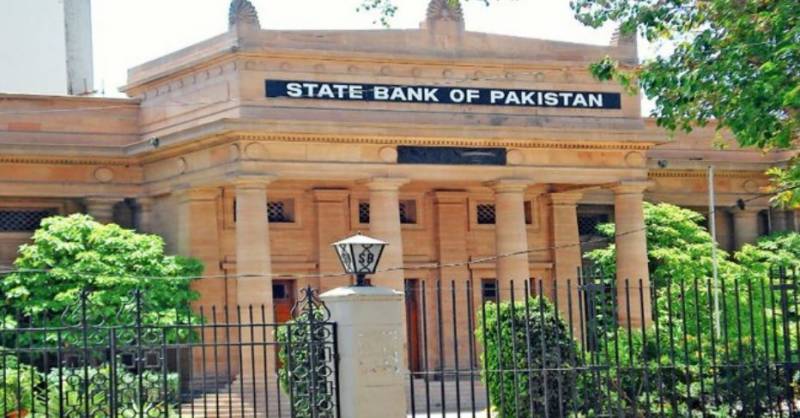
KARACHI: Pakistan’s financial system remained stable and resilient throughout 2025, the State Bank of Pakistan said on Tuesday, citing stronger capital buffers, easing inflation and improved macroeconomic conditions even as the central bank warned that the war in Iran could pose fresh risks to financial stability.
In its annual Financial Stability Review 2025, the SBP said the sector expanded 15.1% during the calendar year, while financial depth — measured by the ratio of assets to gross domestic product — climbed to 67.1%. Risks to the system subsided as the economy continued to stabilize after a period of external financing stress, the report showed. Policymakers had leaned on tight monetary policy and an International Monetary Fund program to restore balance, leaving the country less vulnerable than before but still exposed to external shocks through energy imports and shifts in global financial conditions.
Financial markets operated smoothly, the SBP said, with the money, foreign-exchange and equity segments functioning without major disruption. Volatility did rise, however, driven mainly by the equity market, which posted substantial gains despite trade-tariff uncertainty and geopolitical tensions. The foreign-exchange market, by contrast, remained calm. “The financial sector grew by 15.1 percent and maintained operational and financial resilience during CY25,” the central bank said in the report.
The banking industry, which dominates the financial system, delivered steady performance. Balance sheets expanded 17.8%, led by investments in government securities. Advances fell on a year-on-year basis in December, largely because of a high base effect from the previous year’s advance-deposit ratio-linked tax policy, but adjusted lending still showed healthy growth in line with the improving macro environment.
Deposit mobilization revived, reducing banks’ reliance on borrowings. Asset quality improved, with the non-performing loans ratio declining to 6.1% at end-December from 6.3% a year earlier. Provisioning coverage rose further to 107.7%, and a large portion of the credit portfolio consisted of rated borrowers with stable credit profiles. After-tax earnings increased, though profitability indicators moderated as gains were driven more by volume than margins.
The sector’s solvency position strengthened, with the capital adequacy ratio climbing to 20.8% by the end of 2025 — well above regulatory requirements. Islamic banking institutions recorded their highest-ever expansion in branch networks and maintained robust growth momentum, while keeping capital buffers strong. Foreign-exchange reserves improved during the year, supported by a contained current-account deficit and the central bank’s purchases in the interbank market. Successful completion of reviews under the IMF’s Extended Fund Facility and Resilience and Sustainability Facility provided additional backing.
Performance across non-bank financial institutions was mixed. Insurance companies posted strong growth, while development finance institutions saw their assets contract. Microfinance banks remained under stress on an aggregate basis but recorded a significant reduction in losses as recapitalization and restructuring efforts began to bear fruit. The debt-servicing capacity of the non-financial corporate sector improved as finance costs fell alongside easing monetary policy, though revenue pressures and weaker earnings persisted in some segments. The creditworthiness and repayment capacity of the largest banking borrowers stayed sound, the report said.
Financial market infrastructures remained stable and operationally resilient, the SBP added, with digital transactions continuing to drive overall financial activity. Among policy initiatives launched during the year were enhancements to the PRISM+ system, QR code-based payments through the RAAST instant payment platform, and the transition to a T+1 settlement mechanism by the National Clearing Company of Pakistan Ltd.
Looking ahead, the central bank struck a cautious note on the external environment. “Going forward, the uncertainty around the Middle East conflict may pose challenges to financial stability prospects,” the SBP said. “However, the strong financial cushions, prudent and time-tested supervisory and crisis management frameworks together provide comfort to the banking sector’s stability.” Recent stress tests showed the banking sector, including systemically important institutions, could withstand severe shocks over a three-year horizon, the report said. The central bank pledged to continue working with stakeholders to safeguard both price and financial stability while supporting sustainable economic growth.
Copyright © 2021 Independent Pakistan | All rights reserved