By Staff Reporter
ISLAMABAD: Pakistan has taken delivery of one liquefied natural gas cargo from Qatar, while a second tanker is en route through the Strait of Hormuz, officials said on Monday, marking a tentative resumption of supplies after weeks of disruption caused by the ongoing conflict between the US and Iran.
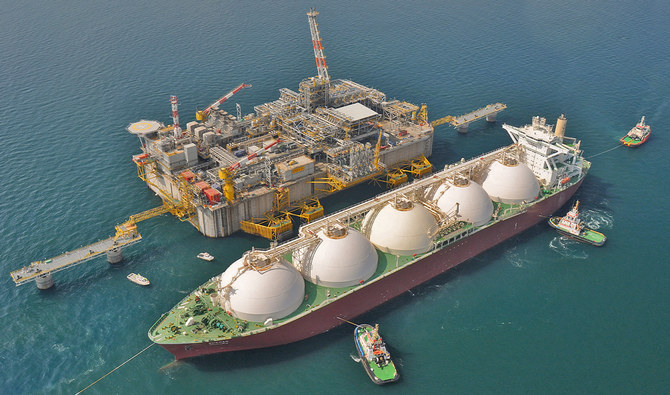
The 211,986-cubic-meter tanker Al Kharaitiyat crossed the strait via an Iranian-approved northern route and reached Pakistan safely, a senior official at the Pakistani petroleum ministry said. A second vessel, the 174,000-cubic-meter Mihzem, departed Qatar’s Ras Laffan terminal and is steaming northeast toward Port Qasim in southern Pakistan. It is scheduled to arrive on May 12, according to LSEG shipping data.
Energy Minister Ali Pervaiz Malik told lawmakers that coordination at the highest levels of government in Pakistan, Qatar, Iran and the US had been required to secure the shipments. “The highest level of leadership from Pakistan, Qatar, Iran and the US were involved to ensure Pakistan gets LNG supply from Qatar through Strait of Hormuz,” Malik said at a meeting of the Senate Standing Committee on Petroleum.
The cargoes are being supplied under a government-to-government agreement between Qatar and Pakistan, officials said. Iran’s approval of the passages was intended to build confidence with both Qatar and Pakistan, which has acted as a mediator in talks with the US, the officials added. A typical cargo holds about 3 billion cubic feet of LNG, enough to supply Pakistani power plants for 12 to 15 days under normal drawdown rates, the petroleum ministry official said. The previous vessel, which docked in Karachi on April 30, continues to feed gas into the system and has roughly two days of supply left, he said. “If you drain it quickly you can finish it in three days but if you use it slowly it can last for 30 days,” the official said of a single cargo’s volume.
The latest deliveries follow a near-total interruption of Qatar’s LNG exports to Pakistan after the strait was effectively closed. Qatar notified buyers of a potential force majeure on March 2, Malik said in a written presentation to the committee. With no fresh cargoes arriving, Pakistan cut regasification rates at both its LNG terminals to a minimum 100 million cubic feet a day to conserve inventory. By the end of March, regasification had been suspended entirely at Engro Elengy Terminal Pakistan Ltd. and Pakistan Gas Port Consortium Ltd.
State trader Pakistan LNG Ltd. moved quickly to secure replacement supply. It issued a tender on April 23 and awarded one cargo at $18.4 per million British thermal units, which was delivered to the PGPCL terminal on April 30. Regasification has since been raised to 260 million cubic feet a day, Malik said. A fresh tender was launched, with bids scheduled to be opened Monday.
Qatar is the world’s second-largest LNG exporter, shipping the bulk of its volumes to Asian buyers. Iranian attacks in the Gulf, launched in retaliation for US and Israeli strikes that began Feb. 28, disabled 17% of Qatar’s export capacity. Repairs are expected to keep 12.8 million metric tons a year of production offline for three to five years. The risks of operating in the strait were underscored earlier this month when Abu Dhabi National Oil Co. successfully sent two LNG tankers through the waterway after switching off their tracking signals, shipping data showed.
Malik told reporters in Islamabad that the government is focused on shielding households and the power sector from global supply shocks and higher energy prices. “There is a lot of work being done,” he said. “You will see some practical benefits of this in the future as well.”The minister thanked friendly nations for their support, singling out Saudi Arabia and Qatar. “I am grateful to all our friendly countries which are fully cooperating with Pakistan, keeping in view its needs and its importance.”
Copyright © 2021 Independent Pakistan | All rights reserved