By Staff Reporter
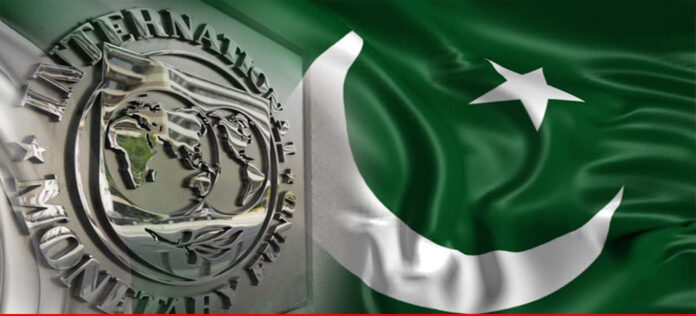
ISLAMABAD: Pakistan must rewrite 174 provisions across its legal code to satisfy the International Monetary Fund, a bill that touches everything from state-enterprise governance to sugar prices and lays bare how deeply the Fund’s $8.4 billion lending program now reaches into the machinery of government.
Finance Secretary Imdadullah Bosal disclosed the tally on Thursday to the National Assembly’s Standing Committee on Finance and Revenue, telling lawmakers the legislative package would be sent to parliament even as the government fought to preserve its say over the outcome. “There are a total of 174 amendments the IMF wants to be passed,” Bosal told the panel, chaired by Syed Naveed Qamar.
The disclosure lands three days before an IMF mission opens formal talks in Islamabad on the fourth review of Pakistan’s $7 billion Extended Fund Facility and the third review of a companion $1.4 billion Resilience and Sustainability Facility — the two programs together account for the $8.4 billion figure that has become the country’s financial lifeline since 2024. A successful review would release roughly $1 billion under the EFF and $200 million under the RSF, funds Pakistan needs to keep building the foreign-currency buffers that have eluded it for years.
The scale of the legislative ask underscores a shift in how the Fund is exercising leverage over Pakistan. Rather than confining itself to fiscal targets and monetary benchmarks, the IMF is pushing for statutory change across sovereign-wealth governance, state-enterprise oversight, remittance pricing, sugar-market liberalization and climate-risk disclosure — an agenda that will keep parliament occupied for months and test a coalition government’s ability to marshal votes on politically uncomfortable measures.
Bosal said the amendments span the Sovereign Wealth Fund Act, adding a provision to allow joint investments and aligning the fund with the State-Owned Enterprise Act that governs other government-run firms. He told the committee the government had been unambiguous with the Fund: cabinet can draft and endorse the changes, but only parliament can pass them.
That distinction matters. The wealth fund, which holds stakes in five blue-chip state assets including Oil & Gas Development Co. and Pakistan State Oil, was set up as a vehicle to attract sovereign capital from Saudi Arabia, Qatar and the UAE. Progress recruiting that capital has been minimal, and the IMF has pressed Islamabad to bring the fund’s governance and financial reporting in line with standards applied to other state enterprises — a request that, according to Bosal, has run up against the government’s preference to keep the fund intact even as the Fund pushed at one point for it to be wound down.
Remittances emerged as a second flashpoint. Bosal told the committee Pakistan needs to fix costly frictions in its payment infrastructure to keep remittance inflows — a critical prop for the external accounts — flowing through formal channels. The IMF, he said, had firmly opposed government subsidies designed to route remittances through official banking corridors; those subsidies once exceeded 120 billion rupees annually and have since been scrapped.
Sugar policy is also under review. The federal government has circulated a draft liberalization plan, and three of Pakistan’s four provinces have signed on. The holdout has not formally objected in writing, but panel member Javed Hanif Khan told the session that the government “knew well” which province was resisting — a pointed remark lawmakers left unchallenged, suggesting the political sensitivity of naming the province outright.
Committee Chairman Qamar pressed officials on a separate front: the government’s plan to sell off power-distribution companies. Three entities — the Islamabad, Faisalabad and Gujranwala electric supply companies — are furthest along, with pre-qualified international investors now conducting due diligence, officials told the panel. The transactions follow the template used to privatize Pakistan International Airlines, whose 75% stake was sold this year to a consortium led by Arif Habib Group for roughly 135 billion rupees, or about $482 million, after decades of state bailouts. Qamar was less interested in the companies changing hands than the ones being left behind. “You will give away the profitable Discos, but what will happen to the remaining ones?” he asked, a question officials did not fully answer in the session.
Officials left the panel without the specificity lawmakers wanted. Members asked for a written breakdown of the Discos transaction structures — whether buyers would get outright ownership, management contracts or concessions — and how liabilities would be split from performing assets before the deals proceed further. A parallel request went to the finance ministry over a proposed transaction involving roughly 75% of Pakistan International Airlines Holding Co., where officials cited a net asset position of about 9 billion rupees post-restructuring; the committee said the numbers presented were not detailed enough to allow a proper assessment and pushed the matter to its next session, alongside a separate corporate social responsibility bill, after voicing displeasure that the Securities and Exchange Commission of Pakistan’s chairman had skipped the briefing entirely.
Bosal’s broader accounting showed a program largely, if unevenly, on track. Cumulative disbursements under the EFF have reached approximately $4.5 billion across three completed reviews, he told the committee, funding that has helped stabilize Pakistan’s balance of payments while the government works through commitments on revenue mobilization, debt sustainability, energy-sector restructuring and trade liberalization. Fifteen structural benchmarks are attached to the fourth review alone, covering the September-to-October window, including the sovereign wealth fund governance safeguards at the center of Thursday’s briefing.
Not every metric has cooperated. The committee was told a target for education spending had been missed, prompting Qamar to press officials for evidence that health and education outlays were producing results rather than simply being spent. Members raised similar doubts about a retailer tax-registration drive that has struggled to sign up participants, asking the finance ministry to report back on registration numbers, revenue collected and whether the scheme’s design needs reworking. A public-austerity push — including a temporary 50% cut to fuel allowances for official vehicles and a 5% reduction in non-salary budgets worth an estimated 16.1 billion rupees for the coming fiscal year — drew similar skepticism, with lawmakers asking for proof the cuts were translating into real savings rather than notional ones.
On climate commitments tied to the Resilience facility, Bosal outlined measures including climate screening of public investment, disaster-risk financing tools and incentives for private investment in electric-vehicle charging networks — an area where members said policy paperwork was outpacing physical infrastructure. Seven reforms under the RSF remain unmet, the committee was told, with members warning that delays could translate into higher costs for consumers, including through carbon-related pricing measures still under discussion.
Wednesday’s diplomatic backdrop offered the government a rare note of encouragement. IMF Managing Director Kristalina Georgieva, meeting Prime Minister Shehbaz Sharif on the sidelines of the United Nations General Assembly in New York, credited Pakistan’s stabilization push with delivering tangible results, according to the government’s account of the meeting — an assessment Islamabad will be looking to translate into a smooth passage through next week’s formal review.
The mission’s verdict will hinge on whether 174 pieces of paper can move through a parliament that, Thursday’s session made clear, is no longer willing to simply rubber-stamp what the executive branch and the Fund have already agreed between themselves.
Copyright © 2021 Independent Pakistan | All rights reserved