By Staff Reporter
ISLAMABAD: The federal government has rejected a plea from the northwestern province of Khyber Pakhtunkhwa for Rs10.4 billion in additional funding to cover costs tied to resettling people displaced by security operations in Bajaur and the Tirah Valley, instructing the provincial administration instead to draw from its own coffers amid tight national finances, Dawn newspaper reported on Wednesday.
The decision came alongside the Centre’s refusal to boost monthly transfers to the province for net hydel profits beyond the current Rs3 billion, citing fiscal pressures and legal restrictions. Still, federal officials signalled they would fast-track about Rs26 billion for the Accelerated Implementation Programme aimed at developing Khyber Pakhtunkhwa’s newly merged districts, once known as the Federally Administered Tribal Areas, or Fata.
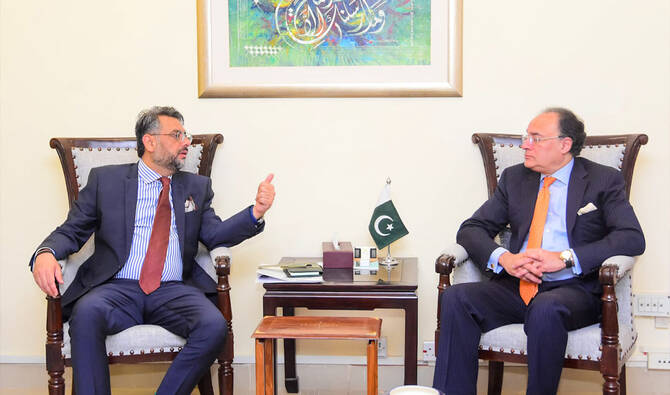
These outcomes emerged from a flurry of high-level talks over the past two days, starting with a meeting on Monday between Prime Minister Shehbaz Sharif and Khyber Pakhtunkhwa Chief Minister Sohail Afridi. Provincial leaders pressed hard for the recovery of what they described as Rs426 billion in outstanding federal dues owed to the province. On Tuesday, Finance Minister Muhammad Aurangzeb and Planning Minister Ahsan Iqbal met with a delegation from Khyber Pakhtunkhwa led by the province’s finance minister, Muzzammil Aslam, to hash out the demands in greater detail.
Informed sources familiar with the discussions told Dawn that the province also pushed for a swift convening of the second meeting of the National Finance Commission, the body responsible for divvying up resources between the federal government and the provinces. Aurangzeb reportedly urged Aslam to wrap up the recommendations from a working group that Aslam himself had chaired on the needs of the merged districts, while pledging to summon the NFC meeting in the near term.
Khyber Pakhtunkhwa officials made their case by pointing to the profound changes wrought by Fata’s merger with the province in May 2018. That integration swelled the provincial population from roughly 31 million to 37 million and expanded its territory from 74,521 square kilometers to 101,741 square kilometers. They contended that this shift should have automatically lifted the province’s share of NFC allocations from 14.6 percent to 19 percent — a shortfall of about 4.5 percent that has imposed a massive financial strain.
For the current fiscal year, provincial authorities estimated that running the merged districts would require Rs143 billion in operating expenses, but the federal budget had earmarked only Rs80 billion — a drop from the Rs105 billion provided the previous year. On the development front, the Centre had pledged Rs100 billion for the Accelerated Implementation Programme in 2025-26, yet just Rs37 billion had been released over the first seven months.
Beyond that, Khyber Pakhtunkhwa detailed the ongoing burdens from displacement. Some 2,000 families remain housed at the Babakhel Camp in North Waziristan, while another 15,000 families from the region receive monthly stipends of Rs20,000 each, totaling around Rs4.2 billion annually. The province reported shelling out Rs19 billion in the 2024 and 2025 fiscal years, plus an additional Rs10.4 billion this year, to handle fallout from the operations in Bajaur and Tirah — all without federal assistance.
Of the Rs426 billion in claimed arrears, the biggest slice — Rs194.5 billion — stems from federal excise duties on crude oil, which provincial officials said have gone unpaid since fiscal year 2011 despite provisions in the 18th Constitutional Amendment. Another Rs75 billion relates to a windfall levy on crude oil production, and Rs64 billion is tied to water supplies from the Galiyat Development Authority to the hill station of Murree dating back to 1947.
In a statement released by the Ministry of Finance, officials described the Tuesday session as centering on an array of fiscal and development issues, including prompt disbursements under major funding streams for the merged districts, unsettled claims for rehabilitating and supporting temporarily displaced persons, and the overall structure of provincial rights and budgets, particularly those connected to the NFC.
The Khyber Pakhtunkhwa representatives stressed the day-to-day operational and growth demands in the merged areas, emphasizing the need for reliable and punctual funding to keep projects afloat and address immediate priorities. They also spotlighted lingering commitments to displaced families and other obligations that call for better coordination and swift settlements.
Aurangzeb, according to the statement, “reaffirmed the federal government’s commitment to cooperative federalism and constructive engagement with the provinces.” He promised backing for the province in advancing its legitimate demands under the NFC and other pertinent categories, in line with established regulations, mutual agreements and proper procedures.
The finance minister further stressed that “effective coordination and timely reconciliation of accounts, where required, remain essential for smooth and transparent releases,” adding that the federal government is attuned to the distinctive development and security hurdles confronting Khyber Pakhtunkhwa, especially in the merged districts.The discussions also touched on progress in NFC-related deliberations, including the importance of maintaining pace in technical talks and subgroup meetings to build agreement on core questions. Both sides committed to ongoing tight collaboration through appropriate platforms and expert channels to tackle unresolved issues promptly, ensuring that financial setups and payouts bolster development goals and public services.
Copyright © 2021 Independent Pakistan | All rights reserved