By Staff Reporter
There is a particular cruelty to diplomatic purgatory — that uncertain space between war and peace where the bombs have temporarily stopped falling but nothing has actually been resolved, where envoys shuttle between capitals under the weight of catastrophe that neither side quite has the nerve to either prevent or complete. That is precisely where the United States finds itself today, fifty-six days into a ceasefire that is not really a ceasefire, negotiating a peace that neither party appears structurally capable of making.
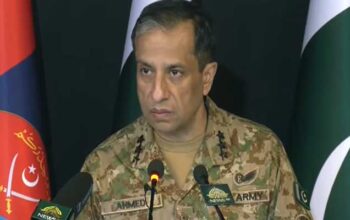
Pakistan’s army chief, Field Marshal Asim Munir, flew to Tehran on Friday. Qatar’s mediators followed, quietly, in coordination with Washington. The shuttle diplomacy has the frantic quality of emergency medicine — not cure, but containment. Pakistan’s biggest advantage, analysts have noted, is that it enjoys relationships with both the United States and Iran, which has helped it be seen as a neutral party by each side. That neutrality is a precious and exhaustible resource. One wonders how much of it remains.
The outlines of the impasse are by now familiar, but their full weight deserves reckoning. On April 28, Iran submitted a 14-point counterproposal calling for a permanent end to hostilities within 30 days, a US withdrawal from areas near its borders, the lifting of a US naval blockade, the release of frozen assets, war reparations, and a new mechanism governing the Strait of Hormuz — with nuclear issues explicitly excluded. Washington responded with demands of its own: a 20-year moratorium on uranium enrichment, the transfer abroad of Iran’s stockpile of highly enriched uranium estimated at roughly 400 kilograms enriched to 60 percent, and the dismantling of nuclear facilities. The two positions are not merely separated by negotiating distance. They reflect entirely different theories of what this conflict is fundamentally about.
Iran’s position, stripped of its diplomatic formulations, is that it fought a defensive war against unprovoked aggression and now deserves relief — from sanctions, from frozen assets, from a naval blockade that amounts to economic strangulation. America’s position is that it struck Iran to prevent a nuclear weapon, and will not leave the table without guarantees that none will ever be built. Both propositions contain some truth and enough of the wrong kind of pride to make them nearly irreconcilable.
And then there is the Strait of Hormuz, which has become something more than a military and economic pressure point. It has become a symbol of the deepest question in these negotiations: who, after all of this, gets to claim that they won? Roughly 20 percent of the world’s oil and liquefied natural gas passed through the Strait of Hormuz before the war; shipping traffic has virtually halted since US and Israeli-led strikes against Iran began on February 28. Iran has now proposed establishing what it calls the Persian Gulf Strait Authority, a body that would impose tolls and direct shipping through Iranian-controlled waterways. The five Gulf states — Bahrain, Kuwait, Qatar, Saudi Arabia, and the UAE — have written to the International Maritime Organization warning that Tehran’s proposed route is “an attempt to control traffic through the strait by forcing vessels to use a route within its territorial waters, which can be exploited for monetary gain.” That is a fairly accurate description.
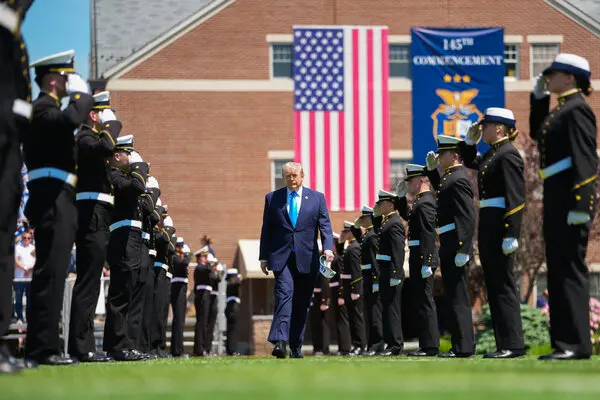
Secretary of State Marco Rubio has said, flatly, that any tolling system would make a diplomatic deal “unfeasible.” President Trump, with his characteristic instinct for the blustering absolute, declared that his administration has “total control” of the waterway and that it is, simply, an international passage — free, open, non-negotiable. What neither man has fully addressed is that Iran’s leverage over the strait, however illegitimate by international norms, is not rhetorical. Since hostilities commenced in late February 2026, Iran’s Islamic Revolutionary Guard Corps has repeatedly threatened or targeted vessels, suspending transit through the strait — a disruption the International Energy Agency has characterized as the most acute supply disruption in the history of the global energy market. Leverage, in international relations, does not yield to indignation.
US intelligence assessments have estimated that the joint US-Israeli bombardment campaign has failed to set back Iran’s nuclear capabilities. Having failed to achieve its core military objective, the administration is now attempting to achieve at the negotiating table what its bombs could not. That is not, on its face, an unreasonable strategy. But it requires a discipline and consistency that this White House has not demonstrated. The administration’s behavior in recent weeks has been not so much “madman theory” as a genuine, structural inability to project a coherent message — one that reflects not tactical calculation but the chaos of a president who genuinely cannot decide what outcome he wants.
Consider the extraordinary sequence of a single week. On Sunday, Trump declared the “clock is ticking” for Tehran. On Monday, he announced attacks were on hold pending Gulf state requests for more time. On Tuesday, he told reporters he had been “an hour away from making the decision” to resume strikes. On Wednesday, he said the United States was “in the final stages” — either a deal or “some things that are a little bit nasty.” On Thursday, he reposted a New York Post op-ed, authored by a fellow at the Foundation for Defense of Democracies, calling for the United States to “sustain blockade and accompanying economic warfare,” “remake the world in America’s energy dominance image,” and “order the US military to forge a path through the Strait of Hormuz.” By Friday, Rubio was telling NATO foreign ministers there had been “slight progress” — but cautioning against optimism.
“If you’re sitting in Tehran, you’re not sure if the president is actually serious about getting a deal, because every day, every few hours, the president changes his position, threatens Iranians with a strike,” Sina Azodi, an assistant professor of Middle East politics at The George Washington University, told Al Jazeera. “They can’t really decide whether the US actually wants to deal or it wants war.” That is not a secondary diplomatic problem. That is the central one. Iran’s supreme leader, Ayatollah Mojtaba Khamenei — the son, now successor, to Ali Khamenei, killed in the strikes — has reportedly issued a directive that near-weapons-grade uranium must not be sent abroad. When the opposing head of state cannot determine whether the United States wants a settlement or a grinding attrition campaign, and when that head of state’s supreme religious authority has publicly prohibited the concession Washington demands most, the path to a deal narrows to a thread.
Both sides reported progress was made in earlier rounds, but no agreement was reached. The US president said “most points were agreed to, but the only point that really mattered, nuclear, was not.” He described Iran as “unyielding” on the issue. Iran’s Foreign Minister said an agreement was “just inches away” but criticized “maximalist demands” from US negotiators. That is the pattern of these negotiations in miniature: close enough to see, never close enough to touch.
Meanwhile, the regional dimension of this conflict has grown considerably more complex. The Associated Press reported this week, through multiple regional officials and a Western diplomat, that Saudi Arabia and the UAE separately launched their own strikes on Iran and Iranian-backed militias in Iraq during the war. An Israeli military officer confirmed the UAE struck Iran directly at least once. The strikes were defensive in motive and were not publicly acknowledged by either Gulf state. But their significance is hard to overstate: two of the Arab world’s most powerful governments joined what was nominally a US-Israeli operation, making the conflict broader and the peace settlement correspondingly more complicated. Iran launched a series of counter-strikes against Israel, US military bases in the region, and military and civilian locations in Arab states — including hitting Qatar’s critical LNG infrastructure at Ras Laffan, wiping out roughly 17 percent of its export capacity. Qatar, which is now rushing mediators to Tehran, did so despite having absorbed those Iranian missile strikes. The willingness to engage diplomatically despite suffering direct attack is either a mark of extraordinary statesmanship or evidence that everyone in the region understands the alternative is genuinely catastrophic. Probably both.
In America, the war has extracted a price the administration continues to minimize while the evidence accumulates that it cannot be minimized forever. Republicans’ disapproval of Trump’s handling of the economy reached a new high of 37 percent in a recent AP/NORC poll. Gas prices nationally reached $4.55 per gallon, up from under $3 before the war began. Only 33 percent of Americans said they approve of Trump on the economy, while 67 percent give him negative marks. Consumer prices reached a three-year high of 3.8 percent by the end of April. Seventy-one percent of Hispanic respondents, 70 percent of independents, and 76 percent of voters ages 18-29 disapprove of Trump’s job performance — precisely the constituencies that delivered his 2024 victory. “It’s not hard for people to see, ‘Oh, gas prices went up after we attacked Iran, and the Middle East is where a lot of oil comes from,'” Geoffrey Skelley, chief elections analyst at Decision Desk HQ, observed. “People are not dumb. They connect the dots on that.”
Trump has argued, repeatedly, that the economic pain is temporary — that once the conflict ends, energy prices will fall rapidly and the accounting will prove favorable. That argument depends on the conflict ending. And it depends on it ending in a way that produces a stable, verifiable, lasting reduction in regional tension. Nothing in the current trajectory suggests those conditions are imminent. After Iran took control of the Strait of Hormuz and caused a global oil shock, Trump was forced to try to dismantle Iran’s nuclear capabilities at the negotiating table instead. The war that was supposed to prevent a nuclear Iran has, so far, produced a more economically powerful, more diplomatically engaged, and more strategically leveraged Iran — while delivering to American consumers a $4.55-a-gallon daily reminder of the venture’s costs.
Trump reportedly told reporters this month that he does not “think about Americans’ financial situation” when making decisions on Iran. He said the only thing that motivates him is preventing Iran from obtaining a nuclear weapon. One respects the principle, however much one disputes the honesty of the self-portrait. But there is a question embedded in that claim that goes unanswered: if the military campaign failed to eliminate Iran’s nuclear capabilities, as US intelligence itself has assessed, and if Iran’s supreme leader has now publicly forbidden the one concession Washington requires most, what is the strategy? Rubio says “the president has other options.” The reposting of an article calling for sustained economic warfare and a military path through the strait suggests at least one option under consideration. But sustained attrition is also an economic choice — and the American economy is already registering its verdict.
The hopeful reading of this week’s events is that the convergence of Pakistani and Qatari mediation, the reported narrowing of gaps, and the administration’s continued decision to forestall military action reflect genuine diplomatic momentum. A clause being negotiated would require Iran to commit not to operate underground nuclear facilities, and the US is seeking a moratorium on all uranium enrichment for at least 12 years. There are contours of an agreement, however distant, in those terms. Omar Rahman, a fellow at the Middle East Council on Global Affairs, has written that Iran has found “a coercive instrument of extraordinary power” in the Strait of Hormuz — which paradoxically may make a deal more possible, because it gives Tehran something to trade rather than merely surrender. The UAE’s senior diplomatic adviser, Anwar Gargash, offered a more skeptical view this week, warning Iran may be “over-negotiating” and that they “have a tendency to overestimate their cards.” That is not wrong. But it applies, with equal force, to the other side.
The darker reading — and the one that cannot be dismissed — is that neither government has the internal political architecture to make the necessary concessions. Iran’s new supreme leader cannot be seen capitulating on uranium. Trump cannot be seen accepting anything that looks less transformative than the deal Obama made and Trump himself destroyed in 2018. And somewhere between those two impossible positions, Pakistan’s Field Marshal Munir is flying back and forth across the Persian Gulf, trying to find language that allows both sides to claim they got what they came for.
That has always been the highest art of diplomacy: not solving problems, but finding formulations under which unsolvable problems can be placed on a shelf without exploding. The world needs that art to succeed right now, with unusual urgency. Brent crude is trading above $106 a barrel. The Strait of Hormuz — through which a fifth of the world’s traded oil and gas ordinarily flows — remains functionally closed. American consumers are paying more for gasoline than at any point since 2022. And a president who said he would pursue peace is retweeting op-eds about crushing Tehran in three moves. The clock, as Trump himself has said, is ticking. The question is whether anyone in this drama has the discipline and the wisdom to stop it.
Copyright © 2021 Independent Pakistan | All rights reserved