By Staff Reporter
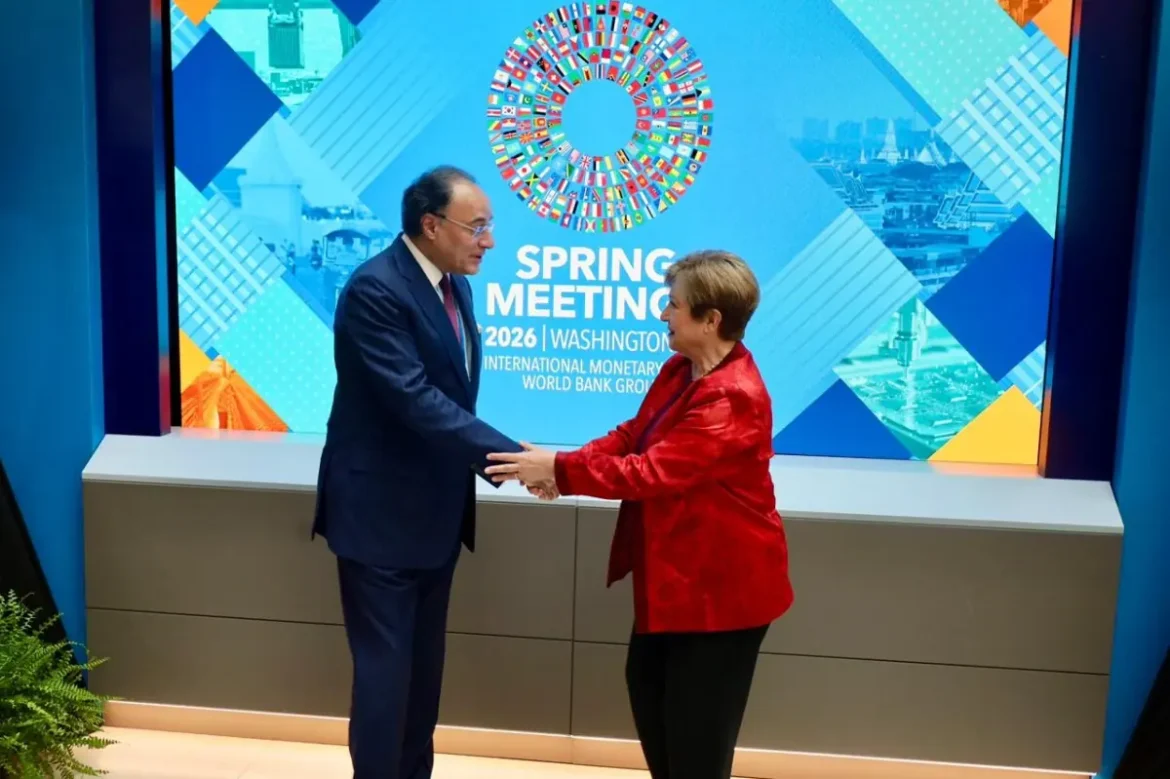
ISLAMAVAD: International Monetary Fund Managing Director Kristalina Georgieva praised Pakistan’s “continued progress on economic reforms” and the macroeconomic stability achieved under the Fund’s program, capping a week of high-stakes diplomacy by Finance Minister Muhammad Aurangzeb at the IMF-World Bank Spring Meetings.
Georgieva met Aurangzeb on the sidelines of the gatherings, which run through April 18. The minister arrived in Washington on Monday and has packed more than 50 bilateral and multilateral sessions into the trip. “Great to see Aurangzeb at the IMF Meetings!” Georgieva wrote on X early on Thursday. She added that “strong programme implementation has helped Pakistan maintain macroeconomic stability and build confidence,” stressing that “sound policies and deeper structural reforms remain key to sustaining growth and raising welfare for all Pakistanis.”
A finance ministry statement released after the meeting said Georgieva “appreciated Pakistan’s continued progress on economic reforms.” The ministry described her comments as evidence of “growing international recognition of Pakistan’s reform efforts and its commitment to maintaining economic stability through prudent policymaking.”
The Georgieva meeting followed a separate discussion a day earlier with IMF First Deputy Managing Director Gita Gopinath, during which Aurangzeb briefed her on the immediate fallout from the Middle East conflict and the government’s policy response.
Fitch Holds Rating; Capital-Market Push Accelerates
In a separate session, Aurangzeb held what the ministry called a “constructive meeting” with Fitch Ratings. On Monday, Fitch affirmed Pakistan’s long-term foreign-currency issuer default rating at B- with a stable outlook. Aurangzeb thanked the agency for its continued engagement and for reaffirming the rating, while highlighting a staff-level agreement reached with the IMF on the third review of the Extended Fund Facility and the second review of the Resilience and Sustainability Facility.
He told Fitch that Pakistan has secured the external financing needed to meet its fiscal 2026 obligations and is pursuing a diversified presence in international capital markets through Panda bonds, eurobonds, international sukuk and ESG-linked instruments.
ADB, Panda Bond and Country Strategy
Aurangzeb also met Asian Development Bank President Masato Kanda. He thanked the ADB for providing credit enhancement on Pakistan’s inaugural Panda bond and noted the recent signing of a new Country Partnership Strategy as a milestone in bilateral ties. Aurangzeb updated Kanda on the IMF staff-level agreement and expressed hope for a swift approval by the Fund’s executive board.
The minister described the Middle East crisis as a significant supply shock and laid out the government’s response, including steps on fuel availability, pricing, logistics, targeted subsidies and demand-side management. He said assessments of second- and third-order effects are under way in coordination with the State Bank of Pakistan.
Kanda raised concerns about disruptions to fertilizer supply chains, potential effects on agricultural output and volatility in financial markets. Aurangzeb, speaking on behalf of Prime Minister Shehbaz Sharif, invited the ADB chief to visit Pakistan.
UN Chief and Borrowers’ Platform Launch
On the sidelines of the launch of the Borrowers’ Platform — a new forum aimed at strengthening debt sustainability, transparency and peer learning among debtor nations — Aurangzeb met United Nations Secretary-General António Guterres. The minister welcomed Guterres’s participation in the event and thanked him for backing the platform’s creation. The two discussed the global economic fallout from the Middle East conflict, particularly its impact on food and energy security in developing countries. Guterres
“lauded Pakistan’s role in facilitating peace and stability in the region and beyond,” according to the ministry, and voiced confidence in Pakistan’s continued constructive global engagement.
Investors and Privatization Pipeline
Aurangzeb’s schedule also included private-sector meetings. He spoke with senior executives at Franklin Templeton about Pakistan’s privatization program, telling them that 28-29 state-owned enterprises have been formally transferred to the Privatisation Commission. Discussions covered the outsourcing of major airports in Islamabad, Karachi and Sialkot as well as the planned privatization of electricity distribution companies.
Separately, he met representatives of JPMorgan Chase and signaled that Pakistan is preparing to re-enter international capital markets after an absence of roughly four years. Aurangzeb expressed appreciation for financial support from Saudi Arabia and assured the bank that financing proposals and market options presented during the talks would be reviewed carefully.
The minister addressed the Citi Macro Forum, attended by institutional investors, where he characterized the Middle East crisis as one of the largest supply shocks in recent history. He outlined the government’s three-stage policy response and said Pakistan’s first Panda bond issuance is targeted for May. He also pointed to rising transit volumes at Karachi Port and the potential revival of Gwadar as a strategic trade corridor.
At the Borrowers’ Platform launch, Aurangzeb told participants that the initiative fills a long-standing gap for debtor nations, giving them a dedicated space to share experiences, identify risks and align perspectives. He noted that many developing countries remain in acute debt distress amid elevated borrowing costs and tighter global financial conditions that limit investment in growth and sustainable development.
While domestic reforms are essential and continuing, systemic constraints in the global financial architecture continue to crimp policy space, he said. The platform, he emphasized, is not a negotiating bloc but a voluntary, member-state-led effort focused on peer learning and amplifying the voice of borrowing countries.
Copyright © 2021 Independent Pakistan | All rights reserved