By Staff Reporter
ISLAMABAD: Iran has agreed to allow 20 additional ships flying the Pakistani flag to pass through the Strait of Hormuz, with two vessels crossing daily, Pakistan’s deputy prime minister said late Saturday in a move that officials here described as a significant confidence-building gesture amid a month-long war that has crippled global energy supplies.
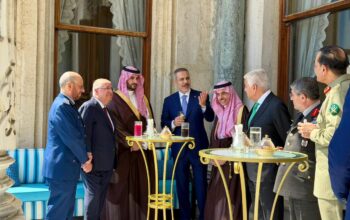
The announcement by Ishaq Dar, who also serves as foreign minister, came as Pakistan has thrust itself into the center of diplomatic efforts to mediate between Washington and Tehran. It followed a lengthy telephone conversation between Prime Minister Shehbaz Sharif and Iranian President Masoud Pezeshkian, in which Sharif outlined Islamabad’s outreach to organise peace talks. On Sunday, Pakistan was set to host the foreign ministers of Saudi Arabia, Turkey and Egypt for two days of discussions focused in part on de-escalating the conflict.
“This is a welcome and constructive gesture by Iran and deserves appreciation,” Dar wrote on X, the social media platform. “It is a harbinger of peace and will help usher stability in the region.” He added that the development “marks a meaningful step toward peace and will strengthen our collective efforts in that direction,” emphasising that “dialogue, diplomacy, and such confidence-building measures are the only way forward.”
Dar’s post directly tagged U.S. Vice President JD Vance, Secretary of State Marco Rubio, U.S. special envoy Steve Witkoff and Iranian Foreign Minister Abbas Araghchi — an unusual public signal that Pakistani officials view the shipping arrangement as part of broader efforts to reduce tensions between the United States and Iran.
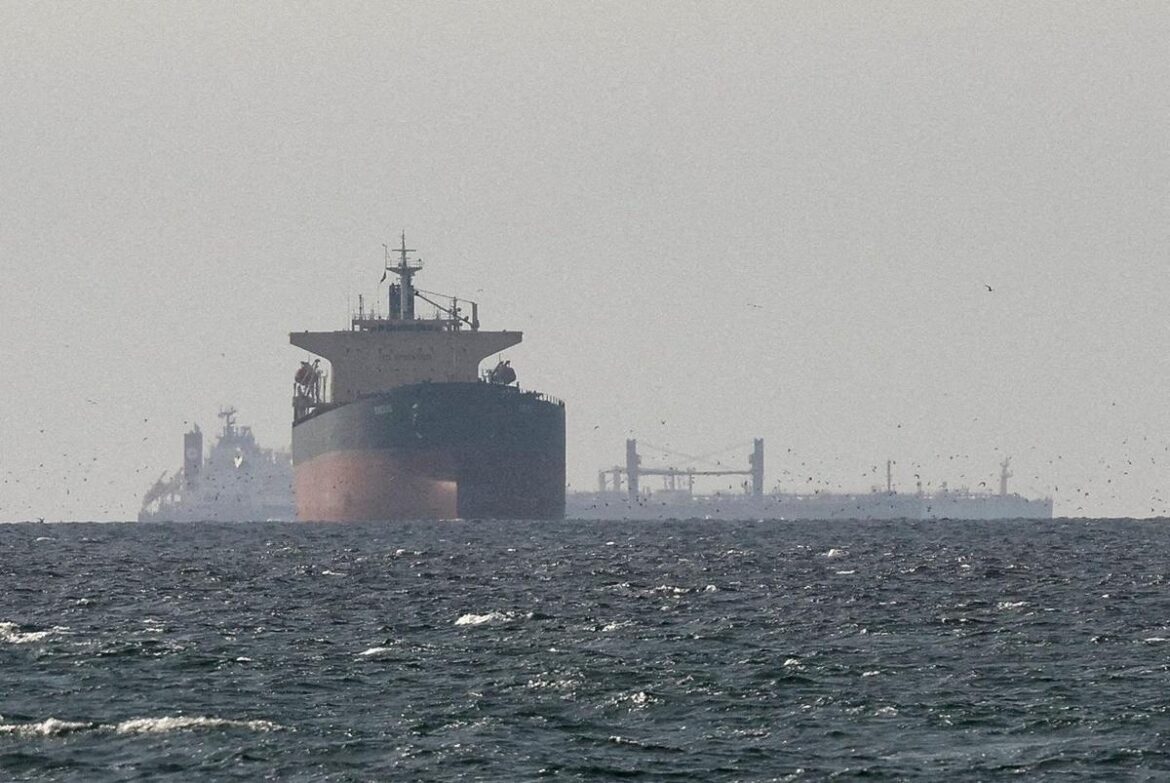
The Strait of Hormuz, which carries roughly one-fifth of the world’s liquefied natural gas and a quarter of its seaborne oil, has been largely paralyzed since the United States and Israel launched coordinated strikes on Iran on Feb. 28. The campaign, which killed Supreme Leader Ali Khamenei, has triggered a war that has claimed about 2,000 Iranian lives and more than 1,100 in Lebanon, according to casualty figures cited in regional reporting, while sending oil prices surging past $100 a barrel — a roughly 40 percent increase.
Iranian threats to target vessels in the narrow waterway have kept most tankers away. Maritime traffic has fallen by about 90 percent, with only about 150 ships making the passage since the fighting began — roughly the volume that normally transits in a single day. Nearly 1,900 to 2,000 commercial vessels remain stranded on either side of the strait, according to Reuters. At least 16 attacks have damaged 17 ships.
The disruption has produced what the head of the World Trade Organization, Ngozi Okonjo-Iweala, described as the worst global trade shocks in 80 years. Former Qatari minister Mohammed Al-Hashemi likened the strait to “the aortic valve of globalised production,” warning that its closure threatens the entire circulatory system of the world economy.
Pakistan’s announcement built on earlier limited openings. Anadolu Agency reported earlier Saturday that Iran had permitted two Pakistani cargo ships to transit the strait. A Pakistani oil tanker had already made the journey on March 16 — the first such voyage by a non-Iranian vessel since the war began. A handful of other ships, including some under Indian and Malaysian flags, have also crossed after receiving Iranian assurances of safe passage. Malaysian Prime Minister Anwar Ibrahim publicly thanked Pezeshkian on Friday for allowing Malaysian vessels through.
Iran’s Islamic Revolutionary Guard Corps has effectively turned the waterway into a checkpoint, requiring ships to submit cargo manifests, crew lists and destinations to approved intermediaries, obtain clearance codes and accept escorts through Iranian waters. At least two vessels have reportedly paid for passage — as much as $2 million per crossing, settled in Chinese yuan — and Iran’s parliament is moving to formalize such fees as a revenue source. Tehran has demanded formal international recognition of its authority over the strait as a condition for ending the war.
Dar’s statement framed the new arrangement with Pakistan as a bilateral breakthrough with wider implications. Pakistan, which shares a 560-mile border with Iran, has emerged as a key intermediary, conveying US proposals to Tehran and offering to host negotiations — possibly in Islamabad or with Turkish involvement.
Copyright © 2021 Independent Pakistan | All rights reserved