By Staff Reporter
ISLAMABAD: The large-scale manufacturing sector expanded 2.69 percent year-on-year in September, accelerating from August’s near-stagnant 0.54 percent pace and pointing to a tentative stabilisation in industrial activity after flood disruptions eased, official data showed on Wednesday.
The Pakistan Bureau of Statistics released figures showing LSM, a key driver of gross domestic product, rose 2.05 percent month-on-month in September. Output had surged 8.99 percent in July, the first month of fiscal 2026, before floods dragged growth down sharply the following month.
For the July-September quarter, LSM posted a 4.08 percent year-on-year increase, recovering from the sector’s contraction in recent years. The sector shrank 0.74 percent in fiscal 2025, missing the government’s 3.5 percent growth target by a wide margin, and edged down 0.03 percent in fiscal 2024.
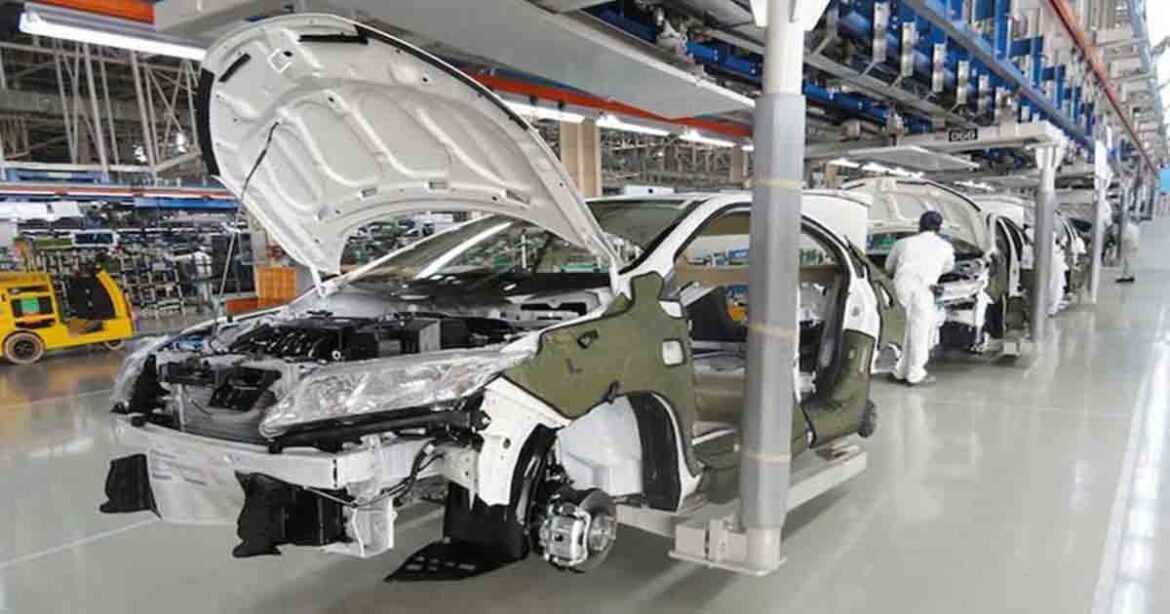
Automobiles led the recovery with an 84.58 percent surge in the first quarter, powered by an 86.19 percent jump in jeep and car production. Trucks soared 139 percent, light commercial vehicles rose 6.36 percent and buses climbed 21.43 percent. Non-metallic mineral products, a proxy for construction activity, advanced 13.86 percent, while rubber products jumped 14.10 percent and electrical equipment grew 4 percent.
Food-group output rose 6.94 percent in the quarter. Wheat and rice milling, the largest component, increased 9.30 percent on better crop yields, cooking oil rose 8.54 percent and starch products edged up 0.64 percent. Vegetable ghee slipped 0.06 percent and blended tea fell 5.35 percent.
Textiles, the biggest manufacturing segment, managed only a 1.88 percent gain. Cotton yarn rose 2.62 percent and cotton cloth inched up 0.28 percent — together accounting for more than 80 percent of the sector’s weight. Garment production, a higher value-added category, rose 2.43 percent for the quarter but posted a 2.18 percent year-on-year decline in September, marking two straight months of contraction.
Coke and petroleum products dropped 3.35 percent. Petrol output fell 3.52 percent, jet fuel oil declined 5.23 percent and furnace oil plunged 21.62 percent. High-speed diesel, kerosene and LPG and lubricating oil posted gains of 10.83 percent, 11.17 percent, 8.20 percent and 46.50 percent, respectively.
Pharmaceuticals contracted 4.81 percent and iron and steel products fell 3.52 percent, with billets and ingots down 10.20 percent and hot-rolled/coiled sheets off 0.75 percent. Fertilisers eked out a 0.97 percent increase.
The September pickup, while modest, suggests the worst effects of recent flooding on factories and supply chains have largely dissipated, setting the stage for steadier industrial performance in coming months if macroeconomic conditions remain supportive.
Copyright © 2021 Independent Pakistan | All rights reserved