By Staff Reporter
ISLAMABAD: Pakistan is bracing for another wave of destructive flooding as India issued a second warning during the week about potential cross-border floodwaters, disaster management authorities said on Tuesday.
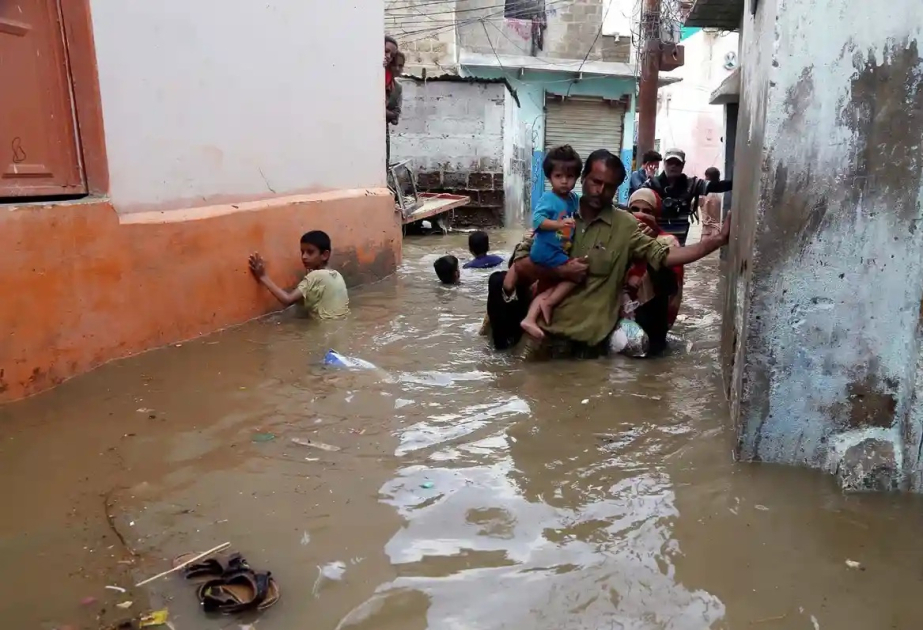
The alert comes as the nation grapples with a monsoon-driven emergency that has already claimed at least 881 lives since late June and affected millions, particularly in the agricultural heartland of Punjab.
Irfan Ali Kathia, director general of Punjab’s PDMA, said the Indian High Commission had alerted Pakistani authorities to the risk of flooding from the Sutlej River, with floodwaters expected to cross into Pakistan by Wednesday. The warning, conveyed through Pakistan’s Ministry of Water Resources rather than the suspended Indus Waters Treaty, highlighted a surge in water flow that could exacerbate already dire conditions in border districts such as Kasur, Okara, Vehari, and Bahawalnagar.
“The situation in Multan could become critical,” Kathia said in a statement, noting that a flood wave from the Chenab River is expected to reach the southern Punjab city via the Trimmu headworks by Tuesday night. He added that 3,243 villages in Punjab have been affected, impacting roughly 2.4 million people. Over 1 million individuals have been rescued through combined efforts of government and private agencies, he said.
Kathia also warned of high flood levels in the River Tawi and a dramatic surge of 60,000 cusecs in water flow at Marala Headworks within a single hour. The Sutlej River, already in high flood, has seen water discharge exceed 150,000 cusecs at Head Sulemanki, affecting areas like Mailsi, Bahawalnagar, and Bahawalpur. The Mai Safura embankment faces a critical 24-hour period, with authorities evacuating at least 22 nearby villages as a precaution. Kathia emphasized that public safety is the priority, with measures in place to avoid embankment breaches where possible.
The National Disaster Management Authority (NDMA) issued a fresh alert on Tuesday evening, forecasting heavy rainfall across Punjab and Islamabad over the next 12 to 24 hours. Cities including Sialkot, Narowal, Lahore, Sheikhupura, Gujrat, Gujranwala, Hafizabad, Chiniot, Faisalabad, and Sargodha are expected to see significant downpours, with intermittent rain likely in Islamabad, Rawalpindi, Jhelum, Chakwal, Attock, Multan, Khanewal, Bahawalnagar, Bahawalpur, Rahim Yar Khan, Dera Ghazi Khan, and Rajanpur. The NDMA cautioned that the rainfall could worsen conditions in already flood-ravaged areas and urged residents to avoid rivers, streams, and unnecessary travel.
In a separate development, the NDMA reported that the Chenab River’s flow, which had reached 885,000 cusecs, was reduced to 550,000 cusecs after authorities breached the riverbank at two locations. “Since there is a capacity of only 650,000 cusecs to pass through the Panjnad headworks, there will be no need to breach the dyke at any other place,” the agency said. The stream is expected to reach Guddu Barrage by the afternoon of September 6, with a projected flow of 450,000 to 500,000 cusecs.
The Pakistan Meteorological Department (PMD) also warned of moderate to heavy rains across Sindh, including Karachi, starting this weekend. A low-pressure system in the Bay of Bengal is expected to bring rain to the province from September 7 to 11, with a risk of urban flooding in Karachi. The PMD noted that no heavy rain is expected in the port city until September 5, but last month’s downpours in Karachi claimed several lives, caused widespread power outages, and damaged roads, leaving the city vulnerable to further disruption.
The annual monsoon, which delivers 70 to 80 percent of South Asia’s rainfall between June and September, is critical for agriculture and food security across the region. However, increasingly erratic and extreme weather patterns have transformed the rains into a destructive force. Torrential downpours on Monday already flooded streets and swelled storm drains in Islamabad and Rawalpindi, turning roads into ponds and stranding dozens of vehicles, according to Aaj News.
Pakistan’s flood crisis, compounded by India’s release of water from its dams, has strained resources and infrastructure. The 2022 floods, among the worst in the country’s history, underscored the growing threat of climate-driven disasters.
Copyright © 2021 Independent Pakistan | All rights reserved