By Staff Reporter
ISLAMABAD: Pakistan’s trade deficit widened sharply in August, surging 30.4% to $2.87 billion from a year earlier, driven by a spike in imports and a steep drop in exports, according to data released on Tuesday by the Pakistan Bureau of Statistics.
The figures underscore mounting pressure on the nation’s external accounts as it grapples with economic fragility.
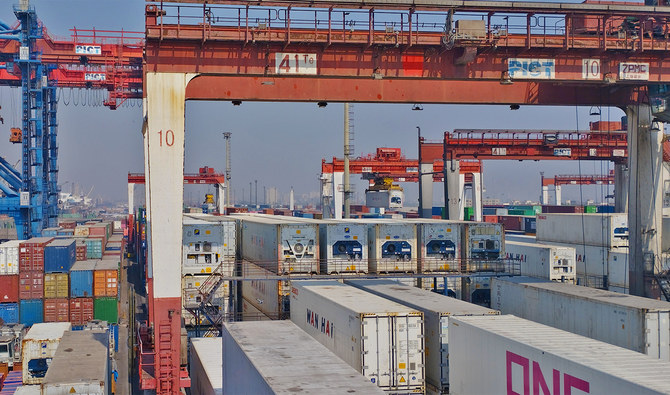
The trade gap, the difference between exports and imports, expanded from $2.20 billion in August 2024. Imports climbed 6.6% to $5.29 billion from $4.96 billion, while exports slumped 12.5% to $2.42 billion from $2.76 billion a year ago, reflecting Pakistan’s struggle to compete globally amid rising domestic demand for foreign goods.
For the first two months of fiscal 2025-26 (July-August), the trade deficit swelled 29% to $6.01 billion from $4.66 billion a year earlier. Imports rose 14.3% to $11.12 billion from $9.73 billion, while exports inched up 0.6% to $5.1 billion from $5.06 billion, signaling stagnant export growth despite government efforts to boost sectors like textiles.
Month-on-month, the deficit narrowed 8.6% from $3.14 billion in July 2025, offering marginal relief. Yet the broader trend highlights structural challenges, including reliance on low-value exports and exposure to volatile global commodity prices.
Pakistan’s economy faces intensifying strain under a $7 billion IMF program agreed in July 2024. The widening trade gap complicates efforts to stabilize foreign exchange reserves and the Pakistani rupee, which remain under pressure from high import costs, particularly for energy and machinery.
The data exposes persistent weaknesses in Pakistan’s trade framework. Economists warn that without reforms to enhance export competitiveness and curb import reliance, the deficit could further erode macroeconomic stability.
The government has vowed to bolster exports through incentives and market diversification, but progress remains elusive.
Copyright © 2021 Independent Pakistan | All rights reserved