By Staff Reporter
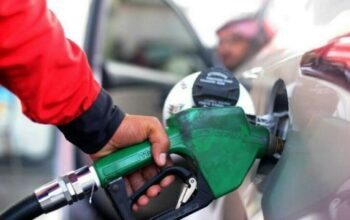
ISLAMABAD: Pakistan cut retail fuel prices for the second consecutive day on Friday, trimming petrol by 2.20 rupees and high-speed diesel by 1.50 rupees per litre, as the country’s new daily pricing regime absorbs a Middle East oil market whipsawed by the nearly six-month-old war between the United States, Israel and Iran.
The Petroleum Division’s notification sets petrol at 327.62 rupees a litre and high-speed diesel at 380.86 rupees, effective through August 10. The government continues to collect 114 rupees per litre in taxes and duties on petrol and 100 rupees on diesel — levies that remain untouched even as the base price moves.
Friday’s reduction follows a steeper cut announced a day earlier, when petrol fell 3.19 rupees and diesel 1.50 rupees for the August 7 pricing window. Combined, the two adjustments have shaved 5.39 rupees off petrol and 3.00 rupees off diesel in the space of 48 hours — a rare stretch of consecutive relief for consumers after months in which price movements ran almost exclusively in the other direction.
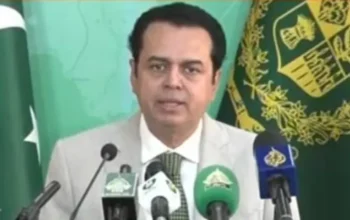
Pakistan Petroleum Minister Ali Pervaiz Malik shifted the country to daily price-setting on July 17, replacing the weekly review cycle the government had relied on since early March. The change puts the Oil and Gas Regulatory Authority in charge of calculating pump prices each day using a seven-day rolling average of international benchmark rates, a mechanism the cabinet and prime minister approved as swings in global crude became too sharp for a weekly cycle to track.
The volatility Islamabad is now pricing into pump rates traces directly to the conflict that has upended Middle East energy markets since February 28, when the United States and Israel launched a joint military campaign against Iran — an operation the Pentagon called Epic Fury — that killed Supreme Leader Ali Khamenei on its opening day and targeted Iran’s nuclear and ballistic missile infrastructure. Diesel in Pakistan, which had been trading near 281 rupees a litre before the war, rocketed to a peak of 520.35 rupees by April 3; petrol climbed from around 266 rupees in early March to a high of 458.41 rupees over the same stretch. A ceasefire in April and a June memorandum of understanding briefly stabilized the picture, but the truce unraveled in early July after Iran moved to assert control over shipping through the Strait of Hormuz and opened fire on commercial vessels, prompting renewed U.S. strikes.
The latest flashpoint emerged Thursday, when a committee in Iran’s parliament began reviewing draft legislation to bar vessels linked to the United States, Israel and other countries Tehran designates as hostile from transiting the Strait of Hormuz, with fines of up to 20% of cargo value for violators. News of the bill sent crude sharply higher: Brent futures settled up $3.04, or 3.83%, at $82.49 a barrel, while U.S. West Texas Intermediate rose $2.07, or 2.75%, to $77.29, according to Reuters.
The strait, which under normal conditions carries roughly a fifth of the world’s daily oil and liquefied natural gas shipments, has operated at a fraction of pre-war traffic for weeks, with tanker transits reported in the low single digits as shippers reroute around the chokepoint. A parallel arrangement between Iran and Oman aimed at defining safe shipping corridors remains under negotiation, and the Trump administration has rejected Tehran’s proposed vessel ban outright.
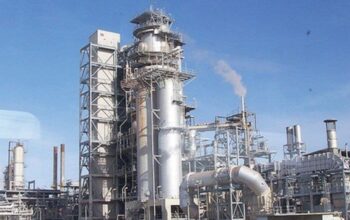
For Pakistan, a country that imports the bulk of its petroleum needs, that volatility lands directly on the exchequer. Data identifies petroleum as one of the country’s largest import categories, meaning swings in global crude prices move quickly through the import bill, foreign exchange reserves and domestic inflation. Islamabad’s refineries cover only a portion of national demand, leaving the rest dependent on crude and refined-product imports priced in dollars.
Petrol and diesel together account for the large majority of Pakistan’s fuel demand and government revenue from the sector, with combined monthly sales in the range of 700,000 to 800,000 tonnes, dwarfing the roughly 10,000 tonnes of monthly kerosene demand. Petrol is consumed mainly in private cars, motorcycles and rickshaws, putting its price movements squarely in the household budgets of Pakistan’s middle and lower-middle classes. Diesel’s reach extends further, powering heavy freight transport, power generation and large-scale industrial and agricultural equipment — meaning shifts in its price ripple into food costs and shipping rates across the economy.
Copyright © 2021 Independent Pakistan | All rights reserved