By Staff Reporter
ISLAMABAD: Pakistan is poised for a significant boost in its mining sector with anticipated US investment and increased copper exports following a breakthrough bilateral tariff agreement, the Dawn newspaper reported on Monday.
Commerce Minister Jam Kamal Khan told the National Assembly that the United States has expressed keen interest in investing in Pakistan’s mines and minerals, particularly copper, during recent negotiations over reciprocal tariffs. The deal, which reduces tariffs on Pakistani exports to the US from 29 percent to 19 percent, is expected to enhance the competitiveness of Pakistani goods, including textiles, in the US market.
The minister highlighted that the US had imposed 50 percent tariffs on imports of copper, iron, steel, and aluminium, but refined copper was subsequently exempted. “It will be more advantageous to export value-added copper (refined) to the US market,” Khan said, noting that this exemption creates a lucrative opportunity for Pakistan to tap into the US market, which has historically been underutilised compared to China, a primary destination for Pakistan’s raw copper ores.
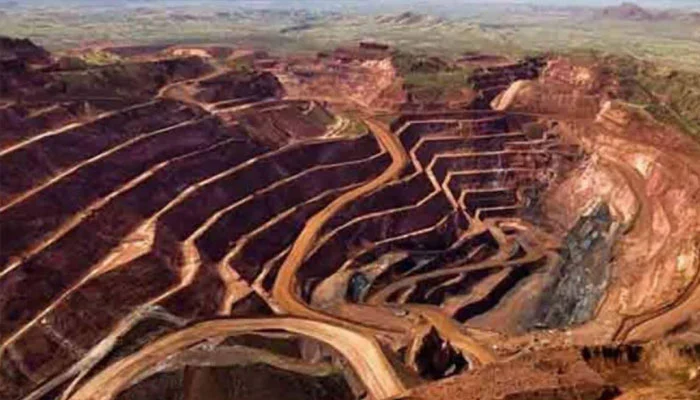
Pakistan, endowed with the world’s fifth-largest copper reserves, has yet to fully capitalise on its mineral wealth due to insufficient investment in modern mining infrastructure and processing capabilities. “This underutilisation of its copper resources highlights the need for strategic development in the mining sector,” Khan said.
The minister stressed that copper, a critical component in renewable energy systems and electric vehicles, is in high demand globally, and Pakistan’s vast reserves could help address trade imbalances. To unlock this potential, the government is taking proactive steps.
The Geological Survey of Pakistan has been tasked with detailed geological mapping to identify untapped reserves, while efforts are underway to streamline regulatory frameworks and address infrastructural gaps, such as mine access roads and dedicated power supplies. These measures aim to attract private sector involvement and foster technological innovation in the mining industry.
Khan emphasised that global demand for copper is projected to surge in the coming years, driven by its role in clean energy technologies. “Pakistan’s strategic development of its copper sector could not only meet domestic economic goals but also contribute to alleviating global shortages,” he said.
By focusing on value-added exports like refined copper, bars, rods, and alloys, rather than raw ores, Pakistan aims to maximize economic returns. “Through strategic investments and the adoption of modern technologies, Pakistan can unlock the full potential of its mineral resources,” Khan said. “This would not only boost its export earnings but also position the country as a responsible and reliable supplier in the international minerals market, contributing to both national development and global sustainability efforts.”
The tariff agreement marks a significant milestone in Pakistan-US trade relations. Khan noted that the 19 percent tariff rate is the lowest among Pakistan’s competitors in the US market, providing a competitive edge, particularly in textiles. The government’s negotiations with US authorities, which Khan described as “hectic,” successfully reversed an earlier decision to impose a 29 percent tariff on Pakistani exports.
The deal comes amid broader efforts to strengthen economic ties with the United States. The government is also exploring increased imports of US goods, such as cotton and edible oils, to balance trade. Additionally, the $7 billion Reko Diq copper and gold project in Balochistan has drawn significant attention, with the US Export-Import Bank reviewing financing proposals worth up to $1 billion, according to reports.
The Reko Diq project, one of the world’s largest undeveloped copper and gold deposits, is seen as a flagship opportunity to attract foreign investment. However, challenges such as security concerns in Balochistan and infrastructural limitations remain. The government has pledged to address these issues to ensure a stable investment climate.
Copyright © 2021 Independent Pakistan | All rights reserved