By Staff Reporter
ISLAMABAD: The interim government is seeking to extend the maturity of deposits from other countries that are due to expire soon, as it tries to manage its dwindling foreign exchange reserves and revive the economy.
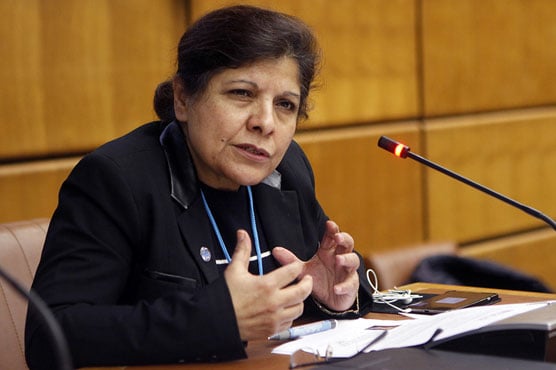
Caretaker Finance Minister Shamshad Akhtar said on Friday that the government was also in talks with multilateral lenders such as the World Bank and the Asian Development Bank to expedite the disbursement of loans and grants that Pakistan expects to receive this year.
“We are making a sincere effort to define our roadmap for augmenting the country’s macroeconomic management for which the anchor is fiscal stability and coordination with monetary policy, as well as external policy,” Akhtar said at a press conference in Islamabad after a meeting of a council formed to address the economic challenges.
The council discussed various measures such as cutting government spending, curbing smuggling, easing barriers to foreign investment and improving the performance of state-owned enterprises.
Akhtar, who took charge of the finance ministry last month after the parliament was dissolved ahead of general elections in November, said the interim government needed to boost the economy and it was important to remove import restrictions “across the board” since Pakistan was an import-intensive country.
“We have to revive the economy and have to release import restrictions.”
The minister said that imports also needed to be opened up for industrial revival, exports had declined and there was a shortfall in remittances, which contributed to the outflow of dollars from the country.
Akhtar said the situation of foreign exchange reserves was “reasonably okay” for now, but the interim government would go for a rollover of the deposits from other countries upon their maturity.
She did not specify which countries had provided the deposits or when they were due, but Pakistan had received $3 billion from Saudi Arabia, $1 billion from UAE, and $2 billion from China to shore up its reserves.
The minister said a review of the International Monetary Fund program was due in November, after which Pakistan expected to receive the second tranche of its $3 billion loan from the IMF, as well as a tranche from the ADB and some loans from the WB.
“What the actual precise amount of [total inflows] will be will take some time in discussions but if you ask for the full year, we are hoping it will be close to about $6 billion cumulative inflows” from various sources, she said.
.
Akhtar added that state-owned enterprises are a burden on the national exchequer and a policy is being prepared and a central monitoring unit is being established to support of the ministries to improve corporate governance of state-owned enterprises and entities that are ready to be taken forward for privatisation.
“The state-owned enterprises’ debt burden is solely on the banking system and the government is also borrowing from the system… the government wanted to diversify the debt burden through the capital market which would create depth and breadth of the capital market.”
Additionally, she said the government securities would also be floated in the Pakistan Stock Exchange so that its maturity could also be stretched and the common man could also benefit from it.
Copyright © 2021 Independent Pakistan | All rights reserved